Every brand needs robust Seasonal Marketing Strategies to maximize revenue during peak shopping periods. By aligning your promotions with holidays, weather changes, and cultural events, you capture high-intent buyers, boost brand loyalty, and drive conversions effectively. Timing and relevance dictate absolutely everything.
This comprehensive guide explores how to build and execute powerful campaigns year-round. We cover consumer psychology, effective planning techniques, multi-channel deployment, and compelling offer creation. By studying expert insights, avoiding common pitfalls, and actively analyzing performance metrics, your enterprise will master shifting market dynamics to secure consistent growth, enhance customer retention, and confidently outpace competitors.
Understanding the Core of Seasonal Marketing Strategies
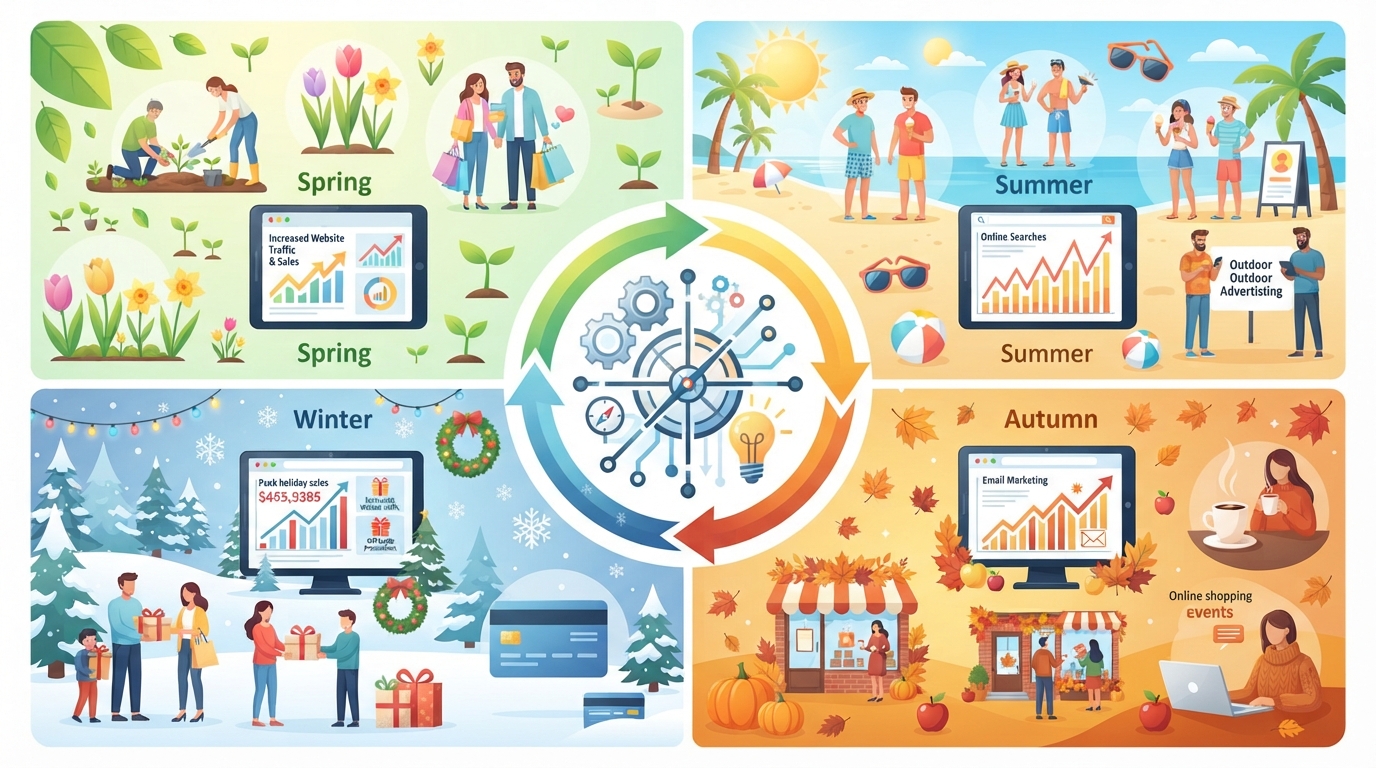
To truly leverage calendar events for business growth, brands must first understand the foundational elements that make Seasonal Marketing Strategies effective. At their core, Seasonal Marketing Strategies capitalize on predictable shifts in consumer behavior, environmental changes, and cultural milestones. Instead of relying on a static, year-round message, businesses dynamically adapt their communication to match the immediate mindset of the buyer. This approach builds instant relevance. When you align your product offerings with what consumers already have top-of-mind, you drastically reduce friction in the buying journey. Whether it involves gearing up for the summer rush, preparing for back-to-school shopping, or dominating the winter holiday sales, executing precise Seasonal Marketing Strategies ensures that your brand remains visible when purchase intent reaches its absolute peak.
The Psychology Behind Seasonal Buying
Consumer psychology plays a massive role in the success of any promotional calendar. During specific times of the year, shoppers experience heightened emotional states. The winter holidays evoke nostalgia, generosity, and urgency, while the onset of spring often triggers a desire for renewal, cleaning, and self-improvement. By implementing carefully crafted Seasonal Marketing Strategies,
marketers tap directly into these emotional currents. You do not just sell a product; you sell a timely solution to a timely desire. Brands that seamlessly weave emotional triggers into their campaigns see significantly higher engagement rates. Furthermore, concepts like fear of missing out (FOMO) become exponentially more powerful during time-bound events like Black Friday or Cyber Monday. Effectively harnessing these psychological drivers is the secret behind the most profitable Seasonal Marketing Strategies deployed by global retail giants.
Aligning Business Goals with Seasonal Trends
Successful Seasonal Marketing Strategies require tight alignment between overarching business objectives and temporary market shifts. You cannot simply run a holiday promotion and expect transformative results without a clear goal. Are you attempting to clear out old inventory before the new year? Do you want to acquire first-time buyers who you will later target with customer retention techniques? Or are you aiming to boost the average order value among your existing loyal customer base? By defining clear, measurable objectives for every campaign, your Seasonal Marketing Strategies become laser-focused. A brand focused on brand awareness might heavily invest in viral social media challenges during Halloween, while a B2B company might focus on end-of-year tax-prep webinars to generate highly qualified leads. Establishing key performance indicators early guarantees that your Seasonal Marketing Strategies yield measurable return on investment.
How to Plan Effective Seasonal Marketing Strategies

Thorough preparation forms the bedrock of highly profitable Seasonal Marketing Strategies. The biggest brands do not brainstorm their winter campaigns in November; they finalize them in July. Executing a proactive planning phase allows businesses to secure ad inventory at lower costs, refine creative assets without rushing, and build anticipation among their target audience. To dominate your market, you must treat your Seasonal Marketing Strategies as an ongoing, year-round operation rather than a series of disconnected, last-minute scrambles. Proper planning ensures that marketing, sales, customer service, and fulfillment teams operate in total synchronization, preventing the operational bottlenecks that frequently ruin poorly planned seasonal spikes.
Mapping Out the Yearly Promotional Calendar
The first practical step in developing winning Seasonal Marketing Strategies involves creating a comprehensive 12-month calendar. This document serves as the master blueprint for your entire marketing department.
- Identify major holidays and events directly relevant to your specific industry and target demographic.
- Establish hard deadlines for creative conceptualization, asset production, campaign launch, and post-campaign analysis.
- Allocate specific budgets to each event based on historical performance and projected revenue targets.
By maintaining this structured calendar, marketing directors remove the guesswork from their Seasonal Marketing Strategies. It allows content creators to work months in advance, ensuring high-quality output. Furthermore, a visible calendar helps teams spot unique, niche holidays that competitors might ignore. A
coffee brand, for example, could build massive Seasonal Marketing Strategies around National Coffee Day, dominating a low-competition event while competitors only focus on Christmas.
Budget Allocation and Resource Management
Financial discipline determines the longevity of your Seasonal Marketing Strategies. Ad costs notoriously skyrocket during Q4, meaning that poorly budgeted campaigns will rapidly bleed cash. Smart marketers distribute their financial resources strategically, relying on historical data to predict which channels will yield the highest return on ad spend (ROAS). You must also allocate funds for contingency plans. If a specific ad creative goes viral during a summer sale, you need reserve budget ready to fuel that winning campaign instantly. Beyond ad spend, allocating human resources is critical for successful Seasonal Marketing Strategies. You must ensure your development team can handle website traffic spikes, and your support team must be adequately staffed to manage the inevitable influx of customer inquiries. Efficiently managing these logistical elements prevents your Seasonal Marketing Strategies from collapsing under their own success. You can reference authoritative frameworks from
McKinsey & Company to better understand enterprise-level resource allocation during peak demand periods.
Top Channels for Deploying Seasonal Marketing Strategies
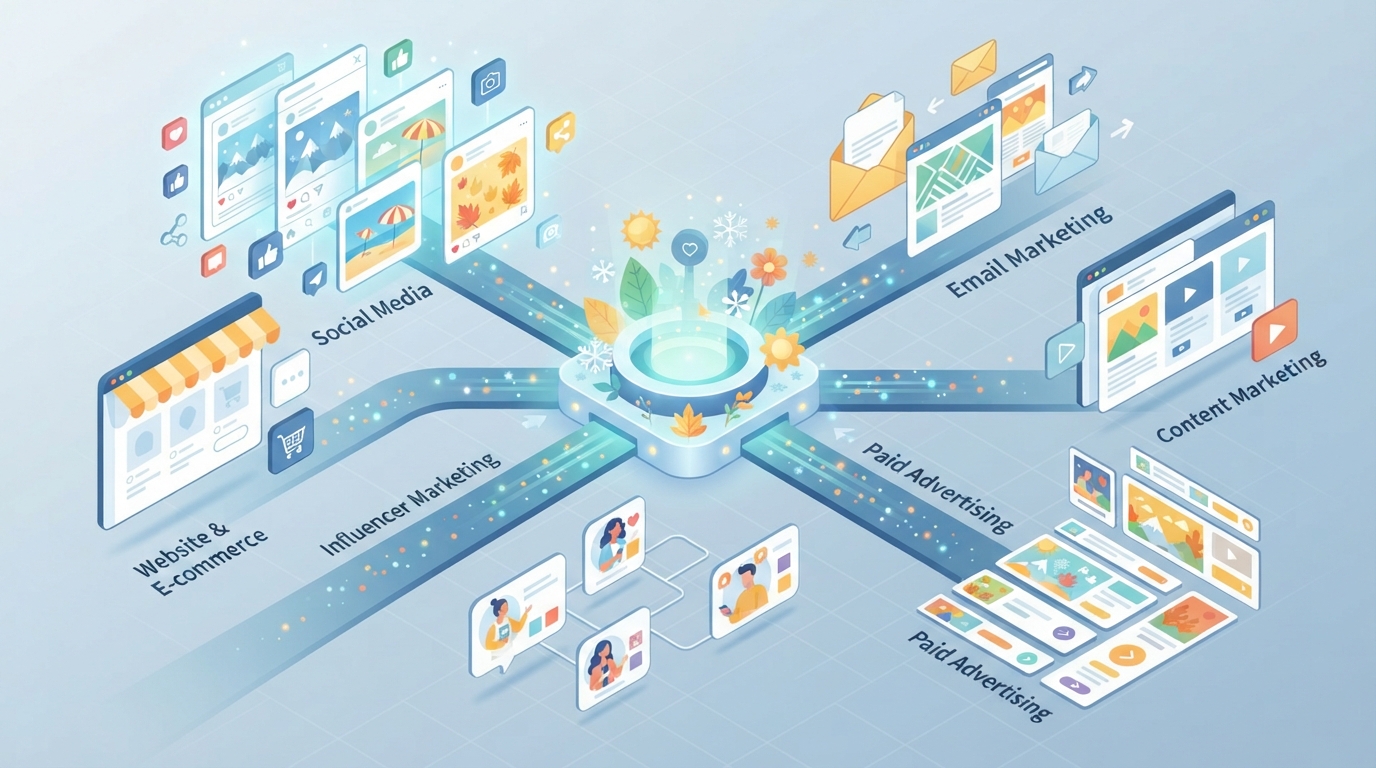
To maximize reach and conversion, businesses must deploy their Seasonal Marketing Strategies across a meticulously selected mix of digital and physical channels. Relying on a single platform creates dangerous vulnerabilities; an unexpected algorithm update or account suspension could instantly wipe out your entire holiday revenue. An omnichannel approach ensures that your brand message surrounds the consumer, creating multiple touchpoints that gently guide them toward a purchase. The most sophisticated Seasonal Marketing Strategies weave together organic search, paid advertising, social engagement, and direct communication to form a seamless customer experience.
Search Engine Optimization and Content Marketing
Organic search remains a dominant driver of high-converting traffic for well-executed Seasonal Marketing Strategies. Because SEO requires time to build authority, you must publish seasonal content months before the actual event. If you want to rank for “best Mother’s Day gifts,” publishing the article in early May guarantees failure. You must deploy advanced SEO tactics by publishing in February, building backlinks in March, and updating the timestamp in April. Integrating your Seasonal Marketing Strategies with your broader content marketing efforts allows you to capture consumers in the research phase. Create comprehensive gift guides, seasonal tutorials, and themed landing pages. Ensure your technical SEO is flawless so search engine crawlers quickly index your seasonal pages. Year after year, you can reuse the same URLs for these seasonal pages, continually building page authority and dominating search engine results pages.
Social Media and Influencer Partnerships
Social platforms provide the ideal environment for the visual and emotional elements of your Seasonal Marketing Strategies. Platforms like Instagram, TikTok, and Pinterest thrive on thematic, timely content. To execute effective Seasonal Marketing Strategies on social media, you must adapt your brand’s visual identity to match the season without losing your core aesthetics. Influencer partnerships drastically amplify this effort. Collaborating with creators allows you to tap into highly engaged, niche communities. When integrating influencers into your Seasonal Marketing Strategies, prioritize long-term relationships over one-off transactional posts. An influencer who genuinely uses your product year-round will deliver a much more authentic and high-converting seasonal message than someone who only mentions your brand during a Black Friday blitz.
Leveraging Email Marketing

Email remains the highest-converting digital channel, making it the crown jewel of your Seasonal Marketing Strategies. Your subscribers have already opted into hearing from you, meaning they represent a warm, receptive audience. To maximize this channel, you must utilize robust email marketing automation.
- Segment your subscriber list based on their past seasonal purchasing behaviors and engagement levels.
- Design automated sequences that build anticipation weeks before the seasonal sale officially begins.
- Implement aggressive, dynamically updating cart abandonment workflows specifically tailored for the seasonal event.
Sending generic blasts to your entire list severely limits the potential of your Seasonal Marketing Strategies. Instead, personalize the messaging. Offer VIP early access to your best customers, and send re-engagement discount codes to those who haven’t purchased since the previous holiday season.
Crafting Compelling Offers in Seasonal Marketing Strategies
Driving traffic to your website only represents half the battle; the offer itself determines whether those visitors actually convert. The most successful Seasonal Marketing Strategies revolve around offers that feel exclusive, valuable, and highly time-sensitive. Consumers are bombarded with generic “10% off” banners daily. To cut through the seasonal noise, your offer must command attention and provoke immediate action. Designing these offers requires a delicate balance between protecting your profit margins and delivering undeniable value to the consumer.
Strategic Discounts vs. Value-Adds
Many businesses default to heavy discounting when building their Seasonal Marketing Strategies, but slashing prices often damages brand perception and destroys profitability. Instead of joining a race to the bottom, intelligent brands incorporate value-adds into their Seasonal Marketing Strategies. A value-add might include a free gift with purchase, complimentary expedited shipping, or exclusive access to limited-edition packaging. These tactics increase the perceived value of the transaction without drastically cutting into your margins. When you do use discounts within your Seasonal
Marketing Strategies, tier them strategically to boost average order value. For example, offer a 15% discount on orders over $50, and a 25% discount on orders over $150. This structures your Seasonal Marketing Strategies to directly incentivize larger cart sizes, ultimately driving greater absolute revenue.
Creating Authentic Urgency and Scarcity
Urgency and scarcity are the twin engines that power high-converting Seasonal Marketing Strategies. However, consumers have grown highly skeptical of fake countdown timers and artificial inventory limits. To make your Seasonal Marketing Strategies effective, the urgency must be absolutely authentic. When the clock strikes midnight on the final day of the sale, the discount codes must genuinely expire. If consumers realize your sale always extends for “one more day,” you permanently destroy the urgency of all future Seasonal Marketing Strategies. Highlight authentic scarcity by displaying real-time inventory levels (“Only 4 items left in this color”). Pair this with strict shipping deadlines (“Order by Tuesday to guarantee delivery before Christmas”). This combination forces the consumer to make a purchasing decision immediately, dramatically reducing procrastination and cart abandonment.
Offer Structure Comparison Table
To better understand how to position your campaigns, review this structural comparison between seasonal and standard promotions.
| Feature |
Evergreen Marketing Offers |
Seasonal Marketing Strategies |
| Time Horizon |
Infinite, always available |
Strictly limited, expires on a specific date |
| Primary Driver |
Logic, consistent utility |
Emotion, urgency, specific cultural events |
| Offer Type |
Standard pricing, standard bundles |
Heavy discounts, limited-edition items, gifts |
| Audience Mindset |
Casual browsing, low immediate pressure |
High intent, highly motivated to buy now |
| Creative Tone |
Consistent, brand-standard imagery |
Thematic, festive, highly visual and dynamic |
Advanced Data Analysis for Seasonal Marketing Strategies
To continuously scale your revenue year after year, your Seasonal Marketing Strategies must be deeply rooted in data analytics. Operating on gut feeling inevitably leads to wasted budget and missed opportunities. By thoroughly analyzing consumer data, traffic patterns, and conversion metrics, you transition your Seasonal Marketing Strategies from reactive guesswork to proactive, highly predictable revenue generation systems. You must implement robust tracking infrastructure long before the seasonal rush begins, ensuring every click, add-to-cart, and purchase is perfectly attributed to the correct campaign source.
Utilizing Predictive Analytics
Forward-thinking enterprises integrate predictive analytics into their Seasonal Marketing Strategies to anticipate market demand before it materializes. By analyzing historical sales data, weather patterns, and macroeconomic indicators, sophisticated software can predict exactly which products will trend during upcoming seasons. This
data-driven decision making allows supply chain managers to optimize inventory levels perfectly, preventing both stockouts of popular items and overstocking of duds. Furthermore, predictive modeling enhances the targeting of your Seasonal Marketing Strategies. By identifying the behavioral patterns of your most profitable seasonal shoppers from last year, you can build hyper-accurate lookalike audiences on advertising platforms, ensuring your seasonal ad spend reaches users mathematically proven to have high purchase intent. Industry leaders frequently rely on advanced data frameworks, such as those detailed by platforms like
Google Analytics, to refine their targeting precision.
Post-Campaign Performance Reviews
The conclusion of a holiday sale does not mark the end of your Seasonal Marketing Strategies; it marks the beginning of the analysis phase. Conduct exhaustive post-mortem meetings with your entire marketing and sales team. Analyze which specific creatives drove the cheapest clicks, which email subject lines generated the highest open rates, and exactly where users dropped off in the checkout flow. Document these findings meticulously. These post-campaign reports become the foundational blueprints for next year’s Seasonal Marketing Strategies. Did your mobile site load too slowly during the traffic spike? Fix it now. Did a specific influencer drastically underperform? Remove them from future rosters. By rigorously institutionalizing this feedback loop, your Seasonal Marketing Strategies become exponentially more effective and efficient with every passing calendar year.
Common Mistakes to Avoid in Seasonal Marketing Strategies
Even experienced marketers frequently stumble when executing high-pressure seasonal campaigns. Because the window for success is so narrow, a single critical error can sabotage months of meticulous planning. Recognizing and avoiding these widespread pitfalls is essential for safeguarding your revenue targets. By auditing your Seasonal Marketing Strategies against these common failures, you build highly resilient, robust marketing ecosystems capable of withstanding unexpected market turbulence.
Launching Campaigns Too Late
The most prevalent and destructive mistake businesses make with their Seasonal Marketing Strategies is waiting too long to launch. If you launch your Black Friday ads on the Wednesday before Thanksgiving, you have already lost. The market is entirely saturated, ad costs have peaked, and consumers have already allocated their budgets to brands that engaged them weeks prior. Effective Seasonal Marketing Strategies require an extended runway. You must begin planting seeds, building awareness, and capturing email addresses weeks or even months before the peak buying days. Early engagement guarantees lower customer acquisition costs and ensures your brand occupies top-of-mind awareness when the consumer is finally ready to swipe their credit card.
Ignoring Mobile Optimization
Another fatal error within Seasonal Marketing Strategies involves neglecting the mobile shopping experience. Over half of all seasonal e-commerce traffic originates from mobile devices. If your themed landing pages feature massive, unoptimized images, tiny unclickable buttons, or complex, multi-page checkout processes, mobile users will bounce instantly. Your Seasonal Marketing Strategies must adopt a mobile-first design philosophy. Test your seasonal pop-ups, countdown timers, and discount code fields strictly on mobile devices before launching. A frictionless mobile experience is absolutely mandatory for capitalizing on impulse buys driven by seasonal urgency.
Failing at Post-Season Retention
Many companies view seasonal shoppers as single-transaction entities, entirely ignoring the post-purchase relationship. This is a massive waste of acquisition budget. The ultimate goal of your Seasonal Marketing Strategies should be acquiring new buyers and immediately funneling them into robust brand loyalty programs. Implement automated post-purchase email flows that thank them for their holiday order, provide helpful product usage tips, and offer a specialized discount for their second purchase. By converting one-time seasonal deal-hunters into lifelong brand advocates, you drastically maximize the true return on investment of your Seasonal Marketing Strategies.
Expert Insights and Pro Tips for Ongoing Success
To elevate your Seasonal Marketing Strategies from good to exceptional, you must study the subtle tactics employed by top-tier marketing agencies. These nuanced approaches often require a deeper understanding of brand positioning and technical execution, but they yield significantly higher conversion rates and brand affinity.
Implementing Dynamic Website Personalization
Leading brands enhance their Seasonal Marketing Strategies by deploying dynamic website personalization. Instead of showing the same generic homepage to every visitor, the website adapts based on the user’s referral source, geographic location, or past browsing history. If a user clicks an ad for “Winter Running Gear,” the landing page should dynamically display snow-themed imagery and prioritize thermal apparel. This level of granular personalization makes your Seasonal Marketing Strategies feel bespoke and highly relevant to the individual shopper, drastically reducing bounce rates and accelerating the path to purchase.
Leveraging User-Generated Content
Integrating User-Generated Content (UGC) is a highly effective, low-cost method for boosting the credibility of your Seasonal Marketing Strategies. Consumers trust other consumers far more than they trust polished brand advertisements. Encourage your existing customers to post photos of themselves using your products during seasonal events, utilizing a specific branded hashtag. Curate the best UGC and feature it prominently in your seasonal emails, paid social ads, and product pages. This social proof acts as a powerful conversion catalyst, providing authentic validation that elevates the overall impact of your Seasonal Marketing Strategies. Furthermore, prioritizing conversion rate optimization on pages displaying this UGC ensures that the trust generated directly translates into measurable sales.
The Power of Micro-Seasons and Niche Events
While massive holidays like Christmas and Black Friday dominate the conversation, expert marketers utilize micro-seasons to fuel their Seasonal Marketing Strategies year-round. Events like National Pet Day, the Super Bowl, the first day of Summer, or even localized festivals present massive opportunities for highly targeted campaigns. Because the competition is significantly lower during these micro-seasons, ad costs are cheaper, and consumer attention is easier to capture. By plotting out a dozen smaller Seasonal Marketing Strategies throughout the year, businesses maintain a steady, highly profitable revenue cadence that prevents the massive cash flow dips traditionally associated with slow retail months.
Structuring the Ultimate Seasonal Action Plan
Bringing all these elements together requires a disciplined, highly structured action plan. You must synthesize the psychological triggers, the channel tactics, the offer strategies, and the data analytics into a cohesive operational roadmap. Start by auditing last year’s performance to establish your baseline metrics. Next, finalize your promotional calendar, ensuring every major and micro-season is accounted for. Develop your creative assets well in advance, focusing on thematic relevance and emotional resonance. Structure your offers to prioritize value and authentic urgency over margin-destroying discounts. Finally, deploy your Seasonal Marketing Strategies across a meticulously tracked omnichannel network, remaining agile enough to scale winning ads and kill underperforming assets in real-time. By adhering strictly to this blueprint, your business will transform unpredictable calendar changes into a highly systematized engine for predictable, explosive growth.
Conclusion
Implementing robust Seasonal Marketing Strategies transforms predictable calendar events into massive, reliable revenue drivers. By planning early, analyzing behavioral data, and delivering targeted value, businesses create lasting customer relationships that survive well beyond the holidays. Start optimizing your upcoming campaigns today, leverage these advanced frameworks, and confidently watch your seasonal profitability soar beyond all expectations.
1. What are the most effective Seasonal Marketing Strategies for small businesses?
Small businesses should focus on highly targeted, localized Seasonal Marketing Strategies rather than trying to outspend massive corporations. Leveraging organic social media, engaging in local community events, and utilizing highly segmented email marketing to existing customers yield the best return on investment. Small businesses should also focus on exceptional, personalized customer service during seasonal rushes, as this creates a memorable experience that larger competitors cannot easily replicate. Highlighting limited-quantity, artisan, or bespoke seasonal products also builds strong urgency and exclusivity.
2. How far in advance should I start planning my Seasonal Marketing Strategies?
You should begin planning major Seasonal Marketing Strategies, such as Black Friday or the winter holidays, at least three to four months in advance. This extended timeline allows for proper market research, graphic design, copywriting, inventory procurement, and the deployment of early SEO content. For smaller micro-seasons, a four-to-six-week planning window is generally sufficient. Launching planning phases early ensures cheaper ad rates and eliminates the chaotic, error-prone rushing that destroys last-minute campaigns.
3. How do Seasonal Marketing Strategies impact search engine optimization?
When executed properly, Seasonal Marketing Strategies massively boost SEO by capturing high-volume, event-specific search traffic. To capitalize on this, you must create dedicated seasonal landing pages (e.g., /mothers-day-gifts) and keep the URL the same every year, merely updating the content. This allows the page to build authoritative backlinks and historical trust over time. Publishing SEO content months in advance gives search engines adequate time to crawl, index, and rank your pages before the seasonal search volume spikes.
4. Can B2B companies successfully use Seasonal Marketing Strategies?
Absolutely. While B2B Seasonal Marketing Strategies look different from B2C retail campaigns, they are highly effective. B2B companies can leverage the end of the fiscal year by encouraging clients to utilize remaining budget surpluses. They can run “New Year, New Tech” campaigns in January to align with annual corporate goal-setting. Additionally, seasonal periods provide excellent opportunities for B2B relationship building through personalized corporate gifting, client appreciation events, and targeted educational webinars.
5. What metrics should I track to measure the success of my Seasonal Marketing Strategies?
To accurately evaluate your Seasonal Marketing Strategies, track metrics across the entire funnel. Key performance indicators include Return on Ad Spend (ROAS), Customer Acquisition Cost (CAC), overall conversion rate, and Average Order Value (AOV). Additionally, monitor email open and click-through rates for seasonal broadcasts, and track the shopping cart abandonment rate specifically during the promotion period. Post-season, heavily track the retention rate and lifetime value of the customers acquired during the seasonal push.
6. How do I prevent my Seasonal Marketing Strategies from hurting my profit margins?
To protect your margins within your Seasonal Marketing Strategies, avoid blanket site-wide discounts. Instead, use strategic bundling to increase average order value (e.g., “Buy 2, Get 1 Free”). Implement threshold offers like free shipping only on orders over a specific dollar amount. You can also offer non-monetary value-adds, such as exclusive packaging, faster shipping, or a free low-cost accessory. These tactics make the offer highly appealing without severely degrading your fundamental profit margins.
7. Should I change my brand’s visual identity for Seasonal Marketing Strategies?
You should temporarily adapt your visual identity to align with your Seasonal Marketing Strategies, but never at the expense of your core brand recognition. You can incorporate seasonal colors, festive typography, or thematic imagery into your social media profiles, website banners, and email templates. However, your logo, brand voice, and core aesthetic principles must remain instantly recognizable. The goal is to dress your brand for the season, not to disguise it completely.
8. How can I keep the momentum going after my Seasonal Marketing Strategies end?
The key to maintaining momentum post-campaign is executing strong retention workflows. Immediately after the seasonal event ends, transition those newly acquired buyers into automated welcome and onboarding email sequences. Offer them a special “welcome to the family” discount for their next purchase to encourage repeat buying. Additionally, launch a “New Year, New Goals” or similar follow-up campaign that smoothly transitions the seasonal shopper back into your standard, evergreen marketing funnel.
9. What is the biggest mistake businesses make with their Seasonal Marketing Strategies?
The single biggest mistake is operating reactively rather than proactively. Launching a holiday sale just days before the event guarantees that you will pay the highest possible prices for advertising while reaching a consumer base that has largely already finished their shopping. Poor planning also leads to inventory stockouts, broken website infrastructure, and overwhelmed customer support teams. Successful Seasonal Marketing Strategies are defined by months of meticulous, proactive preparation.
10. How do I stand out when competitors are also running aggressive Seasonal Marketing Strategies?
To cut through seasonal saturation, your Seasonal Marketing Strategies must focus on unique value propositions rather than just price wars. Focus heavily on emotional storytelling, exceptional unboxing experiences, and frictionless customer service. Leverage user-generated content to build authentic trust. Additionally, try targeting slightly earlier or slightly later than competitors; running a “Black Friday Early Access” for VIP email subscribers in early November often captures consumer budgets before competitors even launch their main campaigns.
To maximize your return on ad spend, do not spend your entire budget on the peak day of the holiday. Effective Seasonal Marketing Strategies involve a three-phase budgeting approach: allocate 20% to early awareness and lead generation a month prior, 60% to aggressive conversion campaigns during the peak shopping window, and reserve 20% for aggressive retargeting of cart abandoners immediately after the event ends.
Batch-and-blast emails drastically reduce deliverability and conversions. Advanced Seasonal Marketing Strategies rely on granular segmentation. Create specific segments for past seasonal buyers, high-lifetime-value VIPs, and bargain hunters who only buy during sales. Send your VIPs early access or exclusive bundles, while sending higher discount thresholds strictly to the bargain hunters to reactivate them without cannibalizing full-price sales.
The post-holiday slump is avoidable if your Seasonal Marketing Strategies extend beyond the main event. Implement “bounce-back” campaigns by including a time-sensitive discount code (e.g., valid only in January) inside holiday packages. Additionally, launch campaigns specifically targeting gift card recipients and consumers looking to purchase the items they didn’t receive as gifts, effectively smoothing out your Q1 revenue curve.
Consumers rarely purchase after a single touchpoint. The most resilient Seasonal Marketing Strategies create a unified experience across email, SMS, organic social, and paid search. If a user clicks an Instagram ad for a holiday bundle, they should subsequently receive a retargeting email and see a cohesive banner on your website. This omnichannel presence builds trust, reinforces urgency, and prevents competitors from stealing your leads across different platforms.
Targeting Gen Z requires Seasonal Marketing Strategies heavily focused on authenticity, social commerce, and User-Generated Content (UGC) on platforms like TikTok and Instagram Reels. They respond to micro-influencers and immediate trends. In contrast, older demographics often convert better through detailed email newsletters, Facebook retargeting, and clear, value-driven search engine ads. Tailoring your channel and creative tone to the specific generation is essential for maximizing seasonal conversions.