



Black Friday Marketing helps retailers compete through customer trust, product value, convenient shopping, relevant experiences, and retention strategies rather than relying entirely on aggressive discounts.
Black Friday has become one of the most competitive shopping periods of the year. Businesses across e-commerce, retail, technology, fashion, electronics, beauty, and consumer services compete for customer attention through limited-time offers, promotional campaigns, product bundles, and special shopping experiences.
For many retailers, the immediate response is to reduce prices. They introduce percentage discounts, advertise promotional codes, and use countdown timers to encourage customers to purchase quickly. Although these techniques can generate short-term sales, they do not necessarily create profitable growth or lasting customer relationships.
The challenge is that consumers have become more selective. They compare prices, investigate product quality, read customer experiences, evaluate delivery conditions, and consider whether a promotional offer genuinely provides value. A business that competes exclusively through lower prices may attract temporary buyers without giving them a compelling reason to return.
This is where Black Friday Marketing requires a broader strategic approach.
Instead of treating Black Friday as a single discount event, businesses should use it as an opportunity to demonstrate product value, improve customer relationships, strengthen brand positioning, and create a better purchasing experience. Discounts can remain part of the strategy, but they should support a larger commercial objective rather than become the entire reason customers purchase.
Consider two online retailers selling similar products. The first advertises a large discount but provides limited product information, unclear delivery conditions, and little customer support. The second offers competitive pricing alongside useful product comparisons, verified customer experiences, convenient delivery, and transparent return policies. Even when the second retailer does not offer the lowest price, customers may prefer purchasing from a business they trust.
A successful Black Friday Marketing strategy focuses on understanding these purchasing decisions.
This guide explains how businesses can attract buyers beyond discounts, develop compelling offers, improve product presentation, use AI and personalization, coordinate marketing channels, build trust, and measure campaign profitability throughout the shopping season.
Understanding Black Friday Marketing Beyond Traditional Discounts
Black Friday Marketing refers to the coordinated promotional activities businesses use around the Black Friday shopping period to attract customers, generate demand, increase sales, and strengthen commercial relationships.
Traditional campaigns often focus on price reductions. Modern campaigns can combine discounts with product education, exclusive experiences, customer reviews, loyalty benefits, convenient purchasing options, and personalized recommendations.
The objective is to create a reason for customers to choose a particular business instead of automatically selecting whichever competitor advertises the lowest price.
Why Discount-Only Campaigns Are Becoming Less Effective
Discounts can influence purchasing behavior, but relying exclusively on them creates several problems.
Customers may begin evaluating the business primarily through price. When competitors introduce larger reductions, the original retailer can lose attention.
Heavy discounts can also reduce profit margins, make regular prices appear less attractive, and encourage customers to postpone purchases until the next promotional event.
Another problem is attracting customers who have little interest in the product beyond the temporary saving.
A more balanced Black Friday Marketing strategy communicates why the product deserves consideration even after the promotional price disappears.
The Difference Between Sales Volume and Profitable Growth
High sales volume does not automatically indicate a successful campaign.
A retailer might generate substantial revenue during Black Friday while spending heavily on advertising, offering excessive discounts, and absorbing additional fulfillment costs.
Consider this simplified example:
| Performance metric | Campaign A | Campaign B |
|---|---|---|
| Orders | 1,000 | 750 |
| Average order value | $50 | $75 |
| Revenue | $50,000 | $56,250 |
| Gross margin before marketing | 35% | 45% |
| Gross profit | $17,500 | $25,312.50 |
Campaign B generates fewer orders but produces higher revenue and gross profit.
This demonstrates why Black Friday Marketing should evaluate commercial value rather than focusing exclusively on the number of transactions.
Why Customer Experience Matters
A successful purchase involves more than finding an attractive price.
Customers want to understand what they are buying, know whether the product meets their requirements, complete checkout easily, and receive the order as expected.
Confusing product information, unexpected delivery charges, limited payment options, and complicated returns can discourage purchases.
A modern Black Friday Marketing strategy therefore considers every stage of the customer journey, from initial product discovery to post-purchase support.
Understanding the Psychology Behind Black Friday Purchases
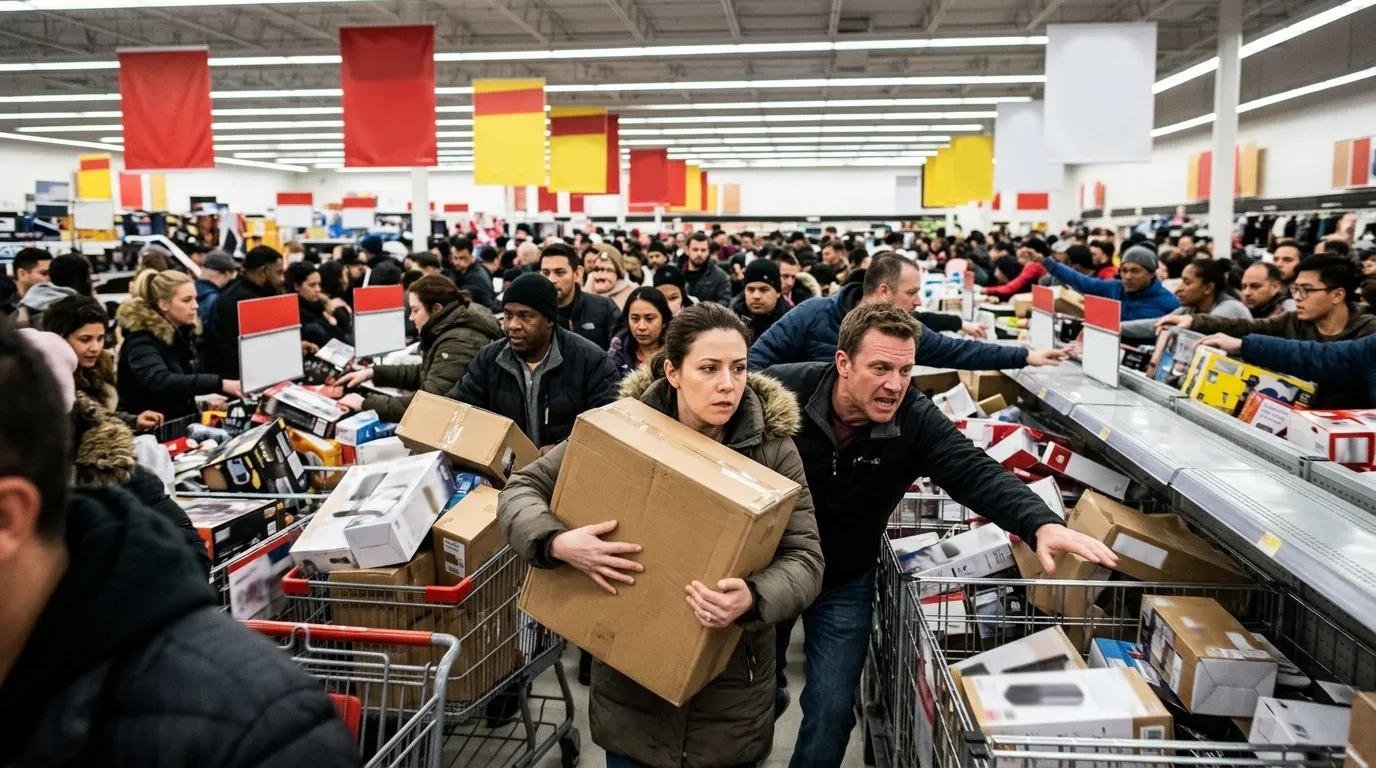

Customers do not make purchasing decisions based on price alone. Emotions, perceived value, convenience, confidence, and personal priorities influence how they evaluate offers.
Understanding these motivations helps businesses develop campaigns that feel relevant instead of relying on aggressive promotional messaging.
Perceived Value Influences Purchasing Decisions
Perceived value describes how customers evaluate the benefits of a product compared with its total cost.
A product may be more expensive than a competing alternative but still appear more attractive because it offers better quality, reliability, customer support, durability, or convenience.
For example, someone purchasing a laptop may consider warranty coverage, performance, battery life, technical support, and software compatibility.
A Black Friday Marketing campaign that communicates these benefits can influence purchasing decisions without depending entirely on the size of the discount.
Convenience Can Be More Important Than a Lower Price
Customers often prefer purchasing from businesses that simplify the buying process.
Convenient checkout, clear product availability, reliable delivery, flexible collection options, and accessible customer support can influence the final decision.
For busy shoppers, reducing the effort required to complete a purchase may provide meaningful value.
Retailers should therefore consider whether their promotional experience saves customers time and removes unnecessary friction.
This is particularly important for Black Friday Marketing campaigns because customers frequently compare multiple retailers during a short shopping period.
Trust Reduces Purchase Uncertainty
People are naturally cautious when spending money, especially when buying from unfamiliar brands.
They may question product quality, seller credibility, delivery reliability, or refund procedures.
Providing verified reviews, realistic product demonstrations, transparent terms, and clear support information can reduce these concerns.
A strong Black Friday Marketing campaign creates confidence before asking customers to purchase.
Social Proof Encourages Buyer Confidence
Social proof refers to the influence of other people’s experiences and opinions.
Customers may feel more comfortable purchasing a product after seeing genuine feedback from previous buyers.
This is particularly important for products that require evaluation, such as electronics, beauty products, fitness equipment, and household technology.
Businesses can use verified reviews, customer photographs, demonstrations, and detailed testimonials to help potential buyers understand what they can realistically expect.
Scarcity and Urgency Should Be Genuine
Limited availability and time-sensitive offers can encourage customers to make decisions.
However, artificial urgency can damage trust.
A countdown timer that repeatedly resets or a stock message that does not reflect actual inventory creates misleading expectations.
An effective Black Friday Marketing campaign uses urgency only when the offer genuinely has a defined end date or the product has limited availability.
Customers should be encouraged to make informed decisions rather than pressured through deceptive tactics.
Building a Strong Value Proposition Without Depending on Discounts
The most important step toward competing beyond price is developing a compelling value proposition.
Your offer should explain why customers should choose your product and what makes purchasing from your business worthwhile.
Identify the Product’s Strongest Benefits
Start by identifying the benefits that matter most to potential customers.
These may include higher product durability, better performance, easier installation, convenient maintenance, improved compatibility, better customer assistance, comprehensive warranty coverage, and greater long-term savings.
Do not assume that customers understand these benefits automatically.
Explain how each feature improves their experience.
For example, a retailer selling a premium kitchen appliance might communicate energy efficiency, long-term reliability, maintenance support, and practical everyday convenience.
This creates a more substantial purchasing argument than simply advertising a percentage reduction.
Develop a Clear Differentiation Strategy
Customers can compare competing products quickly.
If several retailers offer similar prices and product specifications, the shopping experience may become the deciding factor.
Identify what separates your business from competitors.
| Differentiation factor | Potential customer benefit |
|---|---|
| Extended warranty | Greater purchase confidence |
| Expert product advice | Easier decision-making |
| Faster delivery | Better convenience |
| Installation assistance | Reduced setup effort |
| Exclusive product bundles | More complete solutions |
| Flexible returns | Lower purchase uncertainty |
| Dedicated support | Better after-sales experience |
A well-developed Black Friday Marketing strategy highlights differences that customers genuinely value.
Communicate Long-Term Value
Sometimes a product’s greatest benefit becomes visible over time.
For example, a more durable appliance may cost more initially but require fewer replacements. A premium software subscription may save employees several hours each week.
Help customers understand the relationship between initial price and long-term value.
Use realistic comparisons and avoid unsupported savings claims.
Creating Attractive Black Friday Offers Beyond Percentage Discounts
A discount is only one possible component of a promotional offer.
Businesses can develop different offer structures to increase perceived value while protecting profitability.
Product Bundles
Product bundles combine complementary products into one purchasing package.
For example, a photography retailer might offer a camera, compatible lens, memory card, and protective case together.
A skincare retailer might combine cleanser, moisturizer, and sunscreen into a practical routine.
Bundles make shopping easier and can increase average order value.
However, products should be genuinely complementary. Combining unrelated products simply to increase transaction value can make an offer less appealing.
A Black Friday Marketing strategy should use bundles to solve a customer need rather than simply add items to a shopping basket.
Free Gifts With Purchase
A complimentary product can increase perceived value without reducing the main product’s advertised price.
Examples include free accessories, complimentary samples, extended trial access, educational resources, product maintenance kits, and additional subscription features.
The additional item should be useful and clearly described.
Businesses should also calculate its actual cost and contribution to the overall offer.
Loyalty-Based Benefits
Existing customers may appreciate exclusive benefits during promotional periods.
These could include early shopping access, complimentary delivery, priority customer support, additional loyalty points, or selected product availability.
Such benefits can encourage customer retention without requiring the business to reduce prices for every transaction.
Service-Based Offers
Service businesses can compete through additional value rather than traditional discounts.
A company providing accounting software might include an onboarding session. A technology retailer could offer installation support. A marketing agency could provide an introductory audit with selected services.
These benefits address customer concerns and strengthen the overall offer.
Flexible Payment and Purchasing Options
Flexible payment arrangements can help customers manage higher-value purchases.
Depending on the business model and applicable regulations, retailers may offer installment options, business purchasing terms, or multiple payment methods.
However, explain associated costs and conditions clearly.
A convenient payment experience can support conversion without relying entirely on promotional price reductions.
Audience Segmentation for More Effective Black Friday Campaigns
A campaign becomes more relevant when different customer groups receive messages that reflect their purchasing motivations.
Sending identical promotional content to every customer often ignores differences in product interests, budgets, buying readiness, and previous experiences.
Segment New and Existing Customers
New visitors may require more product education and trust-building information.
Existing customers may already understand the brand and need information about relevant new products or additional benefits.
A useful segmentation structure includes:
| Audience | Main requirement | Suitable campaign approach |
|---|---|---|
| New visitors | Product understanding | Education and social proof |
| Existing customers | Relevant offers | Personalized recommendations |
| Previous buyers | Complementary products | Cross-selling |
| High-value customers | Recognition | Exclusive access and service |
| Inactive subscribers | Renewed interest | Relevant product updates |
| Cart abandoners | Purchase reassurance | Clear product and delivery information |
A targeted Black Friday Marketing strategy considers these differences when creating campaign messages.
Segment by Product Interest
Customer interests can help businesses organize relevant product recommendations.
For example, an electronics retailer may separate subscribers interested in smartphones, computers, gaming equipment, audio devices, smart home products, and accessories.
Each group can receive information about relevant products instead of being overwhelmed with unrelated promotions.
Use declared preferences and appropriately collected customer information rather than assuming every interaction allows unrestricted profiling.
Segment by Purchasing Behavior
Businesses can also distinguish between new buyers, repeat buyers, high-value customers, and customers who have not purchased recently.
These groups may respond differently to promotional messages.
For example, a repeat customer may be interested in a complementary product, while a first-time visitor may need stronger evidence about product quality and seller credibility.
Segmentation makes Black Friday Marketing more efficient by aligning promotional communication with customer needs.
Creating a Campaign That Starts Before Black Friday
One of the biggest planning mistakes is beginning promotional activity only when Black Friday arrives.
Customers often research products, compare alternatives, and prepare shopping lists before the event.
Businesses should therefore develop a structured campaign that introduces relevant products and builds interest in advance.
Build Awareness Early
Publish educational content, product demonstrations, buying guides, and promotional announcements before the main shopping period.
Help customers discover products they may want to purchase.
For example, an electronics retailer can publish a comparison guide explaining which laptop specifications matter for students, professionals, and creative users.
This information helps potential customers evaluate their requirements before promotional offers become available.
Create an Early Access Experience
Early shopping access can be a useful benefit for loyal customers and registered subscribers.
Instead of promising only a lower price, businesses can provide earlier access to selected products, priority access to limited inventory, personalized product recommendations, early product demonstrations, and exclusive shopping information.
A Black Friday Marketing strategy can use these benefits to recognize existing relationships and create a reason for customers to remain subscribed.
Build an Email Subscriber Audience
Email subscribers provide an important communication channel during promotional periods.
Businesses can share relevant product information, launch announcements, buying guides, and shopping updates with people who have agreed to receive those communications.
Keep subscription promises clear and respect communication preferences.
Avoid sending repetitive promotional messages simply because Black Friday is approaching.
Use Content Marketing to Educate Buyers
Useful articles and comparison resources can attract shoppers who are still evaluating their options.
A retailer selling home appliances might publish energy-efficient appliance buying guides, product maintenance recommendations, feature comparisons, size and compatibility explanations, and warranty considerations.
These resources can attract qualified visitors through search engines and support future purchasing decisions.
Businesses planning seasonal activity can also connect their Black Friday Marketing approach with a broader Holiday Marketing strategy, allowing promotional messages to remain consistent throughout the wider shopping season rather than focusing on one isolated day.
Using AI and Personalization to Improve Shopping Experiences
Artificial intelligence is increasingly influencing how customers discover products, compare alternatives, and evaluate purchasing decisions.
Retailers can use relevant AI capabilities to make shopping more convenient without assuming that every customer wants the same experience.
AI-Powered Product Recommendations
Recommendation systems can identify relationships between products and display relevant complementary items.
For example, a customer viewing a gaming laptop might see compatible accessories, a cooling stand, or a suitable monitor.
Recommendations can be based on product attributes, customer-selected preferences, and appropriately processed transaction information.
The purpose should be to make product discovery easier rather than overwhelm shoppers with endless suggestions.
Personalized Shopping Assistance
AI-powered assistants can help customers find suitable products by answering questions about specifications, compatibility, availability, and product features.
For example, someone shopping for headphones might ask which model is suitable for travel or professional audio use.
A useful assistant can explain relevant differences and direct the customer toward appropriate product information.
However, generated answers should remain accurate and consistent with actual product specifications.
AI-Assisted Shopping Journeys
Modern shoppers may use search engines, AI assistants, social platforms, and retailer websites while researching products.
This makes complete and accurate product information increasingly important.
A retailer should maintain consistent product titles, descriptions, specifications, pricing, availability, shipping information, and return conditions.
Businesses can explore AI Holiday Shopping to understand how AI-assisted product discovery influences customer expectations and how clear product information supports visibility across different shopping experiences.
Use AI Without Losing Human Trust
AI should improve customer assistance rather than create unnecessary barriers.
Businesses should avoid presenting generated recommendations as verified product testing or inventing product benefits.
Make it possible for shoppers to access accurate specifications and human support when needed.
A strong Black Friday Marketing strategy uses automation where it improves convenience while preserving transparency and accountability.
Building Customer Trust Through Reviews and Authentic Experiences
During competitive shopping periods, customers may encounter hundreds of promotional messages.
They need reliable information to distinguish attractive offers from products that genuinely meet their requirements.
Social proof can help reduce purchasing uncertainty.
Display Genuine Customer Reviews
Verified reviews provide insight into how actual customers experience a product.
Useful review information may include product quality, ease of use, performance, durability, delivery experience, packaging, customer service, and value for money.
Place relevant reviews near product descriptions and purchasing information.
Do not rely exclusively on five-star ratings. Honest feedback, including constructive criticism, can create a more credible picture of the product.
A structured Customer Review Marketing approach helps businesses turn authentic customer experiences into useful purchasing information while maintaining transparency around review collection and presentation.
Use Customer Questions to Improve Product Pages
Questions frequently reveal the information missing from product descriptions.
If customers repeatedly ask about compatibility, sizing, delivery, or warranty coverage, address those subjects directly on the product page.
This reduces unnecessary uncertainty and helps future shoppers make more informed decisions.
Develop User-Generated Content Campaigns
User-generated content provides a different type of social proof.
Customers may share photos, product demonstrations, unboxing experiences, or practical usage tips.
With appropriate permission, businesses can feature genuine customer-created material across their product pages and promotional channels.
Well-developed UGC Ads can show how products fit into everyday situations, helping potential buyers understand their practical value beyond polished advertising images.
Be transparent about paid creator partnerships and avoid presenting sponsored material as an independent customer recommendation.
Improving the Website Experience During Black Friday
Promotional traffic has limited commercial value when customers cannot complete purchases easily.
Website performance, navigation, product presentation, and checkout experience all influence campaign results.
Optimize Mobile Shopping
Many shoppers browse products using smartphones.
A mobile-friendly website should provide responsive product images, readable descriptions, clear pricing, visible purchase buttons, simple navigation, accessible payment options, convenient form completion, and fast page loading.
Test important purchasing journeys on different screen sizes before the promotional period begins.
Improve Product Page Quality
Every important product page should explain what the customer is purchasing.
Include clear specifications, benefit-focused descriptions, accurate images, stock availability, delivery information, and relevant reviews.
Customers should not need to contact support simply to understand basic product details.
Simplify Checkout
Long checkout forms can create unnecessary friction.
Allow guest checkout where appropriate, avoid requesting irrelevant information, and display the complete purchase cost before payment.
Include delivery charges, applicable taxes, and relevant conditions clearly.
A Black Friday Marketing campaign should make completing a purchase as straightforward as discovering the product.
Prepare for High Traffic
Promotional activity can create sudden increases in website visits.
Review hosting resources, page performance, payment infrastructure, product inventory integrations, and error monitoring.
Run appropriate technical tests before the main event.
A campaign that attracts substantial interest but cannot handle website traffic can lose sales and damage customer confidence.
Shipping, Returns, and Customer Support as Competitive Advantages

Price comparisons often dominate promotional messaging, but the complete purchasing experience can become a stronger differentiator.
Customers may choose one retailer over another because of delivery reliability, collection options, transparent return conditions, and convenient support.
Make Delivery Conditions Clear
Explain estimated delivery periods, shipping charges, available delivery locations, collection options, order tracking procedures, and potential delivery restrictions.
Avoid promising delivery times that operational systems cannot support.
Offer Convenient Fulfillment Options
Depending on business capabilities, options may include standard shipping, express delivery, click-and-collect, local delivery, or scheduled collection.
Different customers value different levels of convenience.
A retailer should identify which options are operationally realistic and communicate them clearly.
Develop an Accessible Returns Process
Customers want to understand what happens if a product does not meet expectations.
Display return eligibility, timelines, refund conditions, and contact procedures clearly.
A fair and understandable policy can reduce purchasing hesitation.
Prepare Customer Support Resources
Black Friday can generate additional enquiries about products, payment issues, and delivery arrangements.
Provide accessible FAQs, order information, support channels, and trained customer service staff.
Research published by DHL’s 2026 Black Friday trend report highlights the importance of delivery and return options, reporting that one in three Black Friday shoppers surveyed was most likely to abandon at the shipping-options stage.
This reinforces the importance of treating fulfillment as part of the marketing experience rather than an operational detail that can be addressed later.
Loyalty Marketing: Turning Black Friday Buyers Into Repeat Customers
A business should not measure Black Friday success only by the sales generated during the promotional period.
The event can also introduce new customers who may become valuable long-term buyers.
Reward Existing Customers
Loyal customers should feel recognized rather than treated exactly like first-time visitors.
Businesses can offer early access, relevant product recommendations, exclusive service benefits, or loyalty program advantages.
These approaches can improve retention while protecting pricing consistency.
Develop Post-Purchase Communication
After someone places an order, communicate important information about their purchase.
Depending on the product, this may include order confirmation, delivery updates, setup instructions, product maintenance guidance, usage recommendations, and customer support information.
Useful communication can improve the customer’s experience and reduce avoidable support requests.
Encourage Repeat Purchases
Once customers have received their products, businesses can introduce relevant accessories, complementary products, or replenishment options.
These offers should reflect actual product compatibility and customer needs.
Avoid sending unrelated promotional messages simply because someone completed a Black Friday transaction.
Build Long-Term Customer Relationships
A Black Friday Marketing strategy becomes more valuable when it creates relationships that continue beyond the shopping event.
Collect genuine feedback, understand customer satisfaction, improve product quality, and maintain communication according to individual preferences.
The objective is to make the next purchase easier and more relevant than the first.
Creating an Effective Black Friday Campaign Timeline
A structured timeline helps businesses organize marketing, inventory, creative production, and customer communication.
Although campaign durations vary, planning should begin well before the event.
Four to Six Weeks Before Black Friday
Focus on preparation and awareness.
Activities may include reviewing historical campaign performance, identifying profitable product categories, evaluating inventory and supplier capacity, researching competitors, establishing campaign objectives, producing promotional content, preparing landing pages, segmenting email audiences, and planning customer support resources.
This stage provides the foundation for a well-coordinated Black Friday Marketing campaign.
Two to Three Weeks Before Black Friday
Begin building stronger interest.
Publish product guides, introduce promotional categories, prepare early-access communications, and share useful product information.
Review website performance and test major purchase journeys.
One Week Before Black Friday
Communicate important offer information.
Explain which products will be included, when the promotion begins, how customers can access it, and which purchasing conditions apply.
Check inventory, payment processing, website capacity, and campaign tracking.
Black Friday Weekend
Coordinate promotional communication across relevant channels.
Monitor website performance, product availability, advertising spending, sales volume, average order value, conversion rates, customer enquiries, and delivery expectations.
Adjust campaigns according to genuine commercial performance.
After Black Friday
Review results, fulfill orders, communicate with customers, and identify opportunities for post-event sales.
Do not immediately stop communicating with customers who showed interest but did not purchase.
Provide relevant product information and continue the wider seasonal strategy where appropriate.
Measuring Black Friday Marketing Performance
Campaign reporting should focus on measurable business outcomes.
A large number of impressions or website visits may look impressive, but they do not necessarily translate into profitable sales.
Track Important Marketing Metrics
| Metric | What it measures | Why it matters |
|---|---|---|
| Reach | Number of people exposed to campaigns | Measures awareness |
| Website traffic | Number of visits | Evaluates demand generation |
| CTR | Clicks relative to impressions | Measures advertising engagement |
| Conversion rate | Purchases relative to visits | Evaluates sales effectiveness |
| Average order value | Average transaction amount | Measures basket value |
| CAC | Customer acquisition cost | Evaluates acquisition efficiency |
| ROAS | Revenue relative to advertising spend | Measures advertising returns |
| Gross margin | Revenue remaining after direct product costs | Evaluates profitability |
| Return rate | Purchases subsequently returned | Identifies product or expectation issues |
| Repeat purchase rate | Customers buying again | Measures retention |
Evaluate New and Returning Customers Separately
New customers and returning customers may have different acquisition costs and profitability profiles.
Measure how much revenue comes from first-time buyers compared with existing customers.
Also examine whether new customers make additional purchases after Black Friday.
This makes Black Friday Marketing more useful as a long-term customer acquisition strategy.
Avoiding Black Friday Marketing Mistakes
Successful promotional campaigns require clear planning and honest communication.
Several common mistakes can undermine campaign results.
Depending Entirely on Discounts
Excessive price reductions can damage margins and weaken perceived product value.
Use other benefits such as product bundles, service improvements, convenience, and loyalty advantages.
Advertising Offers Without Stock Preparation
A campaign can generate demand that inventory cannot satisfy.
Verify available stock and coordinate promotional activity with fulfillment capacity.
Using Misleading Countdown Timers
A countdown should reflect a genuine deadline.
Repeating timers, false scarcity messages, and inaccurate stock claims can damage customer trust and create legal concerns.
The UK Competition and Markets Authority has specifically addressed misleading urgency and price-reduction claims in its guidance on unfair commercial practices.
Hiding Additional Charges
Unexpected delivery fees and other charges can cause customers to abandon checkout.
Display important costs and conditions clearly before customers complete their purchases.
Ignoring Mobile Performance
A desktop-friendly campaign is not necessarily mobile-friendly.
Test product pages, navigation, payment forms, and checkout on smartphones.
Failing to Track Campaign Results
Without reliable measurement, businesses cannot identify profitable products, effective channels, or unnecessary expenses.
Set up appropriate conversion tracking before campaign launch.
Neglecting Customers After Purchase
Poor support and delayed communication can weaken a relationship that took substantial marketing investment to establish.
Plan fulfillment and post-purchase communication alongside promotional activity.
Building a Practical Black Friday Marketing Strategy
A successful campaign should combine customer insight, strong product presentation, attractive offers, operational readiness, and reliable performance measurement.
The following framework helps organize the process.
| Strategic stage | Main activity | Intended result |
|---|---|---|
| Research | Analyze customers and competitors | Understand purchasing priorities |
| Positioning | Identify product differentiation | Communicate value |
| Offer design | Develop bundles and service benefits | Create attractive propositions |
| Preparation | Review stock, website, and fulfillment | Improve operational readiness |
| Awareness | Publish educational and promotional content | Build demand |
| Engagement | Use email, social media, and relevant advertising | Reach potential buyers |
| Conversion | Improve product pages and checkout | Generate profitable sales |
| Retention | Support buyers and encourage repeat purchases | Develop long-term value |
| Measurement | Evaluate performance and profitability | Improve future campaigns |
Establish Clear Campaign Responsibilities
Assign responsibilities for campaign planning, content, advertising, inventory, website development, customer service, and reporting.
Clear ownership helps teams respond to problems quickly.
Coordinate Marketing and Operations
Marketing teams should communicate promotional plans to inventory managers, warehouse staff, and customer support teams.
Promoting a product without confirming stock availability can create unnecessary problems.
Maintain Consistent Messaging
Ensure that advertised prices, product features, delivery conditions, and promotional terms remain consistent across all channels.
Customers should receive the same essential information whether they discover the campaign through an advertisement, email, social post, or website.
The Future of Black Friday Marketing

Black Friday will continue evolving as customer expectations, technology, and shopping behavior change.
Price remains important, but it is increasingly part of a broader purchasing decision involving convenience, trust, product information, and the overall shopping experience.
AI-Assisted Product Discovery
AI-powered shopping tools are influencing how customers discover and evaluate products.
Businesses should maintain accurate product information, detailed specifications, clear pricing, and useful comparison resources.
As shopping journeys become more conversational, retailers will benefit from providing content that explains what products actually do and which customer requirements they address.
Greater Importance of Authentic Customer Experiences
Customers increasingly look for practical information before purchasing unfamiliar products.
Verified reviews, demonstrations, detailed comparisons, and authentic customer experiences can help reduce uncertainty.
Businesses that communicate genuine product value may develop stronger relationships than retailers depending entirely on promotional claims.
More Flexible Shopping Experiences
Customers may expect convenient fulfillment, transparent returns, flexible payment options, and accessible customer support.
Retailers that improve these experiences can differentiate themselves beyond price.
Stronger Focus on Customer Lifetime Value
The long-term commercial value of Black Friday extends beyond individual transactions.
Businesses can use the shopping period to introduce new customers to their products, encourage repeat purchases, and strengthen loyalty.
A sustainable Black Friday Marketing strategy will combine competitive offers with the trust and convenience required to maintain customer relationships throughout the year.
Conclusion
Black Friday Marketing works best when businesses compete through value, trust, and convenience rather than discounts alone. Understand customer priorities, select relevant products, communicate genuine benefits, and make every stage of shopping simple. Use authentic reviews, useful content, suitable offers, and responsible personalization to reduce purchase uncertainty. Prepare inventory, delivery, website performance, and customer support before traffic increases. Measure profitability alongside sales, then use customer feedback to improve future campaigns. The strongest strategy does more than generate one busy weekend: it attracts suitable buyers, protects brand credibility, and creates relationships that encourage customers to return after the promotional period ends.
Frequently Asked Questions (FAQ)
What is Black Friday Marketing?
Black Friday Marketing is the process of promoting products and services around the Black Friday shopping period through advertising, content marketing, email campaigns, product offers, social media, and customer engagement. Its objective is to increase sales, attract customers, and build long-term commercial relationships.
How can businesses attract Black Friday buyers without offering large discounts?
Businesses can provide product bundles, complimentary services, extended warranties, convenient delivery, loyalty benefits, exclusive access, and useful product information. These benefits increase perceived value without requiring excessive price reductions.
When should businesses start Black Friday campaigns?
Preparation should ideally begin several weeks before Black Friday. Businesses can start audience research, inventory planning, content production, and campaign development early, followed by awareness campaigns, product announcements, and promotional communication as the event approaches.
Why is customer trust important during Black Friday?
Customers often compare multiple retailers before purchasing. Genuine reviews, transparent pricing, reliable delivery information, clear return policies, and accessible support help reduce uncertainty and increase purchasing confidence.
How can small businesses compete with large retailers on Black Friday?
Small businesses can focus on niche products, specialist knowledge, personalized customer service, authentic experiences, curated bundles, and strong local relationships. They do not need to compete exclusively through the largest discounts.
What role does social media play in Black Friday Marketing?
Social media helps businesses introduce products, communicate promotional information, publish demonstrations, share customer experiences, answer questions, and build relationships with potential buyers. Platform selection should reflect the target audience and product category.
How can businesses increase Black Friday average order value?
Product bundles, complementary product recommendations, useful accessories, volume-based offers, and convenient product combinations can increase average order value. Recommendations should remain relevant rather than encouraging unnecessary purchases.
Are customer reviews important for Black Friday campaigns?
Yes. Genuine customer reviews help shoppers evaluate product quality, reliability, and user experiences. Verified reviews can reduce uncertainty and support purchasing decisions, particularly when customers are considering unfamiliar products.
Which metrics should businesses track during Black Friday?
Important measurements include conversion rate, average order value, customer acquisition cost, ROAS, gross margin, revenue, return rate, and repeat purchase rate. Businesses should evaluate profitability rather than relying exclusively on order volume.
How can businesses retain Black Friday customers after the event?
Provide reliable fulfillment, helpful onboarding, responsive customer support, relevant product recommendations, and communication based on customer preferences. Use genuine feedback to improve products and create reasons for customers to purchase again.