



Mastering seasonal content marketing is the ultimate strategy to captivate your audience year-round. By aligning your brand’s messaging with holidays, changing seasons, and major cultural moments, you can consistently drive massive traffic, boost meaningful conversions, and build lasting customer loyalty effortlessly. This comprehensive guide explores actionable frameworks to build an effective seasonal strategy and editorial calendar. You will discover how to optimize for search engines, leverage social channels, and measure campaign success accurately. By implementing these expert techniques, your business will transform predictable trends into powerful revenue drivers, ultimately outperforming competitors and securing long-term brand authority.
Understanding the Core Fundamentals of Seasonal Content Marketing
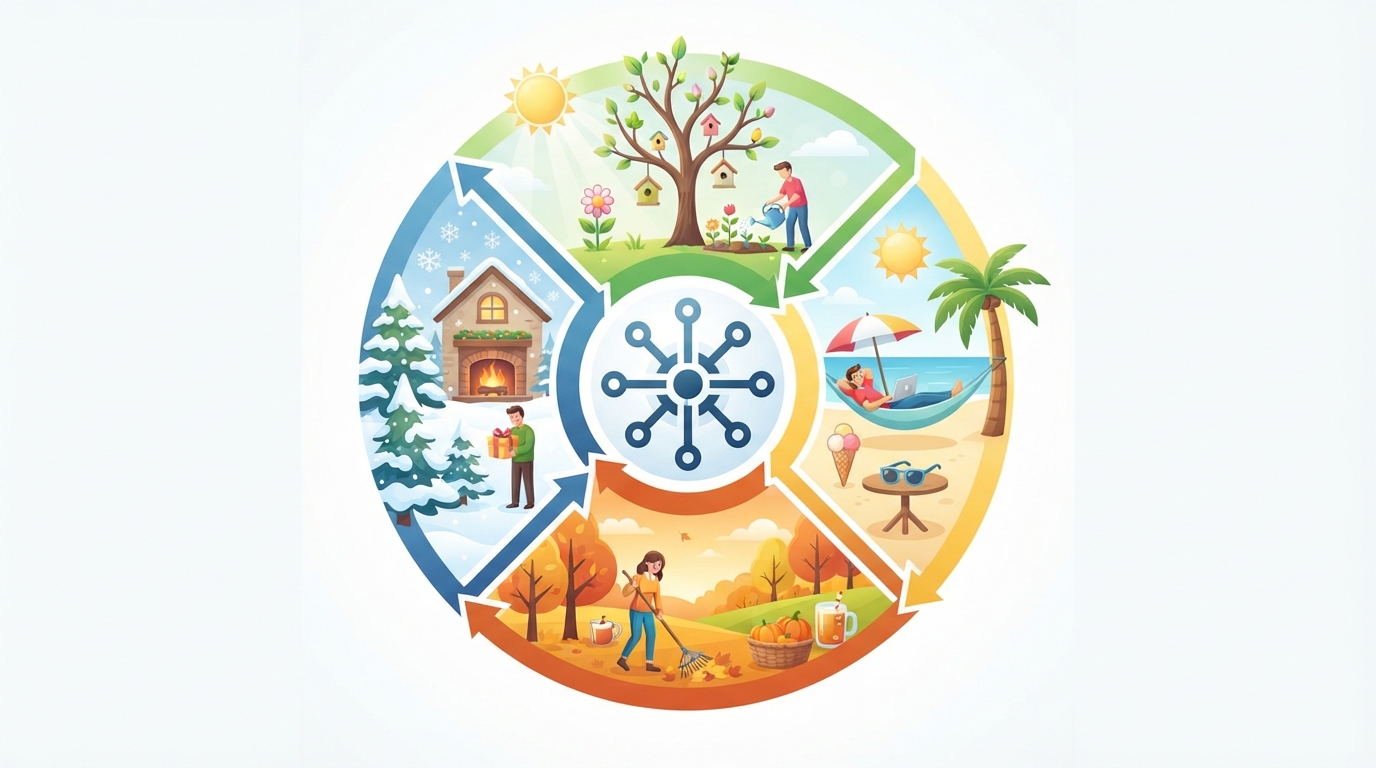

Creating highly targeted, time-sensitive material requires a deep understanding of consumer psychology and market timing. Seasonal content marketing represents a specialized approach where businesses tailor their articles, videos, social media posts, and email blasts to align perfectly with specific times of the year. Unlike standard daily posts, this methodology taps directly into the heightened emotional states and immediate purchasing desires of consumers during distinct periods. When people prepare for winter holidays, summer vacations, or back-to-school transitions, their search behavior shifts dramatically. They look for specific solutions, gift ideas, survival guides, and celebratory inspiration. Capturing this traffic requires anticipation and precision.
To execute this properly, marketers must recognize the difference between predictable annual events and spontaneous cultural moments. Predictable events include major holidays like Christmas, Thanksgiving, Valentine’s Day, or industry-specific seasons like tax season for financial advisors or open enrollment for healthcare providers. These reliable milestones allow for extensive, months-in-advance planning. By establishing a robust content marketing strategy, organizations can create comprehensive hubs of information that serve users exactly when their interest peaks.
Furthermore, Google and other search engines heavily reward relevance and freshness. A well-timed, highly authoritative piece of content published just as a trend begins to rise will consistently outrank older, less relevant material. This makes mastering this specific form of marketing an absolute necessity for anyone looking to dominate the search engine results pages during crucial revenue-generating periods. Providing exactly what the consumer wants, precisely when they want it, creates an immediate bond of trust and positions your brand as an authoritative industry leader.
How Seasonal Content Marketing Drives Business Growth and Revenue
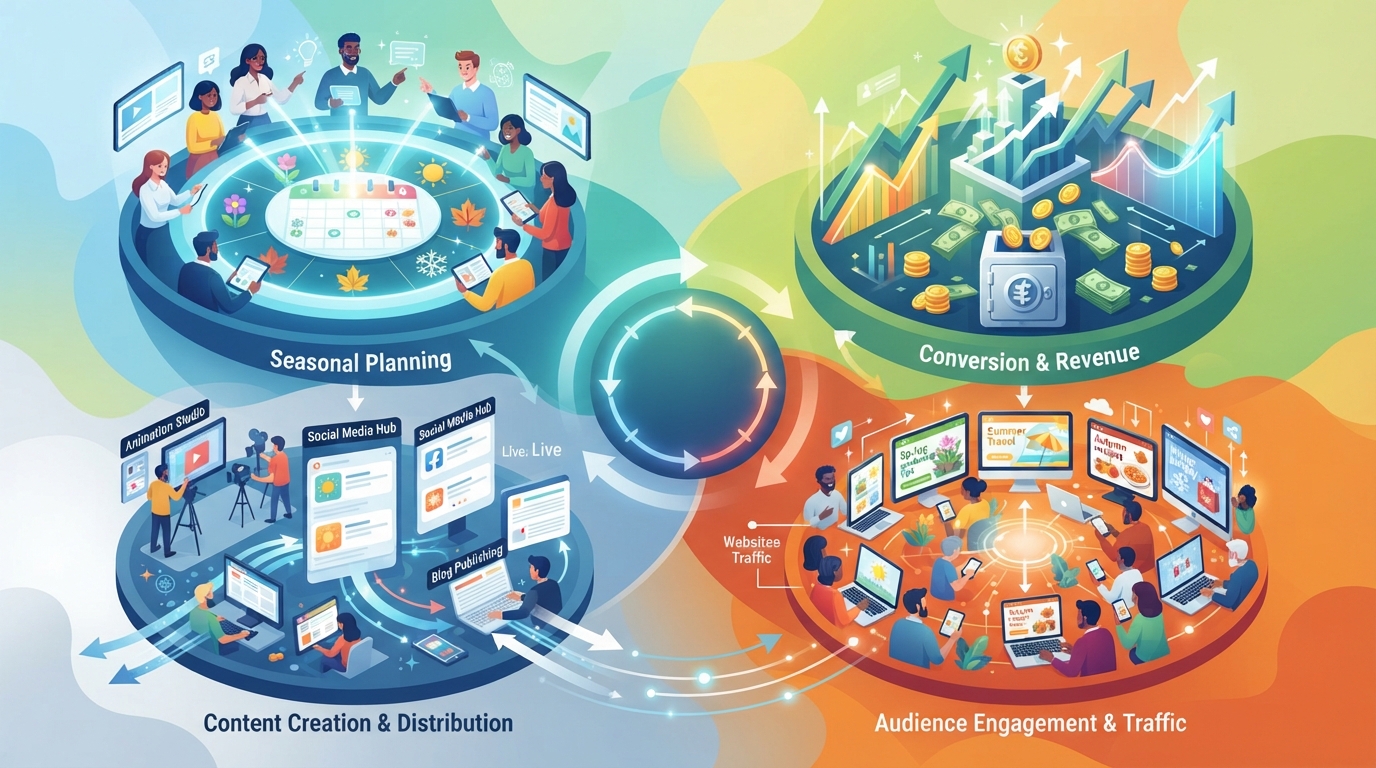
The financial and operational impact of implementing a highly optimized temporal marketing strategy is profound. Brands that rely solely on standard, year-round topics often experience stagnant traffic flatlines. Conversely, brands that integrate timely, event-driven campaigns experience massive spikes in visibility, engagement, and direct sales. These traffic surges are not random anomalies; they are the direct result of aligning your business offerings with the natural rhythms of consumer demand. When you map your publishing schedule to the customer journey, you intercept buyers exactly when they transition from passive browsing to active purchasing.
Consider the retail industry during the fourth quarter. Consumers actively search for gift guides, discount codes, and holiday shipping deadlines. A company that publishes a comprehensive holiday buying guide in October captures early search intent. As November and December approach, that established guide gains traction, earns backlinks, and climbs the search rankings. By the time the purchasing frenzy peaks, the brand sits firmly at the top of Google, capturing high-intent traffic that converts at a significantly higher rate than average daily traffic. This process demonstrates the raw power of anticipation in modern digital marketing.
Moreover, these strategies drastically reduce customer acquisition costs. Acquiring a new customer through paid advertising during peak holiday seasons is notoriously expensive due to intense bidding wars. However, organic traffic generated through well-planned seasonal content marketing requires zero per-click ad spend. By investing in high-quality writing and search engine optimization months in advance, you build an organic traffic engine that bypasses paid competition. You also foster higher engagement rates because the material inherently resonates with what the consumer is already experiencing in their daily life. According to resources like Think with Google, aligning marketing messages with consumer moments drastically improves brand recall and purchase intent.
The Strategic Framework for Building a Seasonal Content Marketing Calendar
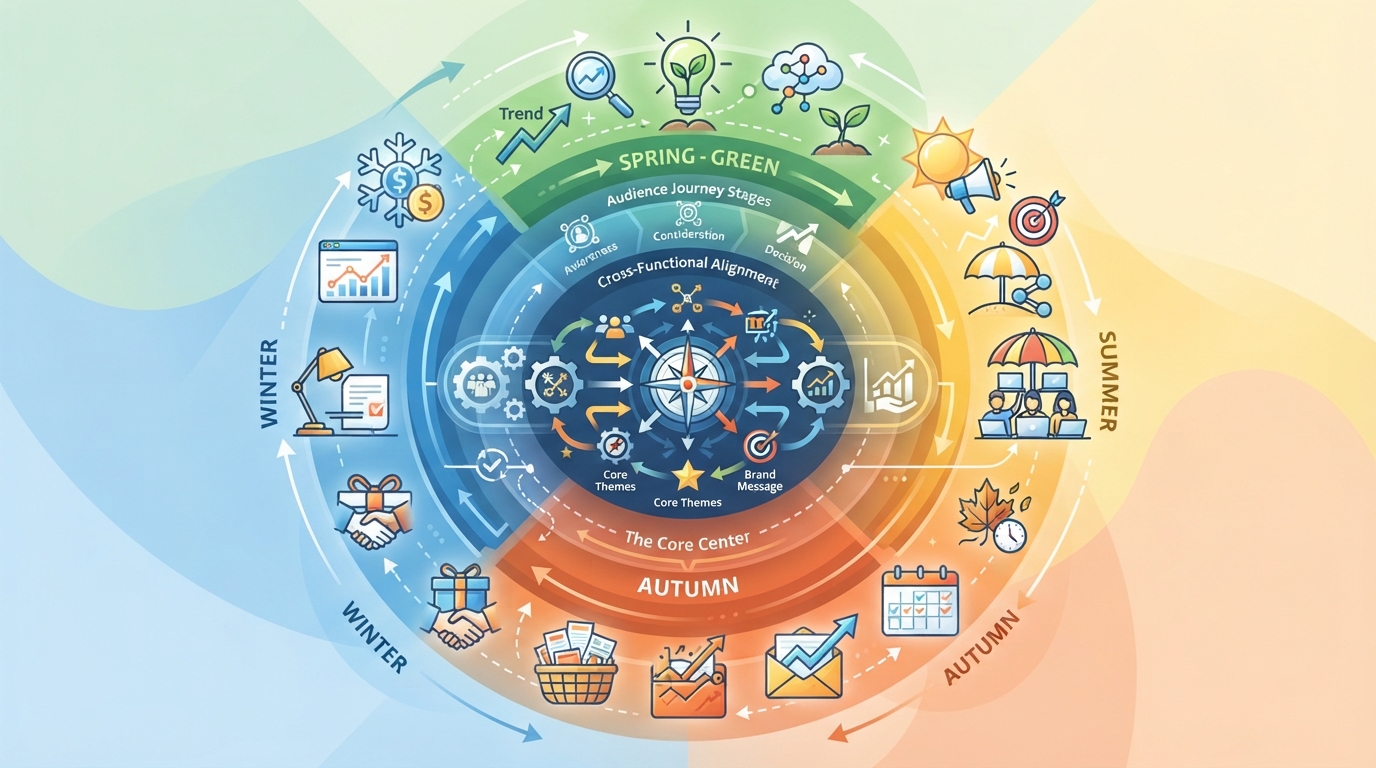
Success in this arena requires meticulous planning and a rigidly structured editorial calendar. You cannot wait until October to start writing about Halloween, nor can you wait until May to discuss summer travel plans. Professional marketers operate on a minimum three-to-six-month lead time. This expansive window allows sufficient time for writing, editing, graphic design, search engine indexing, and algorithmic ranking. To build a flawless calendar, you must first audit your industry to identify every relevant holiday, season, and event that intersects with your product or service offerings.
Begin your planning phase by conducting extensive SEO keyword research utilizing tools like Ahrefs, SEMrush, or Google Trends. You need to identify precisely when search volume for specific terms begins to rise. For example, search volume for “spring cleaning tips” does not start in spring; it begins creeping upward in late January. Therefore, your comprehensive spring cleaning guide needs to go live in early February. Mapping these search volume timelines onto a twelve-month calendar provides a visual roadmap for your entire marketing department. You know exactly what needs to be drafted, approved, and published on any given day of the year.
Once you have your timeline, you must diversify your content formats. A successful campaign rarely relies on a single blog post. It requires a cohesive ecosystem of interconnected assets. You might plan a massive pillar article as the central hub, supported by five shorter blog posts, a downloadable checklist, an infographic, and a video series. Each piece of this ecosystem must link back to the central hub, signaling to search engines that your website represents the ultimate authority on this specific seasonal topic. This deliberate, interconnected approach guarantees maximum visibility and ensures that you cater to different learning styles and consumer preferences.
Types of Seasonal Content to Boost Audience Engagement
Marketers must leverage various categories of temporal events to maximize their reach. By diversifying the types of campaigns you run, you ensure that your brand remains visible across multiple different emotional states and purchasing triggers throughout the year.
- Major Holiday Campaigns: These are the massive, universally recognized events like Christmas, Black Friday, Mother’s Day, and Valentine’s Day. Because competition is incredibly fierce, your material must be uniquely valuable, incredibly detailed, and published well in advance. Focus on comprehensive gift guides, deep-discount roundups, and emotional storytelling that connects your product to the spirit of the holiday.
- Micro-Holiday and Niche Events: These include fun, highly specific days like National Coffee Day, Star Wars Day (May the 4th), or International Women’s Day. These events provide incredible opportunities for social media engagement, viral marketing, and brand personality development. Because they are less competitive than major holidays, smaller brands can easily dominate the conversation by creating clever, highly shareable assets.
- Weather and Climate-Driven Content: This category revolves around the literal changing of the seasons. It includes summer vacation prep, winterizing homes, allergy season survival guides, and back-to-school preparation. This material is highly practical, problem-solving in nature, and critical for businesses in home services, travel, health, and retail sectors.
By categorizing your efforts into these three distinct buckets, you ensure a steady stream of relevant material that keeps your audience continuously engaged and looking to your brand for guidance no matter what time of year it is.
Advanced SEO Best Practices for Seasonal Content Marketing
Optimizing your seasonal content marketing efforts requires a unique approach to search engine optimization. Standard SEO practices apply, but you must adapt them to account for the recurring nature of annual events. The most critical technical decision you will make involves your URL structure. Never include the specific year in your URL slug. If you write an article titled “Best Summer Fashion Trends for 2024,” your URL should simply be yourdomain.com/best-summer-fashion-trends. This evergreen URL structure allows you to update the exact same page year after year.
When you reuse a historical URL, you retain all the authoritative backlinks, page authority, and historical traffic data accumulated over previous years. As the new season approaches, you simply update the title tag to reflect the current year, rewrite the introduction, update the core information, and republish the page with a fresh date. Search engines immediately recognize the update, process the historical authority of the URL, and rapidly push the freshly updated page to the top of the search results. This strategy of user intent optimization saves countless hours of work and delivers exponentially better ranking results than publishing a brand new, zero-authority page every single year.
Internal linking also plays a paramount role in temporal SEO. When a specific season approaches, you must actively funnel link equity from your homepage and high-traffic evergreen content directly to your targeted seasonal pages. Adding prominent banners on your homepage or contextual links within your highest-performing blog posts signals to Google that this seasonal page is currently the most important asset on your website. Once the season concludes, you simply remove those prominent homepage links, but you leave the seasonal page live on your site so it can continue to age and build authority quietly in the background until it is needed again next year. Consult guidelines from the Content Marketing Institute for deeper insights into internal linking architectures.
Comparing Evergreen vs. Seasonal Content Marketing Assets
To truly understand how to allocate your marketing budget and resources, you must understand the distinct differences and symbiotic relationship between temporal material and permanent material. Both are necessary for a healthy website ecosystem.
| Feature | Evergreen Assets | Seasonal Content Marketing |
| Traffic Pattern | Slow, steady, and consistent year-round. | Massive spikes during specific months; flatlines otherwise. |
| Relevance Lifespan | Years. Requires minimal updating. | Weeks to months. Requires intense, immediate updating. |
| Conversion Rate | Moderate to high, depending on funnel stage. | Extremely high due to immediate, pressing consumer needs. |
| Publishing Strategy | Can be published at any time of the year. | Must be published 2-4 months prior to the peak event. |
| Competitive Landscape | Highly competitive constantly; takes time to rank. | Extremely competitive briefly; requires rapid indexing. |
| Primary Goal | Build long-term domain authority and steady leads. | Drive immediate revenue, capitalize on trends, capture urgency. |
A successful website relies on evergreen assets to maintain baseline traffic and authority, while utilizing seasonal content marketing to generate massive revenue injections and capture new audiences during peak buying periods.
Integrating Email and Social Media for Maximum Reach
Relying solely on organic search traffic leaves tremendous revenue on the table. To maximize the impact of your campaigns, you must execute a coordinated, omnichannel distribution strategy. Email marketing remains one of the most profitable channels for distributing timely material because you have direct, unfiltered access to an audience that has already opted into your brand ecosystem. Through sophisticated email marketing automation, you can build countdown sequences that gradually build anticipation for an upcoming holiday sale or seasonal product launch. You can segment your audience based on their previous yearly purchasing behavior, ensuring that you send the right gift guide to the right demographic.
Social media acts as the accelerant for your seasonal content marketing campaigns. Platforms like Pinterest are inherently forward-looking; users begin pinning Christmas decor ideas in July and summer wedding ideas in December. Therefore, your visual assets must be distributed on Pinterest months before the actual event. Conversely, platforms like Instagram and TikTok thrive on immediacy. You should deploy short-form videos, behind-the-scenes preparation content, and interactive polls on these platforms just days or weeks before the event occurs. This multi-platform timing strategy ensures that you capture the planners early and the procrastinators late.
Furthermore, integrating user-generated material into your social channels during holidays builds immense community trust. Encourage your followers to share photos of how they use your products during their summer vacations or holiday gatherings. Reposting this authentic material not only fills your editorial calendar but also serves as powerful social proof. When potential customers see real people enjoying your brand during critical life moments, they are far more likely to convert.
Common Mistakes to Avoid in Seasonal Content Marketing
Even experienced marketers frequently stumble when executing time-sensitive campaigns. Avoiding these critical errors will save your budget and protect your brand reputation.
- Publishing Too Late: The single most devastating mistake is publishing holiday material during the actual holiday month. If you hit publish on a Black Friday guide in mid-November, you have already lost. Google takes weeks to index and rank new material, and consumers begin their research months in advance. Always publish at least 90 days prior to the event.
- Deleting Post-Season Pages: Many novices delete their seasonal pages or redirect them to the homepage once the holiday ends. This destroys the SEO value and backlinks that the page earned. You must leave the URL live, perhaps adding a brief note that the specific sale has ended, and keep the asset intact so it can be updated and reused the following year.
- Ignoring Data and Analytics: Failing to analyze last year’s performance metrics dooms you to repeat previous failures. You must ruthlessly analyze which topics drove traffic, which emails generated clicks, and which social posts converted into sales. Without reviewing your digital marketing funnels post-campaign, you cannot optimize for the future.
By meticulously avoiding these common pitfalls, you ensure that your investment of time and resources yields the highest possible return, rather than resulting in a frustrating lack of visibility.
Pro Tips and Expert Insights for Seasonal Content Marketing Success
Elevating your campaigns from good to exceptional requires advanced tactics that go beyond basic calendar planning. Top-tier agencies and industry leaders employ specific methodologies to squeeze every ounce of value from their temporal assets.
- Master the Art of Repurposing: Never let a massive piece of research serve only one purpose. Take your 3,000-word summer buying guide and break it down. Turn the statistics into an infographic, transform the subheadings into a five-part podcast series, and slice the main points into twenty separate social media posts. Content repurposing maximizes your investment and ensures your message reaches users across all preferred mediums.
- Create Unmistakable Urgency: Use visual countdown timers in your emails and on your landing pages. Psychological triggers involving scarcity and time limits force consumers to make purchasing decisions quickly. Pair these timers with compelling, active-voice copywriting that emphasizes exactly what the user will lose if they fail to act before the season ends.
- Inject Authentic Brand Personality: Holidays and cultural events offer a rare opportunity to step slightly outside your rigid corporate guidelines. Inject humor, nostalgia, or deep emotional resonance into your campaigns. Allow your brand voice to feel human, relatable, and celebratory. Consumers connect with companies that share their genuine excitement for major life moments.
Implementing these expert-level strategies will dramatically separate your brand from competitors who rely on generic, uninspired holiday messaging. You will transition from merely acknowledging a season to actively becoming a memorable part of your customer’s seasonal experience.
Measuring the ROI of Your Seasonal Content Marketing Efforts
You cannot scale what you cannot measure. Determining the exact return on investment for these time-sensitive campaigns requires a precise analytical framework. Standard month-over-month reporting often fails here because comparing December traffic to January traffic provides a skewed, inaccurate picture of your business reality. Instead, you must measure your seasonal content marketing success using strict year-over-year (YoY) comparisons. You must compare this year’s Black Friday performance directly against last year’s Black Friday performance to accurately gauge growth.
First, establish your key performance indicators (KPIs) long before the campaign launches. Are you tracking organic traffic growth, email open rates, coupon code redemptions, or direct revenue generation? Set up specific, trackable UTM parameters for every single link shared on social media and sent via email. This allows you to open Google Analytics and trace a specific sale all the way back to a single holiday tweet or a specific paragraph within your spring cleaning blog post. This granular level of tracking proves exactly which pieces of your marketing ecosystem actually generate cash flow.
Furthermore, you must evaluate the long-term impact on customer acquisition. Did the massive influx of holiday traffic result in permanent newsletter subscribers? Did your marketing ROI justify the ad spend used to boost your organic posts? By tracking the lifetime value of the customers acquired during a seasonal spike, you can definitively prove the financial viability of your campaigns to stakeholders and confidently request larger budgets for the following year’s initiatives.
Advanced Strategies for B2B Seasonal Content Marketing
While temporal marketing seems naturally suited for B2C retail brands, B2B companies can achieve equally spectacular results by adapting the methodology to corporate cycles. B2B purchasing does not revolve around Valentine’s Day or Halloween; it revolves around fiscal year-ends, annual budget allocations, industry trade show seasons, and quarterly reporting periods. A SaaS company, for example, can generate massive lead volume by publishing a “Q4 Budget Planning Guide for IT Directors” in late August. This perfectly aligns with the corporate planning cycle.
Additionally, B2B brands can leverage the “end of year” mentality to push annual subscription upgrades. Creating material that highlights the tax benefits of spending remaining annual budgets on software infrastructure before December 31st represents highly effective seasonal content marketing. You must map your content to the specific pain points your corporate buyers face during specific months of the year. If your industry holds its largest global conference every September, your August marketing calendar should be entirely dedicated to networking guides, local city guides for attendees, and product teasers.
The key for B2B success is replacing traditional consumer holidays with corporate milestones. By providing incredibly valuable, highly technical resources exactly when executives are forced to make annual strategic decisions, you position your brand as an indispensable partner rather than just another vendor.
Ensuring Readability and User Experience During High-Traffic Spikes
When your seasonal content marketing campaigns succeed, your website will experience massive surges in traffic. Preparing your digital infrastructure and optimizing the on-page user experience becomes critical. If a user clicks your highly optimized holiday gift guide and the page takes ten seconds to load due to heavy server load, they will immediately bounce back to the search results. You must ensure your hosting environment can handle sudden traffic spikes without compromising speed.
Beyond technical speed, visual formatting dictates whether a user stays or leaves. High-intent holiday shoppers have zero patience for massive walls of text. You must break your complex guides down using highly scannable H2 and H3 headings. Use bold typography to highlight key takeaways, prices, and discount codes. Keep your paragraphs relatively short—no more than four to five sentences—to accommodate mobile readers, as the vast majority of seasonal shopping and browsing occurs on smartphones.
Incorporate high-quality, compressed images that visually break up the text and provide immediate context for the products or concepts you are discussing. A well-structured page that loads instantly and guides the reader’s eye directly to the most important information will drastically lower your bounce rate and significantly increase your overall conversion percentages during critical sales periods.
Long-Term Maintenance of Seasonal Content Assets
The lifecycle of temporal material does not end when the clock strikes midnight on the holiday. The most successful publishers operate with a mindset of continuous asset management. In the immediate aftermath of a major campaign, your team should conduct a comprehensive post-mortem analysis. Document what worked, what failed, which keywords surprised you, and which channels underperformed. Store this documentation directly alongside the content files so that next year’s team has immediate access to historical context.
During the off-season, you should perform periodic audits of your dormant URLs. Ensure that the internal links pointing to them are still functional. Check that the outbound links referenced within the article have not become broken over time. While you do not need to actively promote these pages during the off-season, maintaining their structural integrity ensures that Google’s crawlers continue to view them as high-quality, well-maintained resources.
When the time comes to revive the asset for the new year, do not just change the date and republish. You must fundamentally improve the piece. Add new data, remove outdated advice, include better graphics, and expand the word count with newly discovered insights. By continuously refining and expanding the asset year after year, it becomes a heavily fortified, unbeatable resource that new competitors cannot possibly outrank with a hastily written new post.
Conclusion
Implementing dynamic seasonal content marketing ensures your brand remains continually relevant and highly profitable throughout the entire year. By aggressively planning ahead, optimizing for search engines, and delivering exceptional value, you capture peak audience interest exactly when it matters most. Start auditing your calendar today, map out your upcoming campaigns, and watch your engagement metrics soar to unprecedented heights. Click the link below to download our free 12-month editorial calendar template and begin dominating your industry’s peak seasons immediately.
FAQs
1. What is the ideal timeline for planning seasonal campaigns?
You should begin planning and creating your assets at least three to six months prior to the target event. This extended timeline allows for thorough research, high-quality production, and most importantly, gives search engines adequate time to crawl, index, and rank your pages before consumer search volume actually peaks.
2. How do I optimize old holiday posts for the current year?
Keep the original URL intact. Do not change the URL slug. Instead, update the H1 title and meta tags to reflect the current year. Rewrite the introduction, update any outdated statistics or product links, add new relevant sections, and republish the page in your CMS with the current date to signal freshness to search engines.
3. Can B2B companies genuinely benefit from these strategies?
Absolutely. B2B companies simply need to target different seasons. Instead of consumer holidays, focus on corporate milestones like fiscal year-ends, tax seasons, annual budgeting periods, major industry trade shows, and open enrollment periods. Aligning your technical resources with these corporate cycles drives massive high-value lead generation.
4. How does seasonal search intent differ from evergreen intent?
Evergreen search intent is usually informational and stable, representing users looking for general knowledge at a casual pace. Seasonal search intent is highly urgent and often transactional. Users are looking for immediate solutions, quick purchases, fast shipping, and time-sensitive guides. Your tone and calls to action must reflect this heightened urgency.
5. What are the best tools for discovering upcoming trends?
Google Trends is the absolute best free tool for mapping exact dates when search volumes begin to rise. Additionally, SEO platforms like Ahrefs and SEMrush provide historical search volume data. Pinterest Trends is also incredibly valuable for visual and consumer goods industries, as users plan on Pinterest months before buying.
6. Should I change my URL structure for annual recurring events?
No. Never include the specific year (e.g., /2023-gift-guide/) in your URL structure. Use a clean, evergreen URL (e.g., /holiday-gift-guide/). This allows you to use the exact same link every single year, preserving all the backlinks and domain authority the page has accumulated over its entire lifetime.
7. How do I maintain website traffic after a peak event ends?
You maintain stability by ensuring your website possesses a strong foundation of high-quality evergreen content. While seasonal campaigns provide massive traffic spikes, evergreen articles provide steady, daily baseline traffic. Additionally, use the high traffic during the peak season to capture email addresses, allowing you to market to them during slower months.
8. What is the role of social media during holiday campaigns?
Social media acts as a real-time distribution and engagement engine. While SEO takes months to rank, social media can drive traffic instantly. Use platforms like Instagram and TikTok for last-minute urgency, flash sales, and behind-the-scenes content, while using Pinterest months in advance to capture early planners.
9. How do micro-holidays impact overall brand engagement rates?
Micro-holidays (like National Pizza Day or Employee Appreciation Day) provide low-pressure, highly shareable opportunities to showcase brand personality. They humanize your company and often go viral easier than major holidays because they are less saturated with aggressive sales pitches, leading to exceptionally high organic social media engagement rates.
10. How much of my budget should go toward seasonal versus standard content?
A healthy balance usually dedicates 70% of resources to evergreen, long-term assets and 30% to temporal, event-driven campaigns. However, if your business is highly cyclical (like an accounting firm or a Halloween retailer), you may need to invert those percentages to align with your primary revenue-generating periods.
Content marketing, Seo strategy, Audience engagement, Digital marketing, Content calendar