



In today’s hyper-competitive retail landscape, capturing consumer attention requires more than standard pricing. Crafting compelling seasonal offers enables brands to drive urgent buyer action, clear out surplus inventory, and build long-term customer loyalty during peak shopping windows throughout the entire calendar year. This comprehensive guide explores the psychology, strategic planning, and execution frameworks behind high-converting seasonal offers.
The Psychological Drivers Behind Limited-Time Promotions and Consumer Behavior
Understanding why consumers react so powerfully to time-sensitive promotions is the cornerstone of designing effective promotional campaigns. Human psychology is deeply influenced by scarcity, urgency, and the fear of missing out, commonly known as FOMO. When a brand introduces promotional events tied to specific times of the year, shoppers perceive a limited window of opportunity that triggers immediate decision-making. According to research published by the Harvard Business Review, perceived scarcity elevates perceived product value while simultaneously lowering cognitive friction during the purchasing phase.
At the core of this behavior lies cognitive bias. Shoppers frequently use price thresholds and temporal anchors as mental shortcuts. When a promotion is framed around a recognizable holiday or weather transition, the context justifies the purchase in the buyer’s mind. They no longer evaluate the product purely on its baseline utility; instead, they evaluate it through the lens of a rare, time-sensitive acquisition. This shift in mindset transforms casual browsers into high-intent buyers, dramatically increasing conversion rates across both digital storefronts and physical retail locations.
To leverage these psychological triggers effectively, marketers must deploy sophisticated Consumer Psychology Tactics that align emotional resonance with clear financial incentives. For instance, pairing a countdown timer with a seasonal discount creates an authentic sense of urgency without eroding brand integrity. Furthermore, framing discounts around milestones such as the transition into summer or the winter holidays taps into established cultural rituals. Consumers look forward to these events as moments of reward, celebration, and indulgence, making them inherently receptive to targeted marketing messaging.
Beyond pure urgency, reciprocity plays a vital role in consumer response. When brands offer exclusive value upfront through thoughtful promotions, customers feel an implicit psychological inclination to reciprocate by completing the purchase and often adding higher-margin items to their carts. This dynamic underpins successful Retail Discount Frameworks that balance aggressive price cuts with strategic product bundling, ensuring that every promotion contributes positively to overall basket size and customer lifetime value.
Building a High-Converting Promotional Calendar Across Four Quarters
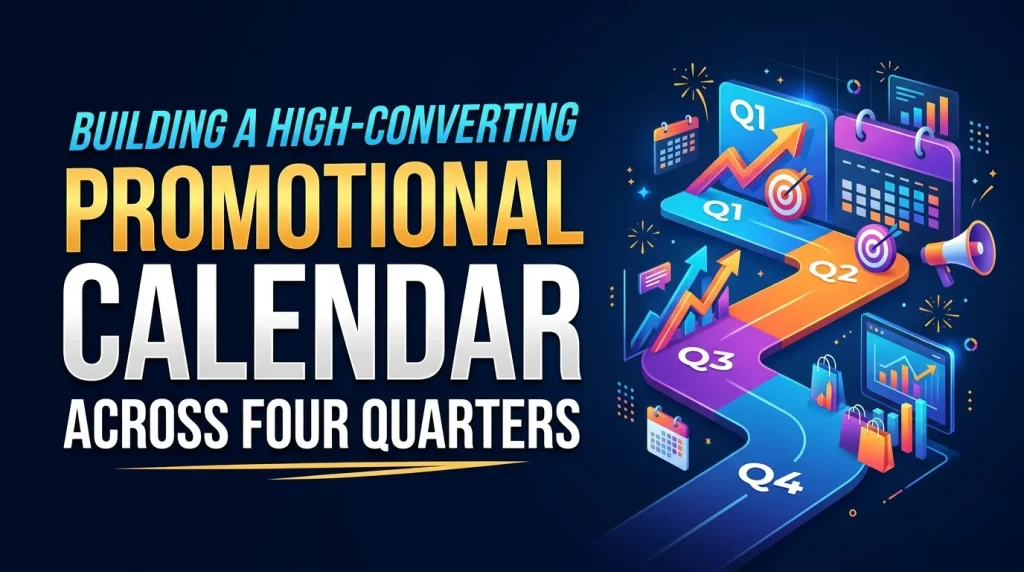

Quarter one immediately follows the intense holiday rush, making it an ideal period for clearing lingering stock and capturing post-holiday resolution shoppers. Promotional events during this window often focus on wellness, organization, and fresh starts. Retailers can introduce clearance promotions that turn stagnant inventory into working capital, clearing warehouse space for spring assortments. Transitioning into quarter two, spring holidays such as Easter, Mother’s Day, and Memorial Day introduce opportunities for gift-centric campaigns and outdoor lifestyle promotions.
Quarter three traditionally encompasses mid-year summer sales, back-to-school preparations, and early autumn previews. Back-to-school shopping represents one of the most lucrative retail periods of the entire year, second only to the winter holidays. Brands targeting students, parents, and young professionals can deploy highly targeted campaigns that emphasize utility, durability, and bundle savings. Finally, quarter four represents the pinnacle of retail activity, driven by Black Friday, Cyber Monday, Green Monday, and the December gift-giving season. Navigating this quarter successfully requires strict adherence to pre-planned promotional tiers, inventory buffers, and high-impact acquisition funnels.
Implementing a structured calendar allows businesses to maintain steady cash flow while avoiding the trap of panic discounting. When promotions are anticipated and integrated into the overarching brand narrative, they feel like exciting events rather than desperate attempts to generate revenue. This structural discipline is closely tied to effective Inventory Clearance Methods that protect gross margins while keeping warehouse carrying costs under strict control.
- Map your annual promotional calendar twelve months in advance to align inventory procurement with peak demand cycles.
- Establish distinct promotional themes for each quarter to prevent message fatigue and maintain consumer excitement.
- Review historical performance data quarterly to refine discount depths and eliminate underperforming promotional windows.
Advanced Discounting Models: Beyond Flat Percentages to Drive Margin Protection
Relying exclusively on blanket percentage-off sales can erode profit margins and devalue your core product offerings. Modern e-commerce and retail leaders utilize advanced discounting models that protect profitability while still offering irresistible value to the end consumer. These sophisticated models shift the focus from simple price reduction to value maximization, structural bundling, and tiered incentive programs.
One of the most effective advanced models is the tiered spending threshold, such as spend a specific dollar amount and receive a corresponding reward or percentage discount. This model directly incentivizes customers to increase their average order value to unlock a higher tier of savings. For example, offering free expedited shipping at one threshold and a substantial discount at the next encourages buyers to add supplementary items to their carts, optimizing shipping unit economics and boosting gross revenue simultaneously.
Another powerful approach is product bundling and kit promotions. By grouping complementary items together at a combined promotional price, retailers can move slower-moving inventory alongside best-selling flagship products. This strategy obfuscates individual item margins while presenting the consumer with an undeniable value proposition. According to data from Shopify, curated bundles significantly outperform standard single-item discounts in both perceived value and overall basket profitability.
| Discounting Model | Margin Impact | Average Order Value Effect | Best Use Case |
| Flat Percentage Off | High Risk | Neutral | Short-term flash sales and clearance events |
| Tiered Spending Reward | Low Risk | High Positive | Scaling cart size during major promotional events |
| Curated Product Bundles | Moderate Risk | High Positive | Moving slow inventory and introducing new products |
| Loyalty Member Exclusive | Minimal Risk | High Positive | Retaining high-value customers and repeat buyers |
Implementing these models requires robust point-of-sale and e-commerce platform capabilities that can dynamically apply rules without creating friction at checkout. When executed correctly, these frameworks ensure that promotional spikes do not compromise long-term financial health. Integrating these tactics with broader Loyalty Program Optimization efforts creates a seamless ecosystem where repeat customers feel uniquely rewarded for their ongoing brand allegiance.
Omnichannel Execution: Unifying Online and In-Store Promotional Strategies
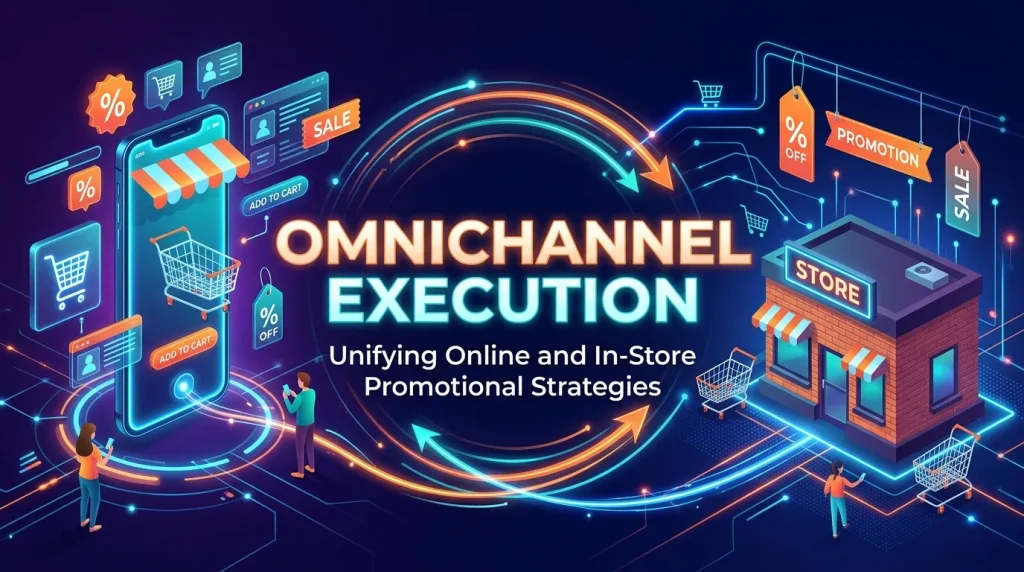
Achieving true omnichannel synchronization requires unified inventory management systems and centralized customer relationship management platforms. When a shopper receives an email detailing a limited-time promotion, they expect to find those exact same prices and terms whether they browse the mobile app, visit the desktop website, or walk into a physical retail storefront. Major retail analysts at Retail Dive consistently emphasize that brands with tightly integrated omnichannel strategies retain customers at significantly higher rates than those operating siloed channels.
Bridging the physical and digital divide also opens up innovative promotional formats such as buy online, pick up in-store incentives. Offering an additional discount or a complimentary gift for customers who choose in-store pickup drives valuable foot traffic into physical locations, where impulse purchases frequently occur. Sales associates equipped with mobile POS devices can access customer profiles, purchase histories, and active promotional statuses, allowing them to deliver personalized recommendations and honor digital offers effortlessly.
To maintain operational clarity during high-volume omnichannel pushes, clear communication protocols across marketing, merchandising, and store operations teams are mandatory. Every employee representing the brand must understand the exact terms, expiration dates, and qualifying criteria of active promotional campaigns. This operational rigor ensures a flawless customer experience from initial digital discovery to final fulfillment.
Common Mistakes to Avoid in Retail Promotional Campaigns
Even experienced marketing teams occasionally fall into common traps that undermine campaign performance, damage profit margins, or alienate loyal customers. Recognizing and avoiding these pitfalls is essential for maintaining brand equity and ensuring sustainable financial growth during high-stakes promotional windows.
The most frequent mistake is communicating overly complex discount rules that confuse the consumer. If a customer cannot instantly calculate their savings or understand which items qualify for a promotion, cognitive fatigue sets in and they will abandon the purchase entirely. Clarity, simplicity, and absolute transparency must always govern promotional messaging across all channels and creative assets.
Another critical error is failing to stress-test your technical infrastructure before launching major traffic-driving events. Sudden traffic spikes during major promotional campaigns can crash e-commerce servers, freeze checkout gateways, and frustrate eager buyers. Ensuring adequate server bandwidth, optimizing mobile loading speeds, and conducting comprehensive load testing prior to launch prevents catastrophic revenue loss caused by technical downtime.
- Avoid unclear or convoluted discount terms that create confusion and increase customer service inquiry volume.
- Never launch major promotional campaigns without rigorous load testing of your e-commerce checkout infrastructure.
- Do not rely on endless, back-to-back discounting, as this trains your customer base to devalue your standard pricing.
Failing to analyze post-campaign performance data represents a missed opportunity for continuous organizational improvement. Many brands run a promotion, pack up when it concludes, and immediately move on to the next without conducting a thorough post-mortem analysis. Reviewing key performance indicators such as net margin, customer acquisition cost, return rates, and inventory sell-through rates provides invaluable insights that inform future strategy.
Pro Tips and Expert Insights for Maximizing Campaign ROI and Customer LTV
Sustaining a competitive advantage in modern retail requires moving beyond basic execution and embracing forward-thinking, data-driven optimization strategies. Industry veterans know that the true value of a promotional campaign extends far beyond the immediate revenue generated on the day of the sale; it lies in the acquisition and long-term retention of high-value customers.
One highly effective pro tip is implementing VIP early-access windows for your most loyal brand advocates. By granting top-tier loyalty members or newsletter subscribers exclusive access to promotional inventory twenty-four hours before the general public, you foster a profound sense of exclusivity and appreciation. This approach drives early cash flow, rewards your most profitable customer segments, and creates social proof that generates momentum when the public sale officially launches.
Another expert strategy involves utilizing dynamic retargeting campaigns powered by machine learning algorithms. Instead of serving generic banner ads to every visitor who browses your site, deploy personalized retargeting ads featuring the exact products the user viewed or added to their cart, paired with a gentle reminder of the active promotion. This hyper-personalized approach dramatically improves return-on-ad-spend and recaptures high-intent window shoppers who might otherwise be lost.
Finally, always analyze customer lifetime value segmented by acquisition channel and promotional type. You may discover that customers acquired during specific seasonal events exhibit significantly higher retention rates and repeat purchase frequencies than those acquired through generic discounts. Reallocating marketing budget toward these high-performing acquisition channels maximizes long-term profitability and ensures sustainable business growth.
Data-Driven Performance Tracking and Post-Campaign Analytics
Rigorous measurement is the bedrock of world-class marketing execution, especially for Seasonal Offers. Without comprehensive data tracking, teams are forced to make decisions based on intuition rather than empirical evidence. For every round of Seasonal Offers, establishing a robust framework of key performance indicators ensures that each promotional initiative can be evaluated objectively and optimized for future iterations. A consistent measurement process helps teams compare different Seasonal Offers and set more realistic targets for future Seasonal Offers.
The primary metrics to monitor for Seasonal Offers include net profit margin per transaction, blended customer acquisition cost, return on ad spend, average order value, and inventory turnover rate. Tracking these metrics in real time throughout Seasonal Offers allows marketing teams to make agile adjustments, such as reallocating ad spend toward high-converting product categories or extending successful promotional mechanics. Comparing results across Seasonal Offers can reveal which tactics generate stronger outcomes. Reviewing product performance during Seasonal Offers also helps teams protect profit margins and manage inventory efficiently. This real-time oversight makes Seasonal Offers easier to optimize.
Following the conclusion of every major Seasonal Offers event, cross-functional teams should convene to review comprehensive attribution reports. Evaluating which marketing channels drove the highest-quality traffic, which discount structures protected gross margins best, and how customer service inquiry volumes fluctuated provides a complete picture of Seasonal Offers performance. Teams should examine these findings alongside prior Seasonal Offers results to identify reliable patterns and areas for improvement. Documenting these learnings from Seasonal Offers in an accessible knowledge repository ensures continuous institutional growth and refinement across all future retail strategies. Applying those insights to upcoming Seasonal Offers helps teams plan budgets, refine promotions, and improve campaign effectiveness. Over time, this disciplined approach makes Seasonal Offers more measurable, efficient, and profitable.
Conclusion
Mastering promotional planning requires balancing psychological insight, structural discipline, and rigorous data analysis. By implementing advanced discounting models, unifying omnichannel execution, and avoiding common operational pitfalls, brands can successfully leverage seasonal events to drive exceptional revenue growth and build lasting customer loyalty.
Ready to elevate your promotional strategy and maximize your profit margins? Contact our retail strategy experts today to schedule a comprehensive campaign audit and discover tailored solutions for your business.
FAQ
1. What is the ideal frequency for running seasonal promotional campaigns?
Running major Seasonal Offers promotional campaigns once per quarter, supplemented by targeted monthly micro-events or flash sales, helps maintain consumer excitement without devaluing core product pricing or eroding gross profit margins. A structured Seasonal Offers calendar also gives customers clear expectations about upcoming promotions.
2. How can small businesses compete with massive retailers during peak holiday sales?
Small businesses can compete with large retailers during Seasonal Offers by focusing on hyper-personalized customer service, curated product bundles, unique artisanal offerings, and exclusive community engagement that big-box retailers cannot easily replicate. These distinctive experiences help make Seasonal Offers more meaningful than price alone.
3. Are percentage-off discounts better than dollar-off promotions?
Psychological studies indicate that dollar-off discounts tend to perform better for lower-priced items, while percentage-off promotions are often more compelling for higher-priced luxury goods. During Seasonal Offers, testing both variations with your specific audience is recommended.
4. How do I prevent inventory stockouts during high-demand promotional events?
Accurate demand forecasting based on historical sales data, supplier lead times, and early-access pre-registration numbers allows merchandising teams to build adequate safety-stock buffers before launching major Seasonal Offers. Reviewing previous Seasonal Offers can also help teams anticipate demand more accurately.
5. What is the best way to train store staff on complex omnichannel promotions?
Creating concise digital reference guides, conducting mandatory pre-launch briefing sessions, and using mobile POS prompts ensures that all retail staff understand promotional terms and can execute Seasonal Offers flawlessly across channels.
6. How can I measure the long-term value of customers acquired during seasonal sales?
Tracking cohort retention rates over the twelve months following Seasonal Offers reveals whether promotional buyers become repeat, full-price purchasers or remain one-time discount seekers. Comparing results across different Seasonal Offers helps measure long-term customer value.
7. What role do countdown timers play in conversion rate optimization?
Countdown timers create authentic temporal scarcity, reducing procrastination and elevating urgency. However, during Seasonal Offers, they must be used ethically and reflect genuine expiration times to maintain consumer trust.
8. How can I protect my brand equity while offering deep discounts?
Limiting deep discounts to specific inventory categories, such as end-of-season clearance items or bundled kits, protects the perceived premium value of flagship products while allowing Seasonal Offers to attract price-conscious shoppers.
9. When should marketing assets for seasonal campaigns be finalized?
Marketing assets, creative copy, and advertising campaigns for Seasonal Offers should be finalized and tested at least four to six weeks before launch to ensure seamless multi-channel execution.
10. What are the biggest warning signs of an underperforming promotional campaign?
Low traffic conversion rates, high cart abandonment, compressed profit margins without corresponding volume spikes, and excessive customer-service complaints about discount application are primary warning signs. Monitoring these metrics during Seasonal Offers helps teams identify issues quickly and improve future Seasonal Offers.