


Seasonal promotions help businesses increase sales, engagement, and customer loyalty by aligning campaigns with holidays, seasons, and cultural moments. With early planning, targeted offers, strong storytelling, and consistent multichannel marketing, brands can turn seasonal demand into long-term growth.
Seasonal promotions are time-sensitive campaigns tied to holidays, seasons, or cultural moments. When executed well, they drive traffic, boost conversions, and deepen customer loyalty. This guide covers the strategies, ideas, and frameworks marketers need to build campaigns that actually perform.
Every year, brands leave money on the table—not because they skip seasonal promotions, but because they run them without a real strategy. A flash sale slapped together the week before Christmas or a vague “Spring Sale” banner isn’t a campaign. It’s noise.
The brands that win during peak seasons are the ones that plan early, communicate clearly, and give customers a genuine reason to act. They understand that seasonal marketing isn’t just about discounts—it’s about showing up at the right moment with the right message.
This guide breaks down everything you need to know about seasonal promotions: how to build a solid marketing strategy, run holiday campaigns that convert, and create customer experiences that keep people coming back long after the sale ends.
What Are Seasonal Marketing Strategies and Why Do They Matter?
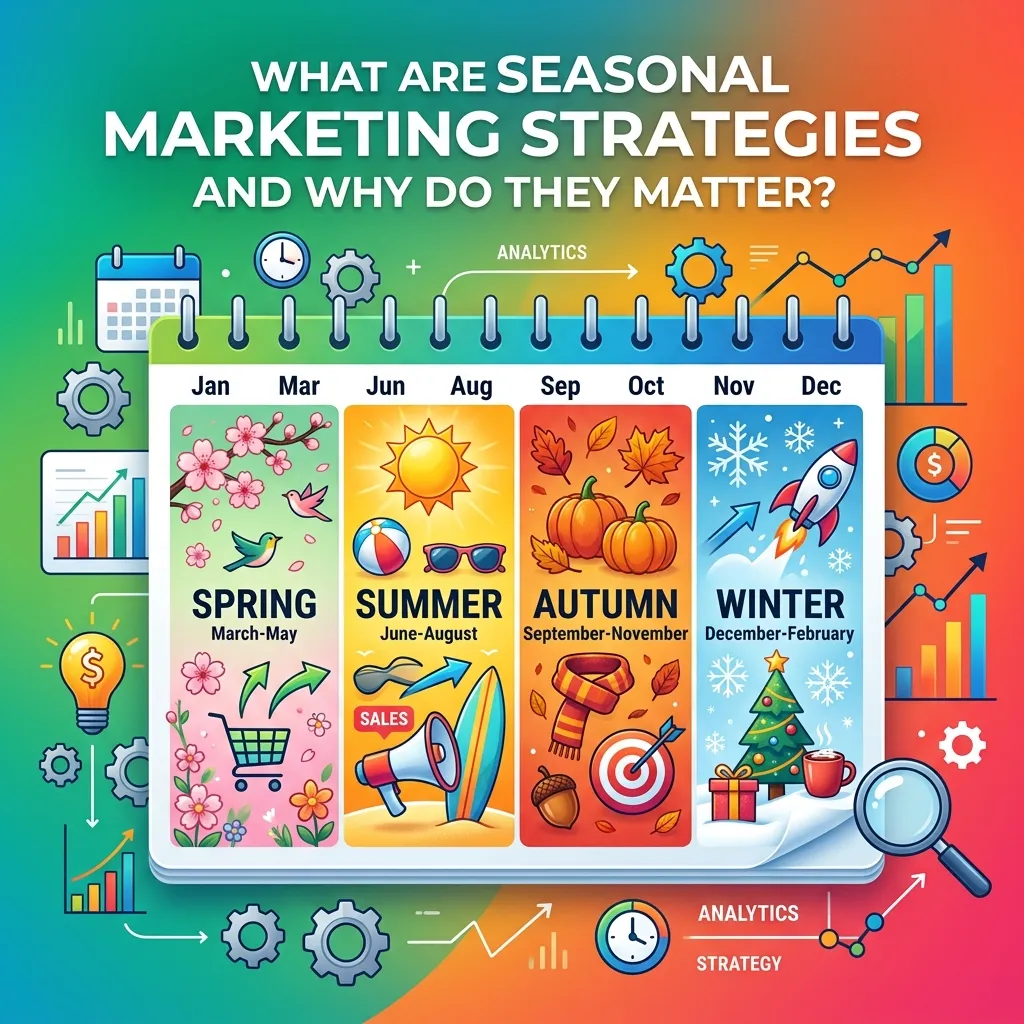

Seasonal marketing is the practice of aligning your promotional efforts with predictable consumer behaviors tied to specific times of year. These might be calendar-based holidays (Christmas, Valentine’s Day, Easter), seasonal shifts (back-to-school, summer), or culturally significant moments (Super Bowl, Mother’s Day).
The reason seasonal strategies work so well comes down to timing. Consumers enter these periods with purchase intent already activated. They’re looking to spend—on gifts, experiences, or upgrades. A well-placed promotion meets that intent directly.
Seasonal campaigns also create urgency by nature. The calendar does the heavy lifting. Customers don’t need to be convinced that Christmas is coming or that summer will end. Brands that tap into these built-in deadlines see stronger click-through rates, higher average order values, and better email open rates compared to evergreen campaigns.
But there’s a catch: every competitor knows this too. Standing out requires more than timing—it requires a distinct angle, a compelling offer, and consistent execution across every channel. Understanding current seasonal trends in marketing can help brands identify opportunities and create campaigns that feel timely rather than repetitive.
How to Build a Holiday Promotional Campaign That Converts
Strong holiday promotional campaigns share a few common traits: they start early, they tell a story, and they make the customer feel something.
Start Planning Earlier Than You Think You Need To
Most successful seasonal campaigns begin months before the promotion goes live. Internal alignment, creative production, inventory planning, and paid media setup all take time. Rushing any of these stages leads to inconsistent messaging, missed deadlines, or promotions that simply don’t land.
A practical rule: begin campaign planning at least 8–12 weeks before the intended launch date. For major shopping periods like Black Friday or the holiday season, extend that window further.
Build a Narrative, Not Just a Sale
Customers are bombarded with promotions during peak seasons. What cuts through isn’t the biggest discount—it’s a story that resonates. A brand that tells a coherent seasonal story across email, social, and paid media will consistently outperform one that just announces a percentage off.
Think about what your brand stands for and how that connects to the season. A sustainable clothing brand might frame its holiday campaign around intentional gifting. A food company might lean into nostalgia and family traditions. The promotion becomes more memorable because it means something.
Align Offers With Customer Segments
Not every customer wants the same thing. Loyal, long-term customers respond well to early access and exclusive perks. New or lapsed customers respond better to first-order incentives or introductory bundles. Building segmented offers into your campaign—rather than blasting one message to your entire list—dramatically improves conversion rates.
What Are the Most Effective Types of Seasonal Sales Promotions?
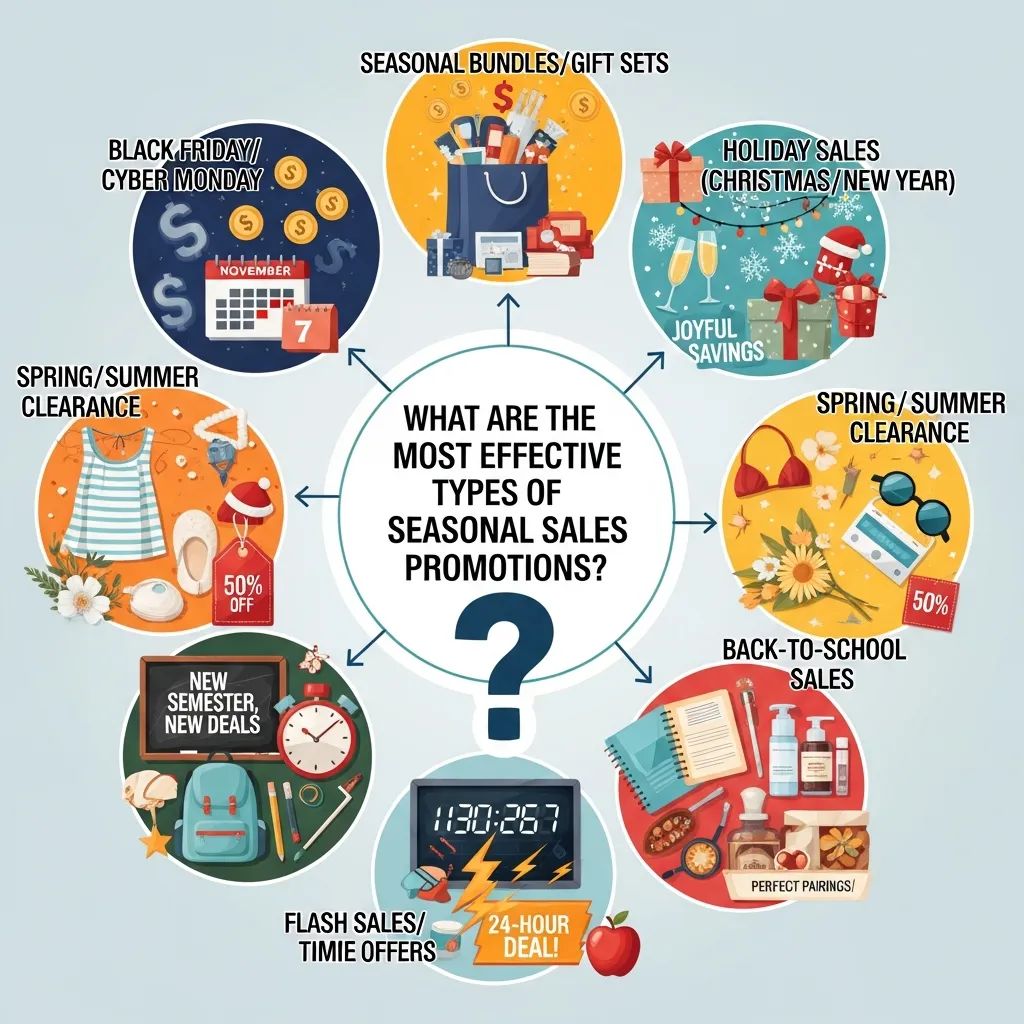
Choosing the right promotional mechanic matters as much as the timing. Here are the formats that consistently perform well across seasonal campaigns:
- Percentage or dollar-off discounts: The most straightforward format. Works best when paired with a clear deadline and a compelling reason to buy now.
- Buy-more-save-more deals: Encourages higher order values. Effective during gift-giving seasons when customers are already buying multiple items.
- Free gifts with purchase: Adds perceived value without reducing the core product’s price. Particularly effective in beauty, food, and lifestyle categories.
- Bundles and seasonal kits: Groups complementary products together at a slight discount. Simplifies the decision-making process for customers shopping for others.
- Early access promotions: Rewarding loyal customers or email subscribers with 24–48 hours of early access creates exclusivity and drives email list growth ahead of major sale events.
- Flash sales: Short windows (often 24 hours or less) create urgency and can generate significant revenue spikes. Best used sparingly so they don’t dilute your brand perception.
The right format depends on your margins, your customer base, and what you’re trying to achieve. A flash sale might boost revenue quickly, but an early access campaign might do more for long-term loyalty.
Holiday Marketing Ideas That Go Beyond the Obvious
Predictable holiday marketing blends into the background. These ideas help brands stand out during crowded seasonal moments:
Reverse advent calendars: Instead of customers receiving a gift each day, they contribute one. This format works particularly well for brands with a social or charitable angle, and it generates sustained social media engagement throughout the campaign.
User-generated content campaigns: Invite customers to share how they use your product during the season. A hashtag challenge, a photo competition, or a simple prompt in your email can generate authentic content that amplifies reach at minimal cost.
Gift guides and curated edits: Seasonal gift guides serve double duty—they’re genuinely useful for customers and highly searchable. Structuring guides by recipient (“For the person who has everything,” “For the home cook”) makes them more actionable and increases the likelihood of conversion.
Charitable tie-ins: Aligning a portion of seasonal sales with a cause your brand genuinely supports can differentiate your campaign and strengthen emotional connection with customers. Transparency matters here—customers can tell the difference between authentic giving and performative marketing.
Personalized recommendations: Using purchase history to send tailored seasonal suggestions removes friction from the buying process. “Based on what you bought last time, we thought you’d love this” is far more compelling than a generic sale email.
How to Design Seasonal Advertising Campaigns Across Multiple Channels
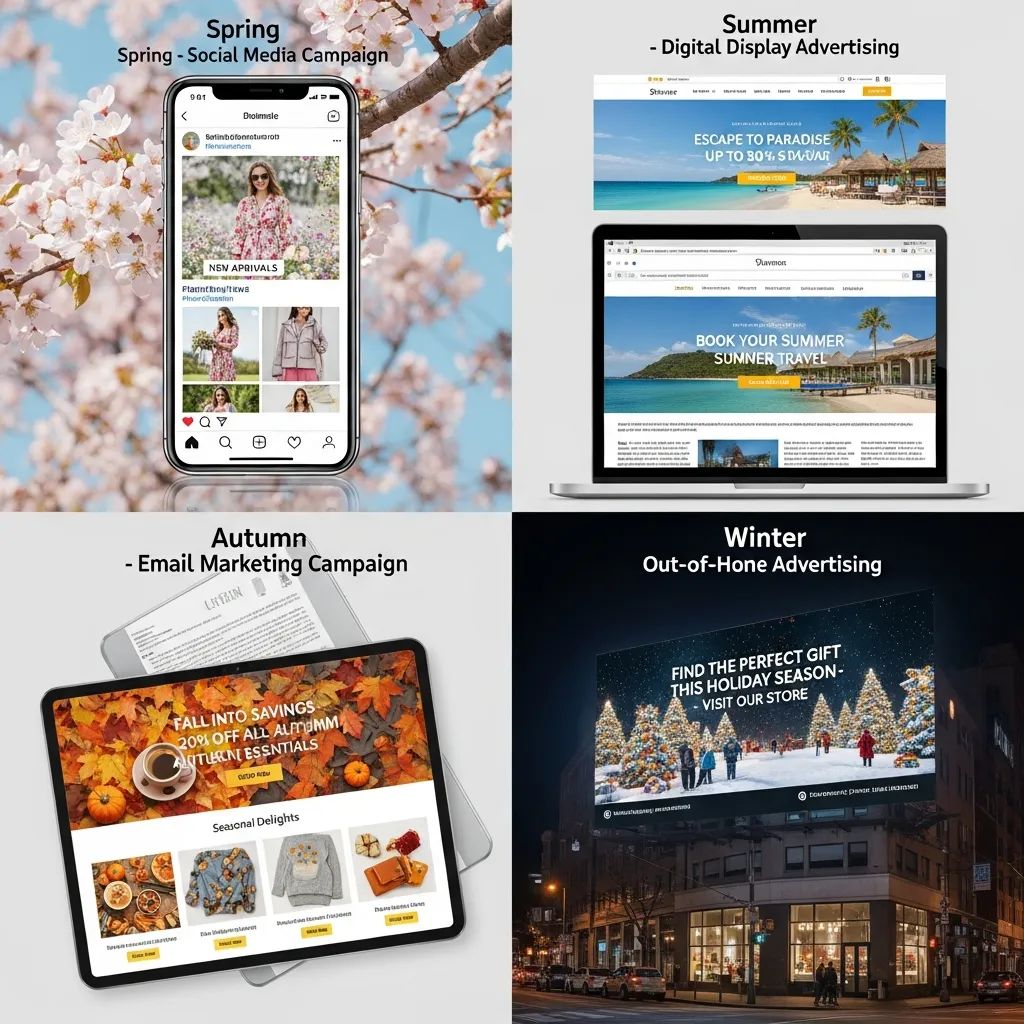
Seasonal campaigns need to show up consistently wherever your customers spend time. That doesn’t mean running the same ad everywhere—it means adapting a unified message to each platform’s strengths.
A strong cross-channel seasonal marketing approach helps brands maintain consistent messaging while adapting content to the strengths of each platform.
Email: The highest-ROI channel for most brands during seasonal periods. A well-structured sequence typically includes a teaser (building anticipation), a launch email (announcing the offer), a mid-campaign reminder, and a final-hours push. Subject lines that create urgency without feeling aggressive tend to perform best.
Paid social: Visually led and great for reaching new audiences. Seasonal creative should feel native to the platform—short-form video on TikTok and Instagram Reels, static carousels on Facebook for older demographics. Retargeting website visitors with seasonal messaging during the campaign window is a high-converting tactic.
Search advertising: Seasonal search behavior spikes predictably. Capturing that intent with targeted paid search campaigns—especially for gift-related queries—can drive strong returns. Adjusting bids in the lead-up to key dates is essential.
Organic social: Builds momentum and brand personality during the campaign. Behind-the-scenes content, countdowns, and community interactions complement paid activity without adding significant cost.
What Is Seasonal Customer Engagement and How Do You Sustain It?
Getting a customer to buy during a seasonal promotion is one thing. Keeping them engaged after it ends is where long-term brand value is built.
Seasonal customer engagement strategies focus on creating touchpoints that extend beyond the sale:
- Post-purchase follow-ups: A personalized thank-you email, a product care guide, or a “how to get the most out of your purchase” sequence turns a transaction into a relationship.
- Community building: Inviting customers to a brand community—whether that’s a Facebook group, a forum, or a loyalty program—keeps them connected between seasonal moments.
- Feedback loops: Asking customers about their experience after a seasonal purchase yields insights that improve future campaigns while making customers feel heard.
- Re-engagement before the next season: A well-timed campaign that reconnects with seasonal customers just before the next major period (“You shopped with us last Christmas—here’s an early look at what’s new”) reactivates purchase intent at the optimal moment.
Seasonal Product Marketing: How to Position What You Sell
Some products are naturally seasonal. Others can be positioned seasonally with the right angle.
For inherently seasonal products—holiday decorations, summer sunscreen, winter coats—the marketing job is largely about visibility, timing, and differentiation. Getting your seasonal product in front of the right audience before the season peaks is critical, since demand drops sharply afterward.
For product-based brands, visual details can also strengthen seasonal positioning. Using thoughtful seasonal packaging design can make products feel more relevant to a specific holiday or season while giving customers an experience that extends beyond the purchase itself. A skincare brand that sells year-round can create a “winter skin” campaign that speaks directly to cold-weather concerns. Finding the seasonal angle that feels genuine, rather than forced, is what makes these campaigns work.
Frequently Asked Questions
When should businesses start planning seasonal promotional campaigns?
Most seasonal campaigns benefit from an 8–12 week planning window before launch. Major shopping periods like the holiday season typically require even more lead time to align inventory, creative production, and paid media setup.
What types of seasonal promotions drive the highest conversion rates?
The most effective seasonal promotions combine urgency with perceived value. Early access offers, bundles, and free-gift-with-purchase mechanics consistently outperform basic percentage-off discounts, particularly during gift-giving seasons when customers are already motivated to spend.
How can small businesses compete during major seasonal sales periods?
Small businesses compete most effectively by going narrow rather than broad. Targeting a specific niche, leaning into community, or offering a personalized experience that larger retailers can’t match are all viable strategies. A loyal email list is one of the most valuable assets a small business can activate during peak seasonal periods.
How do you measure the success of a seasonal marketing campaign?
Key metrics include revenue generated during the campaign window, customer acquisition cost, email open and conversion rates, average order value, and return on ad spend (ROAS). Comparing these figures against previous seasonal periods helps benchmark performance accurately.
How do you keep customers engaged after a seasonal promotion ends?
Post-purchase email sequences, loyalty program invitations, and community-building efforts are the most reliable ways to maintain engagement after a seasonal sale. The goal is to shift the customer’s identity from “seasonal buyer” to “brand community member.”
What are seasonal promotions?
Seasonal promotions are marketing campaigns designed around holidays, seasons, cultural events, or specific times of the year to encourage customers to purchase.
When should businesses start planning seasonal promotions?
Businesses should generally begin planning 8–12 weeks before launch. Major events such as Black Friday and Christmas may require several months of preparation.
What types of seasonal promotions work best?
Popular options include percentage discounts, bundles, free gifts with purchase, early-access offers, buy-more-save-more deals, and limited-time flash sales.
How can small businesses compete with larger brands during seasonal campaigns?
Small businesses can focus on personalization, niche audiences, community connections, unique products, and customer service experiences that larger competitors may struggle to replicate.
How can businesses create effective holiday marketing campaigns?
Start early, create a compelling seasonal message, segment customers, offer meaningful value, and use consistent messaging across email, social media, search, and other relevant channels.
How can email marketing support seasonal promotions?
Email marketing can build anticipation, announce offers, remind customers about deadlines, and create urgency with launch and final-hours campaigns.
How do you make seasonal promotions stand out?
Use authentic storytelling, personalized recommendations, user-generated content, gift guides, exclusive offers, and creative campaigns rather than relying only on standard discounts.
How can businesses measure seasonal promotion success?
Track revenue, conversion rates, average order value, customer acquisition cost, email engagement, and return on ad spend (ROAS). Comparing results with previous seasonal campaigns can reveal improvement.
How can businesses retain customers after a seasonal sale?
Use personalized follow-ups, loyalty programs, helpful post-purchase content, community engagement, and re-engagement campaigns before the next seasonal opportunity.
Are seasonal promotions useful for products that aren’t seasonal?
Yes. Businesses can connect year-round products to seasonal needs or occasions. For example, a project management tool can be positioned around New Year planning or Q4 business goals.
Build Campaigns That Outlast the Season
The most effective seasonal promotions don’t just spike your revenue for a week—they bring in customers who stick around. That requires a strategy built on genuine value, consistent storytelling, and a real understanding of what your customers want at different points in the year.
Start planning earlier. Get specific with your offers. Show up consistently across channels. And always think about what happens after the sale, because that’s where sustainable growth actually lives.
The seasonal calendar is predictable. What you do with it doesn’t have to be.