
In a crowded market, how do you make your brand unforgettable? The key is a brand positioning statement, a strategic tool that defines your unique place in customers’ minds.
This guide explains what a brand positioning statement is and why it’s vital for business success. We’ll cover its core components, a step-by-step writing process, and real-world examples from top brands. You’ll learn how to craft a statement that clarifies your message and builds lasting loyalty.
The Strategic Imperative of a Brand Positioning Statement
Imagine your brand is a ship navigating a vast, competitive ocean. Without a compass and a clear destination, you’re merely adrift. A brand positioning statement is that compass. It is a concise, internal declaration that identifies the unique space your brand occupies in the marketplace and in the minds of your target audience. This isn’t just a catchy tagline for a billboard; it’s the foundational DNA of your entire brand marketing strategy. It dictates every decision, from product development and customer journey mapping to the tone of your social media posts.
Understanding and crafting a powerful brand positioning statement is fundamental to achieving brand alignment. It ensures that everyone in your organization, from the CEO to the customer service representative, understands what the brand stands for, who it serves, and why it’s different. This internal clarity translates into external consistency, which is the bedrock of building trust and brand equity in marketing. In a world saturated with choices, a strong brand positioning statement is what separates memorable brands from the noise.
What Is a Brand Positioning Statement? A Deeper Dive

At its essence, a brand positioning statement is an internal strategic tool that articulates a brand’s unique value proposition to its target market. It’s a declaration of intent, a promise you make to your customers. While it’s not typically customer-facing, its influence is felt in every piece of external communication, from ad campaigns to website copy.
A comprehensive brand positioning statement must answer four critical questions:
- Who is your target audience? This goes beyond basic demographics to include psychographics—their values, aspirations, and pain points.
- What is your market category? What frame of reference do customers have for your product or service? Are you a luxury vehicle, a budget-friendly software, or a health-conscious snack?
- What is your brand’s unique differentiator? This is your unique value proposition (UVP). What do you offer that your competitors cannot or do not? This could be a feature, a benefit, a feeling, or an ethos.
- What is the reason to believe? Why should customers trust your claim? This is the proof—your secret sauce, proprietary technology, ethical sourcing, or overwhelming social proof.
A classic template to build a brand positioning statement is:
“For [Target Audience], [Brand Name] is the [Market Category] that offers [Brand Differentiator/Promise] because [Reason to Believe].”
Example:
“For health-conscious millennials who feel modern life depletes their energy, VitaBoost is the daily nutritional supplement that provides sustained, natural energy without jitters, because it is formulated with adaptogenic herbs clinically proven to combat stress and fatigue.”
This example clearly outlines every element, creating a focused and actionable brand positioning statement.
Why Your Business Cannot Afford to Ignore Its Brand Positioning Statement

In today’s market, a lack of clear positioning is a recipe for failure. A well-defined brand positioning statement is not a “nice-to-have”; it’s a strategic necessity that underpins your entire business. Here’s why it’s so critical.
- Provides Strategic Direction and Focus: A clear brand positioning statement acts as your North Star. It guides every business decision, including product marketing strategy, pricing, distribution, and new market entries. When considering a new feature or a brand extension marketing opportunity, you can ask: “Does this align with our brand positioning statement?” This prevents brand dilution and ensures all efforts are cohesive.
- Creates Differentiation in a Crowded Market: Your competitors are a click away. A powerful brand positioning statement carves out a distinct and defensible space in the market. It moves the conversation away from a price war and toward a value-based discussion. This is the essence of a strong brand positioning strategy.
- Ensures Messaging Consistency: Without a guiding statement, your marketing messages can become fragmented and confusing. A brand positioning statement ensures that your brand voice, tone, and core messages are consistent across all channels, from a digital marketing on YouTube campaign to your in-store signage. This consistency builds brand awareness and trust.
- Fosters Customer Connection and Loyalty: Customers don’t just buy products; they buy into a story and an identity. A statement focused on customer needs and values builds a deeper emotional connection. When your brand stands for something specific, you attract customers who share those values, turning them into loyal advocates. This is a core tenet of modern consumer brand marketing.
- Empowers and Aligns Internal Teams: A clear brand positioning statement ensures everyone is rowing in the same direction. Your sales team understands the key value propositions, your product team knows who they are building for, and your marketing team knows how to communicate it. This internal brand alignment is crucial for delivering a seamless customer experience.
- Informs Your Pricing Strategy: Your positioning helps determine your price point. A luxury brand marketing strategy, for instance, is built on a brand positioning statement of exclusivity and superior quality, which justifies a premium price. Conversely, a brand positioned for convenience and affordability will have a different pricing structure.
The Essential Components of a Winning Brand Positioning Statement
To craft a statement that truly works, you need to understand its four foundational pillars. Each component is a building block that contributes to a powerful and effective whole.
|
Component |
Description |
Example (for a fictional brand “Evergreen Threads”) |
|---|---|---|
|
Target Audience |
The specific group of consumers you aim to serve. Be as detailed as possible, moving beyond demographics to psychographics, behaviors, and needs. |
“Eco-conscious consumers aged 25-40 who prioritize sustainability and minimalist design in their fashion choices.” |
|
Market Category |
The competitive frame of reference. This is the sandbox you are playing in, which helps customers categorize your brand in their minds. |
“Sustainable and ethical apparel.” |
|
Unique Differentiator |
Your “special sauce.” This is the core promise of value that only your brand can deliver. It is the primary benefit you want customers to associate with you. |
“Offers timeless, high-quality basics made from 100% recycled materials that are designed to last a lifetime, reducing fashion waste.” |
|
Reason to Believe |
The evidence that backs up your promise. This is the proof that makes your differentiation credible and trustworthy. |
“Because every garment is certified by Global Recycled Standard (GRS) and comes with a lifetime repair guarantee.” |
Putting it all together for Evergreen Threads, the brand positioning statement would be:
“For eco-conscious consumers who prioritize sustainability, Evergreen Threads is the ethical apparel brand that offers timeless, high-quality basics designed to last a lifetime, because every garment is GRS-certified and backed by a lifetime repair guarantee.”
A 5-Step Guide to Writing Your Brand Positioning Statement
Crafting the perfect brand positioning statement is a strategic exercise that requires research, introspection, and collaboration. Follow these five steps to develop a statement that is clear, compelling, and actionable.
Step 1: Conduct In-Depth Audience Research
You cannot position your brand effectively if you don’t intimately understand who you’re talking to. Go beyond assumptions and dig into data.
- Create Detailed Customer Personas: Develop fictional profiles of your ideal customers. Give them names, jobs, goals, and challenges. What keeps them up at night? What do they value?
- Use Surveys and Interviews: Talk to your existing customers. Why did they choose you? What words do they use to describe your brand? Tools like SurveyMonkey or Typeform are invaluable here.
- Analyze Data: Dive into your CRM and tools like Google Analytics to understand demographic and behavioral data. What content do your best customers engage with?
Step 2: Analyze Your Market and Competitors
To stand out, you need to know what you’re standing against. A thorough competitive brand analysis is crucial.
- Identify Your Direct and Indirect Competitors: Who else is solving the same problem for your target audience? Don’t just look at direct rivals; consider alternatives. For a coffee shop, competitors include other cafes, but also home brewing systems and energy drinks.
- Analyze Their Positioning: How do your competitors position themselves? What are their key messages? Read their website copy, analyze their ads, and follow their social media.
- Conduct a SWOT Analysis: For your own brand and your top competitors, identify Strengths, Weaknesses, Opportunities, and Threats. This will help you find a gap in the market that your brand can uniquely fill. Tools like SEMrush offer competitive analysis features to streamline this process.
Step 3: Define Your Unique Value Proposition (UVP)
This is the heart of your brand positioning statement. Your UVP is the singular promise you make to your customers.
- Brainstorm Your Benefits: List all the features of your product or service and translate them into benefits. A feature is what it is (e.g., “memory foam sole”); a benefit is what it does for the customer (e.g., “all-day comfort”).
- Identify What Makes You Unique: From your list of benefits, which ones are truly unique to your brand? Is it your process, your materials, your service model, or your brand personality in marketing?
- Focus on the Most Compelling Benefit: You can’t be everything to everyone. Choose the single most important and compelling benefit that will resonate most with your target audience. This will become the core of your statement.
Step 4: Gather Your Reasons to Believe
A promise is empty without proof. Your reasons to believe make your UVP credible and trustworthy.
- List Your Proof Points: This could include:
-
- Awards and Certifications: “Certified B-Corp,” “Winner of the J.D. Power Award.”
- Testimonials and Reviews: “Rated 4.9 stars by over 10,000 customers.”
- Data and Statistics: “Clinically proven to reduce wrinkles by 30%.”
- Proprietary Technology: “Powered by our patented Fusion-X algorithm.”
- Brand Heritage: “Family-owned and operated since 1925.”
Step 5: Draft, Refine, and Finalize
Now it’s time to bring all the elements together.
- Use the Template: Start with the classic formula: “For [Target Audience], [Brand Name] is the [Market Category] that offers [Brand Differentiator] because [Reason to Believe].”
- Keep it Concise: Edit ruthlessly. Your final brand positioning statement should be one to two sentences. It needs to be clear, memorable, and free of jargon.
- Pressure-Test It: Share the draft statement with key stakeholders. Does it feel authentic? Is it believable? Is it inspiring? Most importantly, is it unique? Refine it based on feedback until it feels just right.
This process ensures your brand positioning statement is not just a collection of words but a strategic asset built on research and insight.
Strong Brand Positioning Statement Examples from Leading Brands
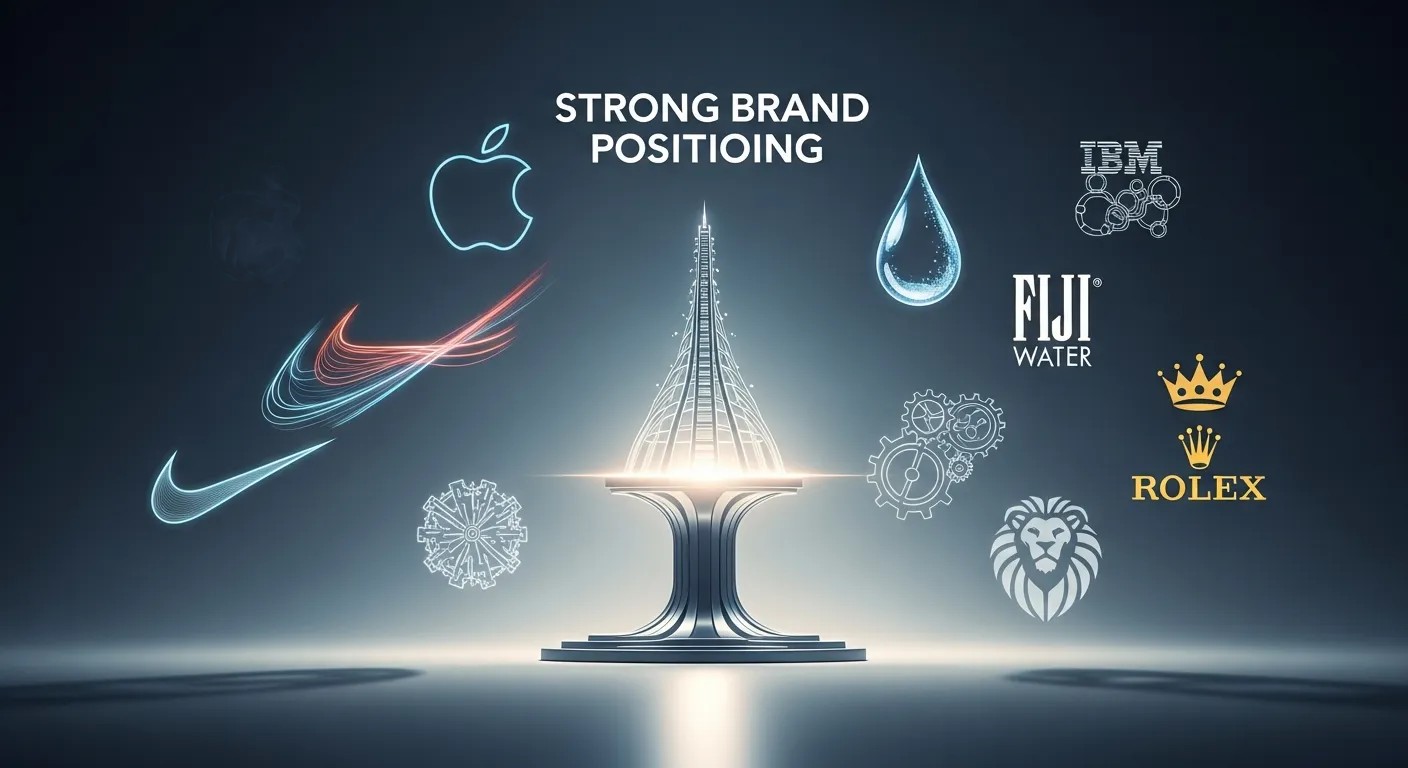
Analyzing how successful companies craft their brand positioning statement can provide inspiration and clarity. While their internal statements are often private, we can infer their positioning from their public messaging and brand marketing efforts.
Nike
Inferred Statement: “For athletes who want to perform at their absolute best, Nike is the sports apparel and footwear brand that delivers innovative technology and inspirational experiences, because we are relentlessly focused on pushing the boundaries of human potential.”
Analysis: Nike’s positioning goes beyond just selling shoes. It’s about a mindset of achievement and innovation (“Just Do It”). Their brand marketing strategy consistently reinforces this through athlete endorsements and stories of overcoming adversity.
Apple
Inferred Statement: “For individuals who believe that creativity and innovation can change the world, Apple is the technology company that creates beautifully designed products that are simple and intuitive to use, because we challenge the status quo by putting design at the heart of everything we do.”
Analysis: Apple never competes on specs alone. Their brand positioning is about user experience, design elegance, and a sense of being part of a creative tribe. This allows them to command a premium price for their luxury brand marketing approach to technology.
Starbucks
Inferred Statement: “For busy people seeking a moment of affordable luxury and connection, Starbucks is the coffee house that provides high-quality, handcrafted beverages in a welcoming ‘third place’ environment, because we are committed to fostering human connection one cup at a time.”
Analysis: Starbucks doesn’t just sell coffee; it sells an experience. Their positioning is built around the concept of being a “third place” between home and work. This focus on community and atmosphere is a key differentiator from fast-food competitors.
Volvo
Inferred Statement: “For safety-conscious families, Volvo is the premium automobile manufacturer that provides the highest level of protection, because for decades, our entire engineering philosophy has been built around safety innovation.”
Analysis: For years, Volvo has owned the “safety” position in the automotive market. This sharp focus in their brand positioning statement has made their brand synonymous with protection, creating a powerful and enduring brand perception in marketing.
Common Mistakes to Avoid When Crafting Your Statement
Creating a weak brand positioning statement can be worse than having none at all. It can lead to confusing marketing and a disconnected brand identity. Here are common pitfalls to avoid:
- Being Too Vague: Statements like “We are the best solution for businesses” are meaningless. “Best” is subjective and not a differentiator. Your brand positioning statement must be specific.
- Trying to Be Everything to Everyone: A brand that tries to appeal to everybody ultimately appeals to nobody. A strong position requires making choices and being willing to exclude some parts of the market to better serve your core audience.
- Focusing on Features, Not Benefits: Customers don’t buy a drill bit; they buy a hole. Don’t just list what your product does. Explain the benefit it provides and the problem it solves. This connects on an emotional level.
- Making Unbelievable Claims: If your brand positioning statement claims you are the “most innovative” but you have no proof to back it up, you will lose credibility. Your promise must be supported by your reasons to believe.
- Copying a Competitor: Your brand positioning statement must define what makes you different. If your statement could easily apply to your main competitor, you haven’t dug deep enough to find your unique space.
A successful brand positioning statement is authentic, specific, and defensible. Avoiding these mistakes is a critical part of the refinement process.
Conclusion
A brand positioning statement is far more than a line of text in a marketing plan; it is the strategic heart of your brand. It’s the filter through which all your decisions should pass, ensuring consistency, clarity, and focus. By defining who you serve, what you promise, and why you’re unique, you build a foundation for a resilient and resonant brand that can stand the test of time and competition. It’s an investment that pays dividends in brand equity, customer loyalty, and long-term growth.
FAQs
1. What is the difference between a brand positioning statement and a tagline?
A brand positioning statement is an internal, strategic document that defines your target audience, market category, and unique value proposition. A tagline is an external, customer-facing slogan that creatively captures the essence of your brand (e.g., Nike’s “Just Do It”). Your positioning statement informs your tagline, but they are not the same thing.
2. How often should I revisit my brand positioning statement?
You should review your brand positioning statement annually or whenever there is a significant market shift, such as a new major competitor, a change in consumer behavior, or a major pivot in your business model. However, it should not change frequently; it’s meant to be a long-term guide.
3. Can a company have more than one brand positioning statement?
A company with a portfolio of different brands (like P&G) will have a unique brand positioning statement for each brand (e.g., Tide, Pampers, Gillette). However, a single brand should only have one clear, unifying statement to avoid confusion.
4. Is a brand positioning statement necessary for a small business or startup?
Absolutely. It’s arguably even more critical for a small business or startup. With limited resources, you cannot afford to have a scattered message. A clear brand positioning statement ensures your marketing budget and efforts are laser-focused on the right audience with the right message, maximizing your impact.
5. How does a brand positioning statement relate to brand architecture?
Brand architecture is the structure that organizes a company’s portfolio of brands, sub-brands, and products. The brand positioning statement for each brand helps define its specific role and relationship within that architecture, ensuring each has a clear purpose and they don’t cannibalize each other.
6. Where does brand voice fit in?
Your brand voice strategy is the personality your brand uses in its communications, and it is directly derived from your brand positioning statement. If your positioning is about being a knowledgeable and trusted authority, your voice will be professional and informative. If it’s about fun and entertainment, your voice will be playful and witty.
7. How do I know if my brand positioning statement is effective?
An effective statement is one that is:
- Memorable and Clear: Is it easy for your internal team to understand and articulate?
- Unique: Does it clearly differentiate you from competitors?
- Believable: Is it supported by credible proof?
- Relevant: Does it resonate with your target audience’s needs and values?
8. What is the role of a brand audit in this process?
A brand audit is often the first step before creating or refining a brand positioning statement. It’s a comprehensive analysis of your brand’s current position in the market, its strengths, weaknesses, and how it is perceived by customers. The findings from a brand audit provide the critical data needed for Step 1 and Step 2 of the writing process.
9. Can my personal brand have a positioning statement?
Yes. A personal brand strategy heavily relies on a positioning statement. It helps professionals—from freelancers to executives—articulate their unique expertise, target audience (e.g., potential employers or clients), and what makes them the best choice in their field.
10. How does a brand positioning statement guide content creation?
Your brand positioning statement is the ultimate content guide. It tells you who your audience is (so you know what topics they care about), what your key message is (so you know what to write about), and what your brand personality is (so you know what tone to use). Every blog post, video, or social media update should align with and reinforce your positioning.