The holiday season represents a major revenue opportunity for businesses worldwide. To capture this demand, a well-planned Festive Marketing strategy is essential. By using strategic promotions and psychological triggers, brands can boost sales, outperform competitors, and build customer loyalty.
The Anatomy of a High-Converting Festive Marketing Campaign
Understanding consumer behavior during peak holiday seasons is essential for successful campaigns. Consumers face constant advertisements, emails, and sales, so brands need a data-driven Festive Marketing approach built around anticipation, urgency, scarcity, and a smooth customer experience. During the holiday rush, shoppers seek gifts, better value, and convenient buying experiences. Effective Festive Marketing goes beyond discounts by creating engaging journeys from discovery to checkout and using Conversion Rate Optimization to turn visitors into customers.
| Marketing Element |
Standard Year-Round Marketing |
High-Impact Festive Marketing |
| Purchasing Urgency |
Generally low to moderate; driven by personal need. |
Extremely high; driven by fixed holiday deadlines. |
| Target Audience |
The primary end-user of the product or service. |
Often gift buyers shopping for family, friends, or colleagues. |
| Sales Cycle Speed |
Varies widely; can involve lengthy consideration phases. |
Highly compressed; decisions are made in minutes or hours. |
| Creative Messaging |
Feature-focused, logical, and brand-building. |
Emotionally driven, festive-themed, urgency-based (FOMO). |
| Budget Allocation |
Evenly distributed across fiscal quarters. |
Heavily front-loaded prior to major seasonal events. |
Crafting Irresistible Value Propositions and Bundles
The cornerstone of any profitable festive marketing initiative is the offer itself. In a landscape saturated with standard percentage-off discounts, your brand must present a value proposition that feels genuinely irresistible. Simply slashing prices by ten percent is rarely enough to capture attention during peak shopping days like Black Friday, Cyber Monday, or regional holiday festivals. Instead, businesses should focus on perceived value enhancement through strategic product bundling and tiered rewards.
Product bundling is a highly effective psychological pricing strategy. By combining complementary items into a single, cohesive package at a slightly reduced combined price, you increase the Average Order Value (AOV) while simultaneously providing the customer with a complete, gift-ready solution. For example, a skincare brand might bundle a cleanser, toner, and moisturizer into a “Winter Radiance Kit.” This not only simplifies the purchasing decision for a stressed holiday shopper but also introduces them to products they may not have purchased individually. To maximize the effectiveness of these bundles, ensure the packaging and presentation align with the festive theme, creating a premium unboxing experience that encourages social sharing.
Another powerful tactic is the implementation of tiered promotional structures. Instead of a flat discount, consider an approach like “Spend $50, get 10% off; Spend $100, get 20% off; Spend $150, get 30% off plus a free gift.” This gamifies the shopping experience and strongly incentivizes consumers to add just one more item to their cart to unlock the next reward tier. Offering a free, exclusive gift with purchases over a certain threshold is often more compelling than a monetary discount, as the perceived value of a physical item is highly subjective and emotionally appealing. Incorporating Dynamic Pricing Models into your e-commerce platform can automate these tiered systems, ensuring profitability margins are protected while maximizing customer spending.
Launching VIP Early Access Campaigns
Exclusivity is a potent psychological trigger, and leveraging it through VIP early access campaigns is a masterclass in festive marketing. Consumers love to feel valued, special, and ahead of the crowd. By granting early access to your seasonal sales to a select group of customers, you accomplish two critical business objectives simultaneously: you secure guaranteed early revenue before the primary market rush, and you deepen brand loyalty among your most valuable segments.
To execute this strategy effectively, you must segment your audience based on their historical engagement and purchasing behavior. Identify your highest Lifetime Value (LTV) customers, your frequent repeat buyers, and your most active email subscribers. Send them highly personalized communications inviting them to shop the festive deals 24 to 48 hours before the general public. Position this not merely as a marketing tactic, but as a genuine token of appreciation for their continued support. The messaging should emphasize themes of exclusivity, limited inventory, and insider status.
Aligning Website Performance for the Holiday Rush
 No matter how compelling your offers or how brilliant your ad creatives are, your entire festive marketing strategy will collapse if your digital storefront cannot handle the pressure. Website performance is the silent engine of e-commerce success. During peak holiday seasons, traffic spikes can be sudden and massive. A slow-loading website, a glitchy checkout process, or a server crash can result in catastrophic revenue loss and severe damage to your brand’s reputation.
The first technical priority is site speed optimization. According to data provided by industry leaders like Google Page Speed Insights, a delay of even one second in mobile load times can decrease conversion rates by up to twenty percent. Consumers have zero tolerance for lag, especially when they are rushed for time and comparing multiple tabs of competitor deals. To mitigate this, compress all high-resolution festive banners and product images using modern web formats like WebP. Minimize heavy JavaScript executions, leverage browser caching, and ensure you are utilizing a robust Content Delivery Network (CDN) to serve site files rapidly to users regardless of their geographic location.
Equally important is the mobile user experience. The majority of holiday product discovery and transaction now occurs on smartphones. If your website is merely mobile-responsive rather than mobile-first, you are leaving money on the table. Navigation menus must be easily tappable, search bars must feature predictive auto-complete, and the checkout process must be seamlessly integrated with mobile wallets like Apple Pay and Google Pay. Frictionless payment options dramatically lower the Cart Abandonment Rate, which traditionally spikes during the holidays when users are browsing on the go.
Dominating with Seasonal SEO Optimization
While paid advertising provides immediate visibility, organic search remains one of the highest-converting traffic sources for any business. However, consumer search behavior changes drastically during the holidays. To capture this intent-driven traffic, your festive marketing strategy must include a dedicated focus on seasonal search engine optimization.
Seasonal SEO Optimization involves anticipating the specific queries your target audience will use as the holidays approach and tailoring your content to match that exact intent. Standard keywords like “leather wallets” transition into long-tail, intent-heavy queries such as “best leather wallet gifts for dad under $50.” To capitalize on this, you must create dedicated holiday landing pages well in advance. These pages—often structured as gift guides or holiday hubs—should be published months before the season begins. Search engines require time to crawl, index, and rank new URLs. By launching early, you accumulate page authority and user engagement signals long before your competitors launch their last-minute pages.
Amplifying Reach Through Social Commerce
Social media has evolved from a brand awareness channel into a direct revenue driver. A modern festive marketing playbook must heavily emphasize social platforms, not just for broadcasting messages, but for facilitating immediate, frictionless transactions. By blurring the lines between scrolling and shopping, businesses can capture impulse buyers exactly where they spend their digital time.
The integration of native shopping features on platforms like Instagram, TikTok, and Pinterest is revolutionizing holiday retail.
Social Commerce Integration allows users to discover a product in a video or image, tap on a localized tag, and complete the checkout process without ever leaving the social media application. This removal of steps in the conversion funnel is critical during the distraction-heavy holiday season. To leverage this, ensure your entire product catalog is synced accurately with your social media business managers. Product descriptions, inventory levels, and festive pricing must update in real-time to prevent customer frustration.
To maintain a consistent and highly engaging social media presence throughout the season, implement the following content frameworks:
- Behind-the-scenes preparation: Showcase your team packing orders, decorating the office, or designing holiday products. This humanizes your brand and builds an emotional connection with your audience.
- User-generated content spotlights: Reshare photos and videos of real customers using your products from previous holidays. This acts as powerful social proof, leveraging peer validation to drive new sales.
- Interactive countdowns and polls: Use native platform features like Instagram Stories countdown stickers to build anticipation for flash sales or new product drops, encouraging users to set reminders.
Leveraging Influencer Partnerships for Trust at Scale
 Influencer marketing has matured into a highly sophisticated and trackable channel, making it an indispensable component of a comprehensive festive marketing strategy. Consumers today are highly skeptical of traditional brand advertising, often suffering from banner blindness and ad fatigue. However, they retain a deep level of trust in the creators and personalities they choose to follow daily. Partnering with the right influencers allows your brand to borrow that hard-earned trust and project your holiday messaging to a highly engaged, targeted audience.
The key to successful holiday influencer campaigns is authenticity and strategic alignment. Rather than blowing your entire budget on a single mega-influencer with millions of followers but low engagement, consider activating a network of micro-influencers. Micro-influencers typically boast highly dedicated, niche communities. Their recommendations are often received with the same weight as advice from a close friend. When these creators authentically integrate your product into their holiday gift guides, styling videos, or daily vlogs, the conversion rates frequently outperform traditional paid social ads.
When designing these campaigns, move away from rigid, overly scripted briefs. Allow the creators the creative freedom to present your product in a way that resonates naturally with their specific audience tone. Whether they are running User-Generated Content Campaigns to encourage their followers to participate in a brand challenge or simply unboxing your holiday bundle, the content must feel organic.
Engineering High-Converting Email Automations
Despite the rise of new communication channels, email marketing remains one of the highest-ROI activities in the digital commerce space. During the festive season, your email list is your most valuable owned asset. However, blasting the same generic promotional flyer to your entire database every day is a guaranteed way to trigger mass unsubscribes and damage your sender reputation. A sophisticated festive marketing approach requires deep segmentation, behavioral automation, and highly persuasive copywriting.
The foundation of your holiday email strategy should be behavioral segmentation. Treat different cohorts of your audience with distinct messaging strategies. For instance, your VIP repeat customers should receive exclusive early access and premium up-sell recommendations. Conversely, subscribers who have never made a purchase might require heavier discounting, strong social proof, and first-time buyer incentives to convert. By tailoring the message to the user’s historical relationship with your brand, you significantly increase open rates and click-through rates.
Beyond broadcast campaigns, automated email workflows are critical for recovering lost revenue. Cart abandonment is at its highest during the holidays as users jump between sites comparing prices. Implement an aggressive, multi-stage cart recovery sequence. The first email should trigger within one hour of abandonment, serving as a helpful reminder. If they do not convert, a second email 24 hours later can introduce a sense of urgency, warning that stock is running low. Finally, a third email can offer a slight, time-sensitive incentive, such as free shipping, to push them over the edge.
Implementing Precision Retargeting and Omnichannel Tactics
A significant reality of digital commerce is that the vast majority of first-time website visitors will not make a purchase immediately. This is especially true during the holidays when consumers are researching and comparison-shopping across dozens of brands. If you allow these users to bounce and forget about you, your initial acquisition costs are wasted. Precision retargeting is the mechanism through which you recapture this lost traffic and guide them back to the checkout page.
Retargeting is most effective when it is highly specific. If a user spends three minutes looking at a specific luxury watch on your site but leaves, they should not be retargeted with a generic brand ad showing your entire catalog. They should be served an ad featuring that exact watch, perhaps with a dynamic overlay showing a holiday discount or highlighting a customer review. This level of personalization reminds the consumer exactly what caught their eye and removes friction from the return journey. By utilizing tracking pixels from Meta, Google, and TikTok, you can follow these high-intent users across the web, keeping your brand top-of-mind.
To elevate this strategy, brands must adopt an
Omnichannel Customer Experience approach. Omnichannel means ensuring that your messaging, branding, and offers are completely synchronized across every platform a consumer interacts with. If a user clicks an ad on Instagram, browses on their mobile web browser, abandons their cart, receives a retargeting email on their desktop, and finally purchases via a search ad, the entire journey must feel like a single, continuous conversation.
Scaling Customer Support for Peak Demand
Marketing strategies focus heavily on customer acquisition, but the actual conversion often hinges on customer support. During a festive marketing blitz, consumer anxiety is high. Shoppers are worried about shipping deadlines, sizing issues, and return policies for gifts. If they cannot find answers to their questions instantly, they will abandon their purchase and move to a competitor who provides clarity. Proactive and scalable customer support is a hidden driver of revenue.
First, your shipping, return, and exchange policies must be aggressively visible. Do not hide them in the footer. Display a banner at the top of your site clearly stating the final order dates for guaranteed holiday delivery. Create a dedicated, easily accessible FAQ page specifically for the holidays. Address the most common objections directly: How long do refunds take? Can a gift recipient exchange an item without the original buyer knowing? Providing this information transparently reduces the burden on your support team and builds immediate trust with the buyer.
To handle the inevitable surge in inquiries, leverage intelligent automation. Chatbots powered by AI can handle up to eighty percent of tier-one customer service tickets, such as order tracking requests, basic product information, and policy clarification. Ensure your chatbot is programmed with a festive, helpful tone and seamlessly escalates complex issues to human agents. When a customer is ready to buy but has one final hesitation, a fast response from a live chat agent can be the difference between a closed sale and a lost customer.
Executing a Post-Sale Nurturing and Retention Plan
The biggest mistake brands make during the holiday season is viewing a purchase as the finish line. In reality, the acquisition of a new customer during the holidays is just the beginning of the relationship. The cost of acquiring these festive shoppers is often high due to increased advertising competition. To make these campaigns truly profitable in the long term, you must convert these one-time gift buyers into loyal, year-round brand advocates.
This requires a sophisticated
Post Holiday Retention Strategy. The moment a transaction is completed, the nurturing process begins. The post-purchase order confirmation and shipping update emails are among the most highly opened emails your brand will ever send. Use this digital real estate wisely. Instead of a blank receipt, include a heartfelt thank-you note from the founder, a brief guide on how to care for the product, or an invitation to join your brand’s loyalty program.
In the weeks following the holidays, typically in January, execute a strategic re-engagement campaign. Consumers are often fatigued by spending, so focus on value-add content rather than immediate hard-selling. If you sell fitness apparel, send a New Year’s workout guide. If you sell food products, share healthy recipes. Once you have re-established engagement, you can introduce subtle promotions for complementary products or subscription services.
Common Mistakes to Avoid in Festive Marketing
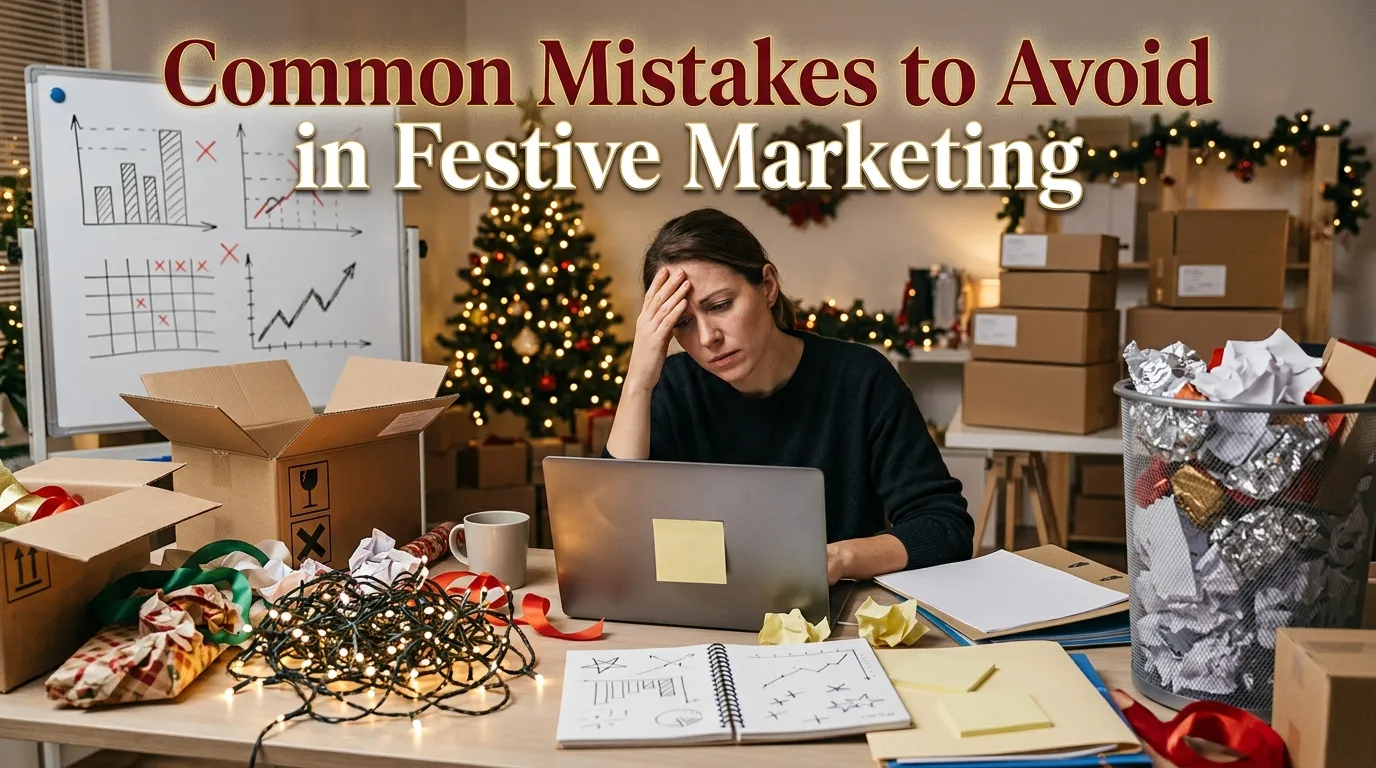 Even the most well-funded campaigns can falter if foundational errors are made. Navigating the holiday rush requires precision, and falling into common traps can severely damage your ROI and brand reputation. Awareness of these pitfalls is the first step in avoiding them.
- Failing to Forecast Inventory Accurately: Running out of stock on your best-selling items during peak traffic days is a disaster. It wastes advertising spend, frustrates customers, and pushes them to competitors. Implementing Predictive Inventory Management software that analyzes historical sales data and current market trends is essential to ensure you are adequately stocked for demand spikes without over-leveraging capital in unsold goods.
- Neglecting the Post-Purchase Experience: Focusing entirely on acquisition and ignoring fulfillment leads to negative reviews. If your shipping partners are delayed, you must communicate this proactively to the customer before they have to ask. Poor unboxing experiences or rigid, unaccommodating return policies will guarantee that the customer never shops with you again, destroying any chance of long-term profitability.
- Launching Campaigns Too Late: The holiday shopping season begins earlier every year. Waiting until late November to start warming up your audience, building your email list, and testing your ad creatives is a guaranteed recipe for failure. Ad costs skyrocket in Q4; by launching early, you acquire leads at a lower cost and build a retargeting pool to utilize when conversion intent peaks.
Expert Insights and Pro Tips for Festive Marketing Dominance
To truly elevate your strategy from good to exceptional, you must adopt the mindset of top-tier digital marketers. These advanced tactics focus on marginal gains that compound to create significant competitive advantages.
- Leverage Scarcity Authentically: Fake countdown timers and artificial “low stock” warnings damage consumer trust. Instead, use real data. Show genuine stock levels (e.g., “Only 4 left in this size!”) or highlight how many people are currently viewing a product. Authentic scarcity drives urgency without sacrificing brand integrity.
- Create Unboxing Experiences for Social Sharing: Invest in custom, festive packaging. Include a handwritten note, a small unexpected freebie, or a visually stunning insert. When customers are delighted by the physical reception of your product, they are highly likely to film an unboxing video for their social media, generating free, highly credible organic marketing for your brand.
- Optimize for Local Search and Foot Traffic: If you operate physical retail locations alongside your digital store, ensure your local SEO is flawless. Update your Google Business Profile with extended holiday hours, upload photos of your festive window displays, and run localized mobile ads targeting shoppers within a specific radius of your stores who are searching for last-minute gifts.
Measuring Your ROI and Key Performance Indicators
The final stage is analyzing campaign data to understand which strategies generate profit and which waste budget. Track ROAS, sales volume, and advertising costs together so you can judge overall campaign efficiency. During the holiday season, higher ad costs may be acceptable when increased sales and healthy margins support them.
Also monitor Customer Acquisition Cost (CAC) and Customer Lifetime Value (LTV). A successful Festive Marketing campaign should attract customers who are likely to return, not only buyers looking for discounts. Reviewing repeat purchases and customer retention after the holiday season can help improve future campaigns and long-term profitability.
Conclusion
Executing a successful Festive Marketing campaign requires more than basic discounts; it demands a data-driven, customer-centric approach. By implementing these proven methods, you will significantly enhance shopper engagement and maximize seasonal revenue. Do not wait for the holiday rush to begin. Take action today, optimize your digital storefront, and secure your highest-converting season yet.
FAQ
1. When is the best time to start planning my holiday campaigns?
You should begin planning your strategy at least three to four months in advance. Early planning allows time for inventory, creative assets, SEO, and audience building. A strong Festive Marketing strategy can also help launch awareness campaigns before peak buying season. Starting early is one of the most effective Festive Marketing approaches for staying visible.
2. How much should I increase my advertising budget during the holidays?
Budget increases vary by industry, but many e-commerce brands allocate a larger share of their annual ad spend to Q4. During the holidays, Festive Marketing campaigns often face higher competition and CPMs. Focus your extra budget on high-performing, data-backed channels to make Festive Marketing more efficient.
3. Are deep discounts absolutely necessary for success?
No. You can focus on value-added offers such as product bundles, limited-edition items, gift wrapping, or faster shipping. These Festive Marketing ideas can increase perceived value without damaging profit margins.
4. How can I reduce cart abandonment during seasonal sales?
Make checkout mobile-friendly, offer multiple payment options, and use automated cart-recovery emails with timely reminders. These Festive Marketing tactics can help recover high-intent shoppers and improve conversions. A smooth checkout experience should remain a key Festive Marketing priority.
5. What is the most effective social media platform for holiday sales?
The best platform depends on your target audience. Instagram and TikTok can be effective for visual products because of their shopping features and short-form video content. Including these platforms in your Festive Marketing plan can improve product discovery and engagement.
6. How do I handle customer returns after the holidays?
Offer a clear and flexible return policy, ideally with an extended return window into January. A simple return process supports customer trust and strengthens long-term Festive Marketing results.
7. Should I create a separate landing page for holiday promotions?
Yes. Dedicated, SEO-optimized holiday landing pages create a focused shopping experience and make campaign performance easier to track. These pages are an important part of Festive Marketing campaigns and can support better search visibility. Well-structured landing pages can also improve your overall Festive Marketing performance.
8. How can local brick-and-mortar businesses leverage digital holiday marketing?
Optimize your Google Business Profile, update holiday hours, promote local inventory, and offer options such as Buy Online, Pick Up In-Store. These Festive Marketing tactics can help local businesses attract nearby and last-minute shoppers.
9. What role does email segmentation play in seasonal campaigns?
Segment your audience by purchase history, engagement, and customer preferences. This allows you to send more relevant offers and makes Festive Marketing campaigns more personalized.
10. How do I maintain sales momentum after the holiday season ends?
Use post-holiday campaigns focused on useful content, loyalty programs, and repeat-purchase offers instead of hard-selling. A strong Festive Marketing strategy should continue after the holidays, helping turn seasonal buyers into long-term customers. Continued engagement makes Festive Marketing more valuable over time.