Preparing for the busiest shopping season requires precision and creativity. If you want to maximize your revenue, implementing proven Holiday Marketing Strategies is non-negotiable. Dive into actionable techniques designed to elevate your brand, capture shopper attention, and drive unprecedented seasonal conversions. This comprehensive guide explores ten highly effective tactics to transform your seasonal campaigns.
1. Deploying Early Bird Holiday Marketing Strategies to Capture Initial Demand
Understanding the shifting timeline of consumer behavior is the foundation of highly effective Holiday Marketing Strategies. In recent years, shoppers have begun their festive purchasing earlier than ever, often starting in October or even late September. This shift is driven by a desire to avoid last-minute stress, secure highly anticipated items before stock runs out, and spread financial expenditures across multiple paychecks. To capitalize on this extended shopping window, brands must launch their initial campaigns well before traditional dates like Black Friday or Cyber Monday. Initiating your promotional activities early allows you to capture high-intent buyers who are already actively researching gifts, thereby securing a significant portion of their seasonal budget before your competitors even launch their advertisements.
Implementing early-bird Holiday Marketing Strategies requires a phased approach to communication and offer distribution. Begin by teasing upcoming product drops or exclusive discounts to your most loyal customers through targeted channels. Creating VIP access groups or offering exclusive early shopping days builds anticipation and rewards your existing community, which dramatically enhances
customer retention strategies. Furthermore, launching early provides your business with a critical testing ground. By analyzing which messaging, creative assets, and product categories perform best during the initial weeks, you can recalibrate your approach for the peak rush. This proactive testing phase ensures that when advertising costs peak in late November, your budget is exclusively allocated to proven, high-converting assets.
2. Crafting Hyper-Personalized Email Campaigns for Deeper Engagement
Email remains one of the most profitable channels available, but generic batch-and-blast messaging is no longer sufficient for modern Holiday Marketing Strategies. Today’s consumers are inundated with promotional emails, meaning your brand must deliver hyper-personalized, relevant content to stand out in a crowded inbox. Personalization goes far beyond simply inserting a subscriber’s first name into the subject line; it involves tailoring the entire email experience based on browsing behavior, past purchases, demographic data, and stated preferences. When you leverage advanced segmentation, you deliver exactly what the consumer wants to see, significantly increasing open rates, click-through rates, and overall revenue per recipient.
To build sophisticated Holiday Marketing Strategies through email, you must heavily utilize robust
email marketing automation. Start by creating specific audience segments based on highly actionable criteria. For instance, you can categorize subscribers into groups such as high-value VIP customers, discount-seeking bargain hunters, and long-time inactive users who need re-engaging. Once segmented, design tailored messaging for each group. VIP customers might receive invitations to exclusive online events or early access to limited-edition merchandise, while bargain hunters respond better to aggressive percentage-off discounts and clear countdown timers. Additionally, utilizing dynamic content blocks within your emails allows you to automatically populate product recommendations based on individual browsing histories, ensuring that every subscriber sees items they have already shown interest in.
3. Optimizing the Mobile Commerce Experience for Seamless Shopping
In the current digital landscape, integrating a flawless mobile experience is a non-negotiable pillar of successful Holiday Marketing Strategies. Mobile devices now account for the majority of online traffic and a rapidly growing percentage of total e-commerce sales. Consumers are researching products on their commutes, browsing social media during breaks, and making impulsive purchases directly from their smartphones. If your website is slow, difficult to navigate, or presents a cumbersome checkout process on a mobile device, you will hemorrhage potential sales regardless of how compelling your products or discounts may be. Therefore, rigorous optimization of the mobile user interface must be a top priority before the seasonal traffic surge begins.
The foundation of mobile optimization lies in page speed and responsive design. Mobile shoppers are notoriously impatient; a delay of even two seconds in page load time can lead to a dramatic increase in bounce rates. To combat this, compress high-resolution images, minimize heavy JavaScript, and leverage efficient content delivery networks. Beyond pure speed, focus intensely on
conversion rate optimization specific to small screens. Ensure that all clickable elements, such as product variants, size selectors, and “Add to Cart” buttons, are large enough to be easily tapped with a thumb without accidentally clicking adjacent links. The navigation menu must be intuitive, typically utilizing a streamlined hamburger menu that allows users to find categories quickly without overwhelming the limited screen real estate.
4. Implementing Scarcity and Urgency Tactics to Drive Immediate Action
Psychological triggers are incredibly potent tools within comprehensive Holiday Marketing Strategies, and none are more effective than scarcity and urgency. Human beings are naturally wired to value things that are perceived as rare or fleeting, a concept known as loss aversion. Shoppers are far more motivated by the fear of missing out on a great deal or a popular product than they are by the simple desire to acquire it. When applied ethically and authentically, scarcity and urgency can compel hesitant browsers to make immediate purchasing decisions, drastically shortening the typical conversion cycle and boosting overall sales velocity.
Urgency relies on time constraints. The most common and effective application of this is the flash sale. By offering a steep discount for a strictly limited period—such as twenty-four hours or even a specific six-hour window—you force the consumer to act quickly. To amplify this effect, utilize visual cues across your website. Sitewide announcement bars with ticking countdown timers constantly remind the user that the opportunity is slipping away. Similarly, incorporating countdowns into your email campaigns and social media stories reinforces the time-sensitive nature of the promotion. It is crucial, however, that these deadlines are genuine; if a countdown timer reaches zero and simply resets, you will instantly lose credibility and permanently damage consumer trust.
5. Partnering with Influencers and Content Creators for Authentic Reach
 Collaborating with influential voices in your industry is a highly dynamic approach to modern Holiday Marketing Strategies. Traditional advertising often struggles to cut through the immense noise of the festive season, as consumers actively ignore banner ads and generic promotional messaging. Influencer marketing bypasses this resistance by leveraging the established trust and authentic relationships that creators have built with their dedicated audiences. When an influencer genuinely recommends your product, it acts as high-impact social proof, significantly lowering the barrier to entry for new customers who might be unfamiliar with your brand but implicitly trust the creator’s curation.
A successful influencer strategy requires moving beyond mere transactional shout-outs and focusing on deep, narrative-driven partnerships. Instead of simply paying for a static photo, encourage creators to develop engaging user-generated content, such as detailed unboxing experiences, practical styling tutorials, or honest product reviews. This type of content demonstrates the real-world value of your products and provides potential buyers with the context they need to make an informed purchasing decision. Furthermore, consider adopting a tiered influencer strategy. While macro-influencers offer massive reach, micro-influencers and nano-influencers often boast significantly higher engagement rates and highly targeted niche audiences. Partnering with a diverse network of smaller creators can yield a superior return on investment and drive highly qualified traffic to your store.
6. Creating Interactive and Shoppable Social Media Content
Transforming passive scrolling into active purchasing is the primary goal of integrating interactive social media experiences into your Holiday Marketing Strategies. Modern consumers, particularly younger demographics, increasingly use platforms like Instagram, TikTok, and Pinterest as their primary search engines and shopping malls. To capture this lucrative audience, brands must evolve beyond static image posts and embrace dynamic, interactive formats that compress the traditional marketing funnel. By bringing the point of sale directly into the social feed, you eliminate friction and capitalize on high-intent moments of discovery.
Shoppable posts and live commerce are at the forefront of this revolution. Utilizing native platform features, you can tag specific products within your images and short-form videos, allowing users to view pricing, read descriptions, and proceed to checkout without ever leaving the app environment. This seamless integration drastically reduces drop-off rates. Taking this a step further, hosting live shopping events provides an immersive, interactive experience that mimics the energy of in-store shopping. During a livestream, hosts can demonstrate products in real-time, answer viewer questions instantly, and offer exclusive, limited-time discounts to the live audience. This format builds immense excitement, fosters community engagement, and drives immediate, impulse-driven sales.
Beyond direct shopping features, gamification and interactive content encourage deeper brand engagement. Launching interactive polls, holiday-themed quizzes, or “this-or-that” style questions in your Instagram Stories keeps your audience actively participating rather than passively consuming.
7. Maximizing Retargeting Ads and Abandoned Cart Recovery Flows
A harsh reality of the e-commerce landscape is that the vast majority of first-time visitors will leave your website without making a purchase. However, ignoring these bounced visitors is a massive missed opportunity. Developing aggressive, multi-channel recovery tactics is a crucial element of advanced Holiday Marketing Strategies. These visitors have already demonstrated clear intent by browsing specific items or adding them to a cart; they simply need the right push to finalize the transaction. Implementing robust retargeting and abandoned cart sequences allows you to systematically recapture this lost revenue and maximize the return on your initial acquisition investments.
Effective retargeting begins with meticulous data collection and dynamic ad creation. Ensure your tracking pixels and server-side tracking solutions are perfectly configured across all platforms well before the season begins. Utilizing this data, deploy dynamic product ads that automatically show users the exact items they previously viewed, alongside personalized messaging. For example, if a user abandons a pair of shoes, they should see those specific shoes in their Facebook or Instagram feed the next day, perhaps accompanied by a subtle reminder of your holiday shipping deadlines or a small incentive. This continuous, relevant visibility keeps your brand top-of-mind as the consumer navigates their complex consideration phase across different websites and applications.
Abandoned cart recovery requires a highly coordinated, omnichannel approach. Relying solely on a single email is no longer sufficient.
8. Offering Irresistible Product Bundles and Curated Gift Guides
Increasing the Average Order Value (AOV) is one of the fastest and most efficient ways to scale profitability, and this is where strategic bundling shines within your Holiday Marketing Strategies. During the festive season, consumers are actively searching for comprehensive solutions and convenient gifting options.
When designing product bundles, focus on logical pairings and distinct consumer personas. For example, a skincare brand could create a “Winter Hydration Essentials” kit containing a cleanser, serum, and heavy moisturizer. This pre-packaged solution is far more appealing to a gift buyer than attempting to navigate individual product pages to guess what items work well together. Take the strategy further by implementing tiered “Buy More, Save More” architectures. Offering a 10% discount on a two-item bundle, scaling up to a 20% discount on a four-item bundle, heavily incentivizes customers to increase their cart size to unlock the maximum perceived value. Clearly visually represent these savings on the product page to immediately highlight the financial benefit of purchasing the bundle.
9. Enhancing Customer Support and the Post-Purchase Experience
While the bulk of Holiday Marketing Strategies naturally focus on customer acquisition and immediate conversion, neglecting the post-purchase experience is a catastrophic error. The intense volume of seasonal shopping inevitably leads to increased customer inquiries, complex shipping challenges, and a higher rate of returns. How your brand handles these operational pressures directly dictates whether a first-time holiday buyer becomes a furious detractor or a loyal, lifelong advocate. Elevating your customer support infrastructure and proactively managing the post-purchase journey are critical investments that protect your brand reputation and fuel long-term profitability.
First and foremost, you must scale your customer service capabilities to meet anticipated demand. Implement highly visible live chat features on your website, supported by intelligent chatbots capable of instantly answering common queries regarding shipping deadlines, return policies, and basic product information. This immediately alleviates the burden on your human agents, allowing them to focus on resolving complex, sensitive issues. Furthermore, ensure your support teams are empowered to make rapid decisions. Lengthy escalation protocols during the peak holiday rush will only frustrate anxious customers. Providing agents with the authority to issue immediate refunds, expedite replacement shipments, or offer appeasement discounts builds immense goodwill in moments of friction.
The post-purchase communication sequence is equally vital. The moment a transaction is completed, the customer’s anxiety regarding delivery begins. Mitigate this by providing proactive, transparent shipping updates via email and SMS. Do not force the customer to continuously hunt for their tracking information push the updates directly to them at every major logistical milestone. If unavoidable delays occur, over-communicate immediately. A sincere apology accompanied by a small discount code for a future purchase can often transform a negative shipping experience into a positive demonstration of brand integrity. This transparent communication is the bedrock of powerful customer retention strategies.
10. Analyzing Real-Time Data for Continuous Campaign Optimization
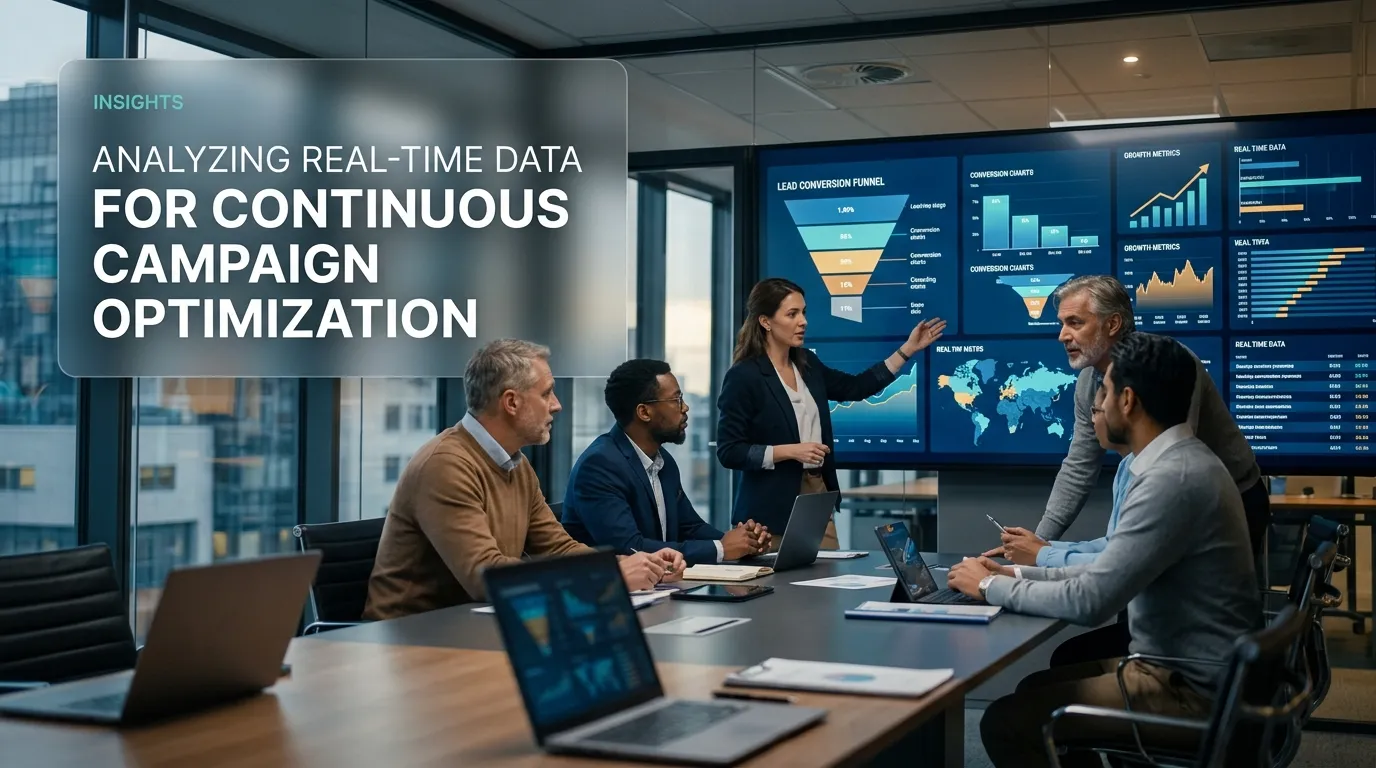 The most sophisticated Holiday Marketing Strategies are never static; they are highly fluid systems that adapt continuously based on empirical evidence. Relying solely on historical data or gut feeling is incredibly dangerous during the volatile festive shopping period. To truly dominate the season, brands must establish a culture of rigorous, real-time data analysis. By constantly monitoring key performance indicators (KPIs) across all active channels, marketing teams can rapidly identify underperforming assets, capitalize on unexpected trends, and aggressively reallocate budgets to maximize overall efficiency and profitability.
Begin by establishing a centralized dashboard that aggregates data from your e-commerce platform, advertising accounts, and email service provider. You must possess immediate visibility into critical metrics such as Return on Ad Spend (ROAS), Marketing Efficiency Ratio (MER), Cost Per Acquisition (CPA), and real-time inventory velocity. If a particular social media ad set is demonstrating an exceptionally high CPA, you must possess the agility to pause it immediately and redirect that budget into a high-performing search campaign or a highly profitable email segment. This daily, sometimes hourly, financial recalibration is essential for effective e-commerce scaling during peak demand.
A/B testing must remain active throughout the entire campaign lifecycle. Do not assume your initial messaging is optimal. Continuously test variations in headline copy, promotional phrasing, hero imagery, and landing page layouts. For instance, you might test whether a “20% Off” message outperforms a “Save $25” message on identical products. As statistical significance is achieved, immediately route all traffic to the winning variation. This relentless pursuit of incremental conversion rate improvements compounds massively when applied to the high volume of seasonal traffic, resulting in substantial bottom-line revenue increases.
Comparing Early vs. Last-Minute Promotional Approaches
To fully grasp the nuances of timing in seasonal commerce, it is helpful to contrast the mechanics of early engagement against last-minute urgency tactics.
| Strategy Component |
Early Bird Promotions (Oct – Early Nov) |
Last-Minute Sprints (Mid-to-Late Dec) |
| Primary Goal |
Capture initial demand, test creative, secure budget early. |
Liquidate inventory, capture procrastinators, maximize final volume. |
| Target Audience |
Planners, brand loyalists, budget-conscious consumers. |
Procrastinators, impulse buyers, desperate gift-seekers. |
| Key Messaging |
“Beat the rush,” “Exclusive VIP access,” “Secure yours now.” |
“Last chance for delivery,” “Running out of time,” “Digital gift cards.” |
| Optimal Channels |
Segmented Email, Organic Social, Content Marketing. |
High-frequency Retargeting Ads, SMS, Search Engine Paid Ads. |
| Logistical Impact |
Eases fulfillment pressure, highly reliable shipping. |
High stress on fulfillment, relies on expedited or digital delivery. |
| Discount Depth |
Moderate to low (focused on exclusivity and access). |
Deepest discounts (focused on immediate clearance and conversion). |
Common Mistakes to Avoid During the Festive Season
Even the most elaborately planned Holiday Marketing Strategies can fail spectacularly if fundamental errors are made during execution. Avoiding these pitfalls is crucial for protecting your margins and brand reputation.
- Ignoring Technical Infrastructure and Website Load Testing: Launching massive marketing campaigns driving thousands of concurrent users to a website that has not been stress-tested is a recipe for disaster. Server crashes and checkout glitches during peak hours will instantly destroy massive amounts of revenue and permanently alienate frustrated buyers. Always conduct rigorous load testing well before November.
- Deploying Overly Complicated Discount Structures: Consumers demand frictionless experiences. If your promotions require the user to add five specific items, enter a complex alphanumeric code, and navigate a maze of exclusions, they will simply abandon the cart. Keep your offers mathematically simple, transparent, and automatically applied at checkout whenever possible to maximize conversion rates.
- Failing to Sync Marketing and Inventory Management: Heavily promoting a product that is already out of stock, or failing to highlight items where you hold massive excess inventory, represents a severe misalignment. Marketing and operations teams must communicate daily to ensure ad spend is directed exclusively toward products that can actually be fulfilled immediately.
Pro Tips and Expert Insights for Seasonal Dominance
To truly excel, businesses must adopt advanced methodologies that transcend basic promotional tactics. One crucial insight is the necessity of aligning your brand storytelling with the emotional resonance of the season. Consumers are not just buying products; they are buying solutions to their holiday-related stressors or seeking ways to create meaningful moments with loved ones.
Frame your copywriting around these emotional outcomes rather than simply listing technical specifications. Show the customer how your product makes them a hero, saves them time, or brings joy to their specific situation. Another expert-level strategy involves aggressive post-holiday continuation. The season does not end on December 25th. The period between Christmas and New Year’s Day, often referred to as “Q5,” is characterized by massive digital gift card redemptions, high engagement rates, and significantly lowered advertising costs as competitors turn off their campaigns. By maintaining aggressive, tailored marketing efforts during this unique window, you can acquire high-quality customers at a fraction of the peak-season cost, establishing powerful momentum as you transition into the new fiscal year.
FAQ
1. When should businesses start planning their seasonal campaigns?
Businesses should start planning in June or July. Early preparation gives enough time to manage inventory, creative assets, influencers, and website testing. A strong Holiday Marketing Strategies plan can then launch teaser campaigns in late September or early October.
2. How can small businesses compete with retail giants during the holidays?
Small businesses should focus on niche targeting, personalized experiences, unique bundles, authentic storytelling, and specialized influencers. These Holiday Marketing Strategies help smaller brands compete through relevance instead of massive discounts.
3. What role does social media play in driving seasonal sales?
Social media can drive both awareness and direct conversions through shoppable posts, live commerce, and targeted advertising. Including social platforms in your Holiday Marketing Strategies can shorten the path from discovery to purchase.
4. How do product bundles increase average order value?
Bundles encourage customers to purchase multiple complementary products at a perceived value. This is one of the practical Holiday Marketing Strategies for increasing Average Order Value while moving more inventory.
5. Why is mobile optimization critical for seasonal success?
A slow or difficult mobile checkout can cause customers to abandon purchases. Effective Holiday Marketing Strategies should always include fast-loading pages, simple navigation, and mobile-friendly checkout.
6. What is the most effective way to recover abandoned carts?
Use a multi-channel sequence with email, SMS, personalized offers, and dynamic retargeting ads. This approach can strengthen Holiday Marketing Strategies by bringing high-intent shoppers back to complete their purchases.
7. How can brands use urgency without seeming manipulative?
Use genuine deadlines and accurate stock information instead of artificial scarcity. Trustworthy Holiday Marketing Strategies create urgency while maintaining customer confidence and transparency.
8. What are the best metrics to track during a seasonal campaign?
Track revenue, MER, ROAS, Cart Abandonment Rate, AOV, and CAC. These metrics help businesses evaluate their Holiday Marketing Strategies and make faster budget decisions.
9. How does free shipping impact seasonal purchasing decisions?
Free shipping can encourage conversions, while unexpected shipping fees may cause abandonment. Holiday Marketing Strategies can use minimum-order thresholds to protect margins and increase AOV.
10. Can post-holiday promotions still generate significant revenue?
Yes. Post-holiday periods can attract gift-card users, exchange shoppers, and self-purchasers, while advertising costs may decrease. Smart Holiday Marketing Strategies can use this period to capture additional sales and profitable new customers.