
Success in the digital landscape isn’t accidental; it requires a roadmap. Mastering how to make a social media marketing plan is the first step toward building a thriving online presence.
This guide breaks down the essential components of a successful digital strategy. We explore setting SMART goals, defining audience personas, selecting the right platforms, and creating engaging content pillars. You will learn how to measure performance using analytics and adapt your approach for consistent growth and engagement.
Why You Need a Social Media Marketing Plan
Navigating the digital world without a strategy is like sailing without a compass. You might move, but you likely won’t end up where you want to be. A robust social media marketing plan serves as your GPS. It aligns your business objectives with your online activities, ensuring that every tweet, post, and reel contributes to a larger goal.
Whether you are figuring out how to start a social media marketing company or simply trying to boost engagement for a local bakery, the foundational principles remain the same. A documented strategy prevents burnout, ensures brand consistency, and provides a benchmark for measuring success. According to data from CoSchedule, marketers who document their strategy are 313% more likely to report success than those who don’t.
Define Your Goals

All effective plans begin with clarity. Before you draft a single caption, you must answer the question: What do we want to achieve? Learning how to make a social media marketing plan starts with setting objectives that support your overall business mission.
Aligning Social Goals with Business Objectives
Your social goals shouldn’t exist in a vacuum. If your business needs more sales, your social goal should be lead generation. If your brand is new, your goal should be awareness.
Common objectives include:
- Increase Brand Awareness: Getting your name out there.
- Drive Website Traffic: Moving people from social apps to your site.
- Drive Leads and Conversions: Turning followers into customers.
- Build a Community: Fostering loyalty and advocacy.
- Brand Reputation Management: Monitoring sentiment and addressing issues.
The SMART Framework
Vague goals lead to vague results. To truly understand how to make a social media marketing plan that works, apply the SMART framework:
- Specific: Don’t say “get more followers.” Say “increase Instagram followers by 10%.”
- Measurable: Ensure you can track it via analytics.
- Achievable: Be realistic based on your resources.
- Relevant: Does this goal help the business?
- Time-bound: Set a deadline.
Example: Instead of “I want to improve my online presence,” a SMART goal would be: “I want to increase website traffic from LinkedIn by 15% over the next quarter by posting three educational articles per week.”
Know Your Audience

The “who” is just as important as the “what.” You cannot create a compelling social media marketing plan if you don’t know who you are talking to. Understanding your audience ensures your content resonates rather than falling flat.
Creating Audience Personas
Audience personas are fictional representations of your ideal customers. To build them, you need data. You can gather this from your CRM, customer surveys, or by analyzing competitors.
A solid persona includes:
- Demographics: Age, location, gender, income level.
- Psychographics: Interests, values, lifestyle, pain points.
- Online Habits: Which platforms they use and when they are active.
For instance, if you are a luxury fashion brand, your luxury brand marketing strategy will target a different demographic than a budget-friendly streetwear label.
Utilizing Analytics
Don’t guess—use data. Tools like Google Analytics and native platform insights (Facebook Insights, Instagram Insights) provide a treasure trove of information. Look at your current audience. Who is engaging with your posts? What content do they like?
If you are looking into how to become a social media influencer, this step is critical. Influencers succeed because they know exactly what their specific audience wants to see.
Pick Platforms That Make Sense

A common mistake when learning how to make a social media marketing plan is thinking you need to be everywhere at once. This often leads to “platform fatigue” and diluted content quality. It is far better to be exceptional on two platforms than mediocre on five.
Platform Breakdown
|
Platform |
Best For |
Audience Demographics |
Content Type |
|---|---|---|---|
|
|
Community building, ads, news |
Broad, skewing 25-55+ |
Video, images, links |
|
|
Visual storytelling, shopping, brand awareness |
Millennials & Gen Z |
High-quality photos, Reels, Stories |
|
|
B2B, professional networking, recruiting |
Professionals, B2B decision-makers |
Articles, professional updates, PDFs |
|
TikTok |
Viral trends, entertainment, quick tips |
Gen Z & young Millennials |
Short-form vertical video |
|
|
Inspiration, e-commerce, planning |
Women, high-intent shoppers |
Vertical images, infographics |
|
X (Twitter) |
Real-time updates, customer service, PR |
News junkies, tech, politics |
Text, short video, images |
Matching Platform to Strategy
If your goal involves B2B digital marketing strategies, LinkedIn is your primary arena. If you are focused on viral marketing on TikTok, you need a video-first strategy. For a company selling visually appealing goods, like New Seasons Market catering, Instagram and Pinterest are non-negotiable.
Develop Engaging Content
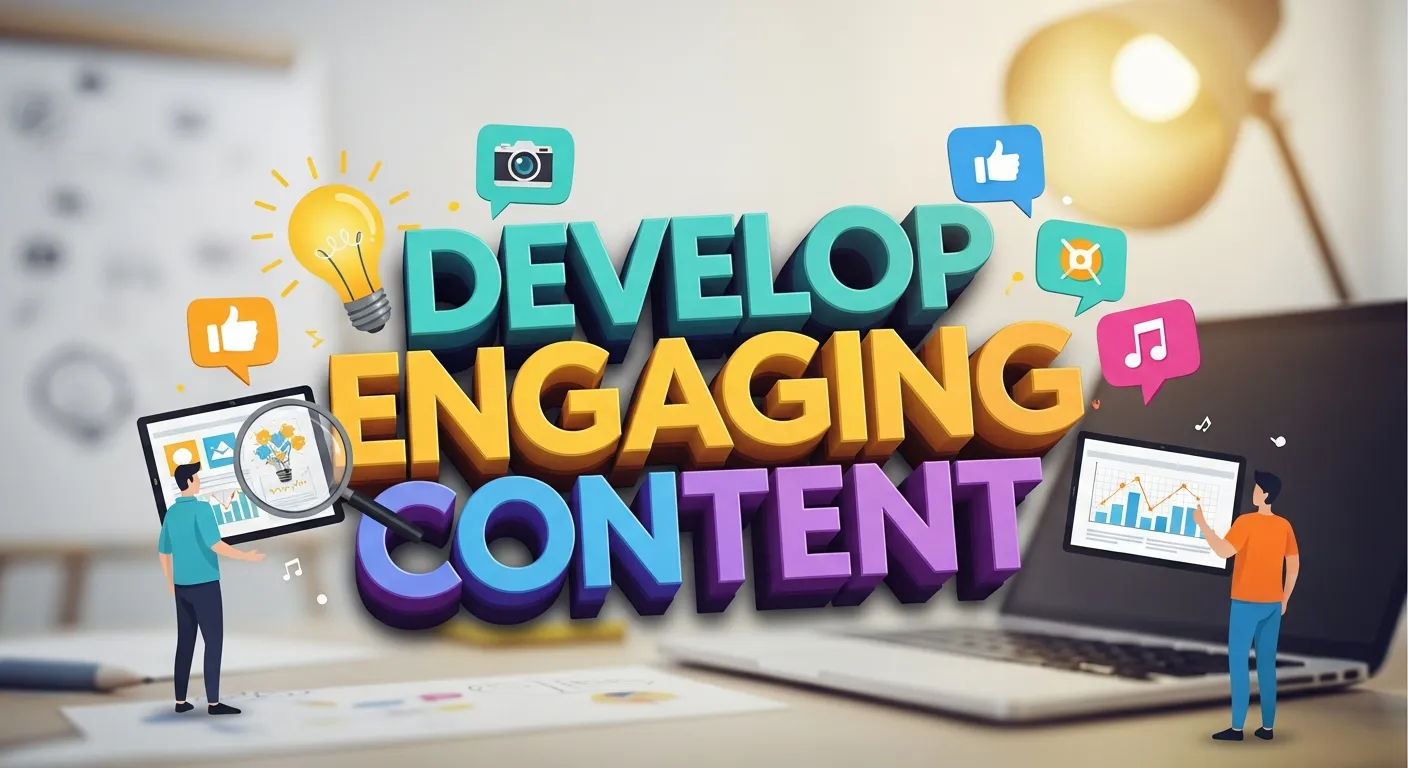
Content is the fuel for your social media marketing plan. It is what stops the scroll and encourages the click. Without high-quality content, even the best strategy will fail.
Establishing Content Pillars
Content pillars are themes or topics that your brand consistently discusses. They keep your content focused and relevant.
Examples of pillars:
- Educational: How-to guides, industry insights, tips.
- Inspirational: Quotes, success stories, digital marketing success stories.
- Promotional: Sales, new products, seasonal marketing ideas.
- Entertainment: Memes, behind-the-scenes, fun challenges.
- User-Generated Content (UGC): Sharing customer photos and reviews.
Adapting Content for Each Platform
You cannot copy-paste the same post across all channels.
- Instagram: Focus on aesthetics and lifestyle shots.
- LinkedIn: Focus on professional growth and brand leadership.
- TikTok: Focus on authenticity and trends.
The Content Calendar
Consistency is the golden rule of social media. A content calendar helps you plan ahead, ensuring you never scramble for a post at the last minute. Tools like Buffer or Hootsuite allow you to schedule posts in advance.
When building your calendar, consider seasonality in marketing. Plan ahead for holiday promotions, summer discount campaigns, or cross channel seasonal marketing efforts. For example, a four season meat market would have very different content in July (BBQ tips) compared to December (holiday roasts).
Measure Performance

You can’t improve what you don’t measure. A vital part of how to make a social media marketing plan is establishing a feedback loop.
Key Metrics to Track
Avoid vanity metrics that look good but mean nothing. Focus on actionable data:
- Engagement Rate: Likes, comments, shares divided by followers/reach. This shows if people care.
- Reach/Impressions: How many eyes saw your content.
- Click-Through Rate (CTR): How many people clicked your link. Crucial for driving website traffic.
- Conversion Rate: How many people took a desired action (bought a product, signed up for a newsletter).
Monitor and Adjust
Review your analytics monthly. Did your seasonal trends in marketing posts perform well? Did your video SEO efforts pay off on YouTube? If a certain type of content is flopping, stop doing it. If something is working, double down.
This is where brand monitoring services and review management services can also come into play. Listening to what people say about you (sentiment analysis) is just as important as counting likes.
Advanced Strategies: Beyond the Basics

Once you have the foundation, it’s time to elevate your social media marketing plan with advanced tactics.
Influencer Marketing
Influencer marketing for product launches is incredibly powerful. Collaborating with a social media influencer gives you access to their trust and their audience. Whether you are looking at how to become a social media influencer yourself or hiring one, authenticity is key.
Paid Social Advertising
Organic reach is declining. To guarantee eyes on your content, you may need to “pay to play.” Media buying services can help manage this, but even small boosts on high-performing posts can yield results. Tinker with paid ads to support your seasonal promotions for e-commerce.
Crisis Management
What happens if things go wrong? A comprehensive plan includes brand crisis management. You need protocols for negative comments, PR disasters, or service outages. Reputation management is easier when proactive rather than reactive.
Video Strategy
Video is king. From video SEO on YouTube to short-form video for Reels, moving images capture attention better than static ones. Incorporate creative webinar ideas or live streams to deepen connection.
Integrating SEO with Social Media
While social media signals aren’t a direct Google ranking factor, there is a strong correlation. A strong social presence drives traffic, which improves SEO.
- Keyword Usage: Use your focus keyword “Social Media Marketing Plan” in your bio and captions where natural.
- Link Building: High-quality content gets shared, leading to ethical link building opportunities.
- Profile Optimization: Treat your social profiles like mini-landing pages.
Tools like SEMrush and Ahrefs can help you identify keywords that bridge the gap between search and social.
Seasonal and Trend Marketing
Staying relevant means riding the waves of culture. Trend marketing AI data strategy is becoming huge for predicting what will go viral next.
- Seasonal Campaigns: Plan for holiday and festival marketing. Use seasonal hashtag strategies to increase discoverability.
- Micro-Trends: Especially on TikTok, micro trend marketing moves fast. Jump on audio trends or challenges quickly.
- Viral Marketing: While you can’t force virality, understanding the psychology of trend marketing helps.
Building Brand Authority
Your social media marketing plan should position you as a leader.
- Thought Leadership: Share deep insights, white papers, or host a webinar guide.
- Brand Voice: Ensure your brand voice strategy is consistent. Are you witty? Professional? Empathetic?
- Social Proof: Share digital marketing success stories and case studies.
Career and Business Opportunities
Mastering these skills opens doors. You could pursue a career at New Seasons Market in their marketing department, start offering social media management services, or launch your own social media marketing company.
Companies are constantly looking for experts in brand strategy consulting guides, brand positioning strategy, and integrated marketing. The demand for digital marketing expert roles is higher than ever.
Checklist: Your Social Media Marketing Plan
- Audit: Review current accounts.
- Goals: Set SMART objectives.
- Audience: Define personas.
- Platform: Choose your channels.
- Content: Create pillars and a calendar.
- Tools: Set up scheduling and analytics.
- Engage: Don’t just post; interact.
- Analyze: Report and refine.
Conclusion
Creating a strategy is not a one-time task; it is an evolving process. By learning how to make a social media marketing plan, you are building a resilient engine for growth. It requires patience, creativity, and a willingness to adapt to data.
Remember, social media is a tool for connection. Whether you are executing luxury brand marketing or running a local four season meat market, the goal is to build relationships. Start today. Define your goals, know your audience, and start posting with purpose. Your future followers are waiting.
FAQs
1. What is the most important part of a social media marketing plan?
The most critical component is knowing your audience. Even if your content is beautiful and your budget is huge, your social media marketing plan will fail if you are targeting the wrong people or addressing them on the wrong platforms. Understanding your audience personas dictates every other decision you make, from tone of voice to posting times.
2. How often should I update my social media marketing plan?
You should review your metrics monthly and conduct a deep-dive audit of your plan quarterly. The digital landscape changes fast—new platforms emerge (like TikTok did), and algorithms shift. An agile brand marketing strategy allows you to pivot when necessary, ensuring you don’t waste resources on outdated tactics.
3. Can I do social media marketing for free?
Yes, organic social media marketing is free. You can create profiles, post content, and engage with users without spending money on ads. However, growing organically takes more time and effort. investing in tools (like Canva for design) or small paid ad campaigns can accelerate your results significantly.
4. How do I choose the right KPIs for my plan?
Choose KPIs (Key Performance Indicators) that align with your business goals. If you want brand awareness, track reach and impressions. If you want sales, track conversion rates and click-through rates. Avoid vanity metrics like “likes” if they don’t correlate to your bottom line.
5. What is the difference between a content calendar and a social media strategy?
A strategy is the “why” and “how”—it covers goals, audience, and platform selection. A content calendar is the “what” and “when”—it is the tactical execution schedule of posts. You need a strategy to build an effective calendar. The strategy is the map; the calendar is the itinerary.
6. How do I handle negative comments on social media?
Part of your plan should include reputation management. Do not delete negative comments unless they violate community guidelines (hate speech, spam). Instead, respond politely and professionally, offering to take the conversation to DMs or email to resolve the issue. This shows other followers that you care about customer service.
7. How important is video content for my plan?
Extremely important. Platforms like Instagram and Facebook heavily favor video content (Reels) in their algorithms. Video SEO is also crucial for YouTube visibility. If you aren’t using video, you are likely missing out on significant engagement and reach.
8. What are LSI keywords and why should I use them in my captions?
LSI (Latent Semantic Indexing) keywords are terms related to your main topic. Using them helps search engines and social algorithms understand the context of your content. For example, if your post is about a social media marketing plan, related terms like “brand awareness,” “audience personas,” and “content calendar” help categorize your content correctly.
9. How can I measure ROI on social media?
Measuring ROI (Return on Investment) involves tracking the revenue generated from social media relative to the cost of your efforts (ads, tools, labor). Use Google Analytics with UTM parameters to track traffic sources and conversions. If you spent $500 on ads and generated $2000 in sales directly from those ads, your ROI is positive.
10. What tools do I need to execute my plan?
At a minimum, you need:
- Design tool: Canva or Adobe Spark.
- Scheduling tool: Buffer, Hootsuite, or Meta Business Suite.
- Analytics tool: Google Analytics and native platform insights.
- Monitoring tool: Google Alerts or Mention to track brand mentions.