Seasonal Advertising: Strategies to Boost Sales During Peak Seasons
Geoffrey Davis
Mastering seasonal advertising transforms ordinary sales periods into extraordinary revenue spikes. Brands leveraging timely campaigns capture high-intent shoppers effortlessly. By aligning your messaging with consumer behavior during peak times, you establish brand authority, outpace competitors, and maximize your overall profit margins effectively. This comprehensive guide explores actionable seasonal advertising strategies designed to maximize revenue during peak shopping periods. You will learn how to build data-driven campaigns, leverage high-converting marketing channels, avoid costly common mistakes, and apply expert optimization tactics. Master these essential techniques to skyrocket customer acquisition and ensure long-term business growth.
Understanding the Fundamental Mechanics of Seasonal Advertising
Seasonal advertising operates as the vital heartbeat of retail and digital marketing ecosystems. Marketers design these highly targeted campaigns to capitalize on specific times of the year when consumer purchasing intent naturally peaks. These periods include major holidays like Christmas, Black Friday, and Cyber Monday, alongside cultural moments like Back-to-School seasons, Valentine’s Day, and even shifting weather patterns. Grasping the foundational mechanics behind these cyclical buying surges empowers brands to allocate their marketing budgets efficiently.
The strategy relies heavily on understanding shifting consumer psychology. Shoppers expect promotions, tailored messaging, and specific product availability during these windows. When you deploy seasonal advertising effectively, you align your brand’s value proposition directly with the immediate desires of your target audience. This alignment reduces friction in the buyer journey, driving higher click-through rates and lowering customer acquisition costs. Furthermore, successful campaigns build momentum. A strong performance in quarter four often establishes a lucrative customer base that you can nurture throughout the subsequent year, making the initial investment yield compounding returns.
The Psychology of Seasonal Purchasing Behavior
Understanding why consumers buy during specific times represents the most critical aspect of seasonal advertising. Emotions heavily dictate purchasing decisions during the holidays. Nostalgia, generosity, and the desire for social belonging drive consumers to open their wallets faster than they do during off-peak months. Brands that tap into these emotional currents see significantly higher engagement. For instance, winter holiday campaigns that emphasize family connection and warmth typically outperform dry, feature-based product advertisements.
Scarcity and urgency also play massive roles in consumer psychology. When you attach a strict deadline to a promotion, you trigger a fear of missing out. This psychological mechanism bypasses the analytical part of the brain that usually delays purchases for further consideration. Integrating strong urgency tactics into your ecommerce marketing strategies forces the consumer to act immediately. However, you must apply urgency authentically. Artificial countdown timers that reset constantly erode brand trust, whereas genuine limited-time offers build excitement and drive massive spikes in conversion rates.
Mapping the Global Retail Calendar
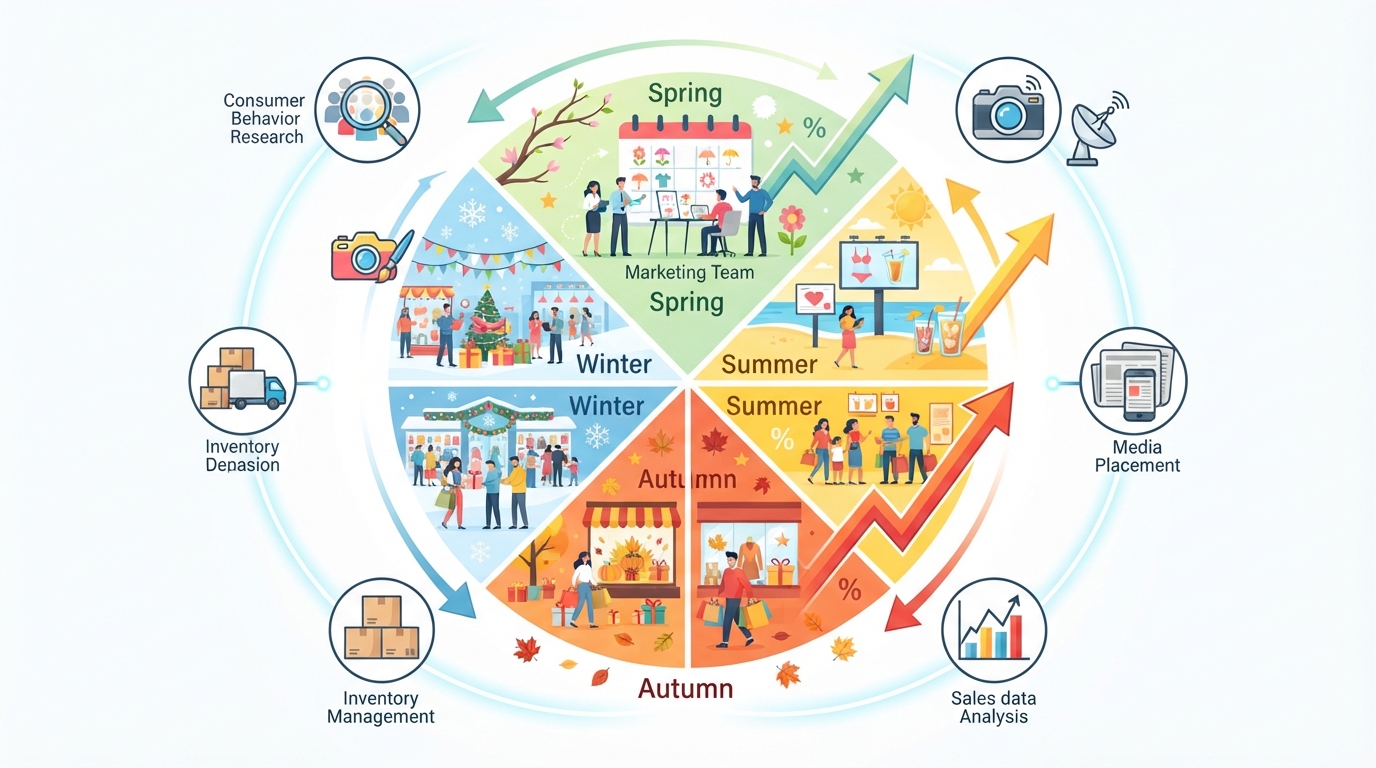
To dominate seasonal advertising, you need a meticulous understanding of the global retail calendar. You cannot afford to react to holidays as they arrive; you must anticipate them months in advance. The retail calendar dictates when you should launch awareness campaigns, when to transition into aggressive conversion tactics, and when to execute post-holiday retention strategies. A well-mapped calendar prevents last-minute scrambling and ensures your creative assets undergo proper testing before peak traffic hits your website.
Major tentpole events dominate the landscape. Quarter four carries Black Friday, Cyber Monday, and the December holidays, representing the highest revenue potential for most retail businesses. However, micro-seasons offer incredible untapped potential. Regional events, specific industry peaks, and changing weather conditions all warrant dedicated seasonal advertising budgets. A proactive approach to retail calendar planning ensures you capture demand during both the massive global events and the smaller, niche opportunities where competitor ad spend might be lower, allowing you to secure impressions at a fraction of the cost.
Why Early Preparation Dictates Campaign Success
The most profound mistake marketers make involves launching their campaigns too late. Effective seasonal advertising requires weeks, sometimes months, of preliminary data gathering and audience warming. If you wait until Black Friday week to launch your ads, you face the highest possible cost-per-click rates and the fiercest competition for consumer attention. Early preparation allows you to build sophisticated retargeting pools that you can activate when buying intent reaches its absolute peak.
Starting early also provides the necessary runway for robust A/B testing. You need time to test different headlines, ad creatives, and landing page layouts to identify the winning combinations. By running low-budget tests in October, you can confidently scale your budget behind the highest-performing assets in November. This calculated methodology relies on conversion rate optimization principles, ensuring that when the seasonal traffic surge arrives, your website transforms those costly clicks into confirmed sales with maximum efficiency.
Key Benefits of Implementing Seasonal Advertising Strategies
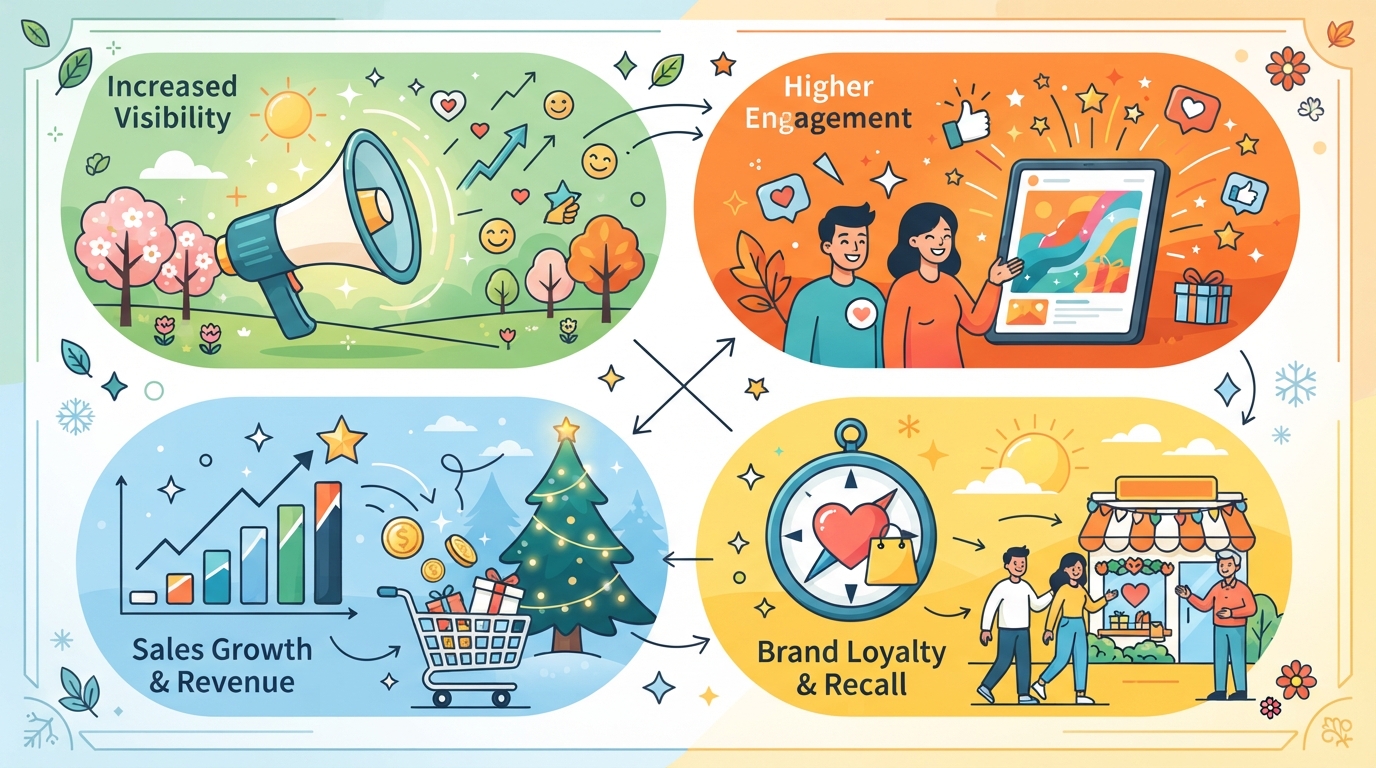
Businesses that commit to seasonal advertising enjoy unique advantages that standard, year-round campaigns simply cannot match. The concentrated nature of peak seasons creates an environment where consumer friction plummets, and purchase intent skyrockets. Leveraging this environment allows brands to achieve critical business objectives rapidly. From rapid cash flow injection to massive brand awareness expansion, the benefits of timing your marketing efforts to match cyclical demand are unparalleled in the digital marketing landscape.
Understanding these benefits helps marketing teams justify the large budget allocations required for Q4 and other peak periods. It shifts the perspective from viewing advertising as an expense to recognizing it as a strategic investment with a highly predictable return. When executed with precision, these campaigns do more than just sell products; they elevate the brand’s market position, gather invaluable zero-party data, and establish a moat against slower-moving competitors who fail to capitalize on cyclical consumer trends.
Accelerated Revenue Generation and Cash Flow
The most obvious and immediate benefit of seasonal advertising is the massive acceleration of revenue. For many retail and e-commerce brands, the fourth quarter alone accounts for up to half of their annual revenue. Targeted seasonal campaigns act as a catalyst for this financial surge. By presenting compelling offers exactly when consumers actively search for them, brands achieve daily sales volumes that dwarf their off-peak performance.
This rapid cash flow injection provides businesses with the necessary capital to fund operations, invest in research and development, and expand their product lines in the following year. Furthermore, moving large volumes of inventory quickly reduces warehouse holding costs and minimizes the risk of stock depreciation. Effective peak season sales campaigns clear out old inventory, making room for new product launches, thereby optimizing the entire supply chain and improving the overall financial health of the organization.
Enhanced Brand Visibility and Market Penetration
During peak shopping seasons, overall consumer activity on search engines and social media platforms hits annual highs. Shoppers actively browse for gift ideas, product reviews, and promotional offers. Launching aggressive seasonal advertising places your brand directly in the path of this massive wave of high-intent traffic. Even if a consumer does not purchase immediately, the increased impressions significantly elevate your brand awareness and market penetration.
This elevated visibility allows you to capture market share from competitors who may have scaled back their advertising spend due to rising ad costs. By maintaining a strong presence across multiple digital touchpoints, you solidify your brand as a top-of-mind option. When you pair this visibility with strong omnichannel marketing strategies, ensuring your message remains consistent across email, social, and search, you create a ubiquitous brand presence that consumers naturally gravitate toward when they finalize their purchasing decisions.
Accelerated Customer Acquisition Rates
Customer acquisition typically stands as the most expensive and challenging aspect of digital marketing. However, seasonal advertising drastically alters this dynamic. Because consumers actively look to spend money during holidays, the natural resistance to trying new brands diminishes. Shoppers searching for the perfect gift often venture outside their usual purchasing habits, creating a golden opportunity for brands to acquire net-new customers at a highly accelerated rate.
Once you acquire these new customers through a seasonal promotion, the true value of the strategy unfolds. While the initial transaction drives immediate revenue, the long-term goal involves turning these seasonal buyers into loyal, repeat customers. By implementing aggressive customer retention strategies immediately following the peak season, you maximize the lifetime value of every user acquired during the holiday rush, turning a one-time promotional purchase into a multi-year brand relationship.
How to Build a Winning Seasonal Advertising Campaign
Constructing a highly profitable seasonal advertising campaign requires moving beyond basic discount codes and generic ad copy. You must build a comprehensive, multi-layered strategy that guides the consumer from initial brand awareness all the way through to final purchase and post-purchase follow-up. This process demands rigorous data analysis, deep audience understanding, and seamless execution across all marketing departments. A disjointed campaign wastes budget and frustrates potential buyers, whereas a unified approach drives massive revenue growth.
The building process begins long before the actual holiday arrives. It requires auditing previous years’ performance, analyzing competitor movements, and establishing strict key performance indicators. Every creative asset, landing page, and automated email must work in harmony to create a frictionless user experience. When you meticulously plan each phase of the campaign, you insulate your business against unpredictable market shifts and platform algorithm changes that inevitably occur during high-traffic periods.
Establishing Clear Performance Objectives
You cannot scale what you do not measure. Before launching any seasonal advertising, you must define exact, quantifiable objectives. Vague goals like “increase sales” provide no strategic direction. Instead, you need precise targets based on historical data and projected growth. Define your target Return on Ad Spend, your maximum acceptable Cost Per Acquisition, and your overall revenue goals. Establishing these benchmarks early allows you to make data-driven decisions when managing your ad budget during the chaotic peak season.
Different phases of the campaign require different objectives. In the weeks leading up to the holiday, your primary objective should focus on audience building and email list growth. You measure success here by tracking cost-per-lead and engagement rates. Once the peak shopping window opens, your objectives must immediately pivot to direct response metrics like conversion rate and average order value. Aligning your Q4 marketing strategy with specific, phase-appropriate KPIs ensures your team remains focused on the metrics that actually impact profitability.
Audience Segmentation and Targeting Frameworks
Treating all potential customers as a single monolith guarantees inefficient ad spend. High-performing seasonal advertising relies heavily on granular audience segmentation. You must divide your audience into distinct cohorts based on their relationship with your brand and their past purchasing behavior. A loyal customer who purchases every month requires vastly different messaging than a cold prospect who has never visited your website.
To maximize your return on investment, implement the following segmentation strategies:
VIP Customers: Target your top 10% of spenders with early access to sales, exclusive bundles, and premium support to guarantee their repeat business before competitors reach them.
Past Seasonal Buyers: Create a specific segment for users who purchased during the same holiday last year. Remind them of their positive experience and offer a streamlined repurchasing process.
Cart Abandoners: Launch aggressive retargeting campaigns aimed at users who added items to their cart within the last 30 days but failed to complete the checkout process.
Lookalike Audiences: Use platform algorithms to find new prospects who share data points and behavioral traits with your most profitable existing customers.
Engaged Social Followers: Target users who frequently interact with your organic social media content but have not yet transitioned into paying customers.
Segmenting your audience allows you to tailor your ad copy, adjust your bidding strategies, and ensure that you allocate the majority of your budget toward the cohorts with the highest probability of conversion.
Budget Allocation Dynamics
Managing your budget during peak seasons requires agility and precision. Advertising costs on platforms like Google and Meta surge as massive corporations flood the market with unlimited budgets. To compete effectively, you must utilize a phased budget allocation strategy. Do not spend your entire budget evenly across the month. Instead, start with a smaller budget focused on lead generation and audience warming during the early weeks.
As the primary shopping days approach, aggressively scale your budget behind the audiences and creatives that demonstrated the highest engagement during the warming phase. This “barbell” strategy ensures you do not waste money competing for expensive clicks before consumers are ready to buy, while simultaneously ensuring you have the financial firepower required to dominate the auction when purchase intent hits its absolute peak. Continuous monitoring and rapid budget reallocation based on real-time ROAS data prevent you from burning capital on underperforming ad sets.
Crafting Compelling Offers
Your ad creative captures attention, but your offer drives the actual sale. In the highly competitive landscape of seasonal advertising, a generic ten percent discount rarely motivates action. Consumers expect significant value during major holidays. You must engineer offers that appear irresistibly valuable to the buyer while remaining financially viable for your business margins. This requires strategic pricing and creative product bundling.
Instead of deep, margin-destroying discounts, consider value-add offers. Buy-one-get-one promotions, free shipping thresholds, and exclusive holiday bundles often drive higher average order values while protecting your bottom line. Tiered discounts also work incredibly well; offering greater percentage discounts as the cart value increases incentivizes the consumer to add more items to their order. Combining these strategic offers with robust cart abandonment solutions ensures that once a user adds an item, you follow up aggressively to secure the transaction.
Top Digital Channels for Your Seasonal Advertising Efforts
Deploying a successful seasonal advertising strategy requires a sophisticated, multi-channel approach. Consumers rarely make a purchase after a single interaction with a brand. They discover a product on social media, research it on search engines, and finally convert through an email promotion. To capture maximum revenue, you must maintain a synchronized presence across all major digital touchpoints. This omnichannel approach surrounds the consumer with your messaging, building trust and driving conversions.
Choosing the right channels depends heavily on your target audience demographics and your specific product category. Highly visual products thrive on platforms like Instagram and TikTok, whereas intent-driven services perform better on Google Search. However, during peak seasons, the most successful brands utilize a blended strategy, leveraging the unique strengths of each platform to guide the consumer seamlessly down the purchasing funnel.
Paid Search and Intent-Based Capture
Google Ads remains the most powerful tool for capturing high-intent shoppers. When consumers actively search for “best Christmas gifts for dad” or “Black Friday laptop deals,” they display immediate purchase intent. Your seasonal advertising strategy must prioritize capturing these searches. To succeed, you need meticulously structured campaigns utilizing specific seasonal keywords, aggressive bid adjustments, and highly relevant ad extensions.
Update your ad copy to reflect the specific holiday and include countdown timers within the text to drive urgency. Furthermore, heavily utilize Google Shopping campaigns. Visual product listings that display pricing, reviews, and seasonal promotional tags directly in the search results drastically improve click-through rates. By aligning your paid search strategy with your holiday marketing campaigns, you ensure that your brand appears at the exact moment the consumer pulls out their credit card.
Paid Social Media and Visual Engagement
While search captures existing intent, paid social media generates new demand. Platforms like Meta, TikTok, and Pinterest allow you to showcase your products visually, utilizing video and high-quality imagery to trigger emotional purchasing decisions. Social media advertising excels at prospecting. By leveraging advanced targeting algorithms, you can introduce your seasonal offers to highly specific demographics based on their interests, behaviors, and social interactions.
During peak seasons, video content reigns supreme. Consumers quickly scroll past static images, but dynamic, engaging short-form videos capture attention and communicate product value instantly. Utilize user-generated content, unboxing videos, and influencer partnerships to build social proof. When consumers see real people enjoying your products, their hesitancy drops. Combine these visual assets with aggressive retargeting campaigns to repeatedly expose interested users to your brand until they complete their purchase.
Email and SMS Marketing Synergy
You do not truly own your social media followers or your search engine rankings; you only rent them. However, you completely own your email and SMS subscriber lists. During the expensive frenzy of seasonal advertising, these owned channels become your most profitable assets. Sending targeted promotional campaigns to a warm list requires virtually zero ad spend, resulting in astronomical return on investment.
To maximize this channel, create highly segmented holiday email campaigns. Do not blast your entire list with the same generic message. Send specific recommendations based on past purchase history, VIP early access codes to your most loyal buyers, and aggressive final-hours reminders to users who have not yet converted. Pairing email with SMS marketing creates a powerful synergy. Use email for long-form storytelling and product showcases, and utilize SMS for urgent, immediate calls to action, such as flash sales and cart abandonment reminders.
Cross-Channel Platform Comparison
To effectively allocate your resources, you must understand the distinct advantages and primary use cases for each major advertising channel during peak seasons. Review the comparison table below to structure your omnichannel approach effectively.
Marketing Channel
Primary Strategic Role
Cost Environment During Peak
Best Used For
Paid Search (Google/Bing)
Capturing high-intent, active searches
Very High CPC
Direct conversions, capturing competitor brand searches, shopping feeds.
Paid Social (Meta/TikTok)
Demand generation, visual storytelling
High CPM
Prospecting new audiences, retargeting website visitors, video engagement.
Email Marketing
Nurturing leads, maximizing LTV
Low to Zero Cost
VIP early access, personalized product recommendations, long-form copy.
SMS Marketing
Driving immediate, urgent action
Low Cost per Send
Flash sales, abandoned cart recovery, final countdown reminders.
Programmatic Display
Broad brand awareness, ambient retargeting
Moderate CPM
Keeping the brand top-of-mind across the broader web, visual reminders.
Expert Insights and Pro Tips for Seasonal Advertising Success
Moving from a baseline seasonal advertising strategy to a highly optimized, scalable machine requires implementing advanced tactical maneuvers. The most successful marketing agencies and enterprise brands do not rely solely on basic best practices; they deploy sophisticated techniques designed to squeeze every possible ounce of efficiency from their ad spend. These expert insights separate profitable campaigns from those that merely break even during expensive peak seasons.
Implementing these advanced tactics requires a solid foundation in data analytics and technical marketing infrastructure. You must ensure your tracking pixels function flawlessly, your product feeds update dynamically, and your landing pages load instantaneously. Once the technical foundation is secure, you can deploy the following pro tips to outmaneuver competitors, decrease your acquisition costs, and dramatically scale your seasonal revenue.
Leveraging Dynamic Creative Optimization
Static advertisements fatigue rapidly, especially during periods of high consumer exposure. Expert marketers utilize Dynamic Creative Optimization to combat this issue. DCO utilizes machine learning algorithms to automatically assemble different variations of an advertisement in real-time. The platform tests multiple headlines, images, descriptions, and call-to-action buttons, serving the specific combination most likely to convert a particular user based on their historical behavior.
This technology is invaluable for seasonal advertising. Instead of manually creating dozens of ad variations for Black Friday, you input your core assets, and the system dynamically adjusts the messaging. If a user previously viewed a specific product category on your site, the DCO system automatically features those exact products in their retargeting ads. This hyper-personalization significantly boosts click-through rates and ensures your creative remains highly relevant throughout the entire campaign lifecycle.
Implementing Urgency Without Devaluation
Many brands destroy their perceived value by running perpetual “closing soon” sales. Consumers recognize fake urgency instantly, which permanently damages brand trust. The expert approach involves creating genuine urgency without resorting to deceptive practices or margin-destroying discounts. You must give the consumer a compelling, truthful reason why they need to purchase today rather than tomorrow.
Achieve this by highlighting inventory scarcity. Phrases like “Only 4 items left in this size” or “Last production run before the holidays” drive massive action because the threat of missing out is real. Additionally, you can utilize shipping cut-off dates to drive urgency. Promoting “Order by Midnight for Guaranteed Christmas Delivery” provides a practical, non-discount-based deadline that forces immediate action. This technique perfectly aligns with sophisticated ecommerce marketing strategies by driving sales while protecting brand equity.
Strategic Remarketing and Retargeting
Your most profitable conversions will rarely come from a user’s first interaction with your brand. Remarketing serves as the backbone of high-ROI seasonal advertising. However, basic remarketing—showing the same ad to everyone who visited your homepage—is highly inefficient. Pro marketers deploy sequential, highly segmented remarketing funnels that adapt based on the user’s depth of engagement.
To master retargeting during peak seasons, implement these strategic layers:
Time-Decay Retargeting: Adjust your bids and messaging based on how recently the user visited. Bid aggressively on a user who abandoned their cart 2 hours ago, and decrease bids for users who visited 14 days ago.
Product-Specific Dynamic Ads: Automatically display the exact items the user viewed, cross-selling with highly relevant accessories to boost the average order value.
Educational Middle-of-Funnel Retargeting: For high-ticket items, retarget initial visitors with customer testimonials, unboxing videos, and detailed FAQs to build trust before pushing the final discount code.
Sequential Messaging: Show Ad A on day one, Ad B on day three, and Ad C on day five. This tells a cohesive brand story and prevents aggressive ad fatigue.
Exclusion Audiences: Immediately exclude users who have already purchased from your promotional ad sets to save budget and prevent annoying your new customers.
Common Mistakes to Avoid in Seasonal Advertising Campaigns
Even heavily funded campaigns fail when marketers ignore fundamental pitfalls. The high-pressure environment of peak shopping seasons amplifies the negative impact of strategic errors. Because ad costs surge dramatically, minor inefficiencies in your funnel rapidly drain your budget, leaving you with poor returns and excess inventory. Recognizing and avoiding these common mistakes protects your investment and ensures your brand capitalizes on the seasonal traffic surge.
Most failures do not stem from a lack of budget, but rather from poor planning, technical oversights, and a failure to align advertising efforts with operational realities. Marketing does not exist in a vacuum. Your seasonal advertising must perfectly synchronize with your supply chain, customer service capacity, and website infrastructure. Bridging the gap between marketing ambition and operational execution is critical for avoiding catastrophic seasonal failures.
Launching Campaigns Too Close to the Peak Date
The most pervasive error brands make is waiting until the week of the holiday to launch their seasonal advertising. This approach guarantees failure. When you launch late, you enter the ad auction when competition is at its absolute highest, resulting in astronomical cost-per-click rates. Furthermore, advertising platforms require an algorithmic “learning phase” to optimize delivery. Late launches prevent the algorithm from gathering enough data to find your ideal buyers before the holiday ends.
Instead, you must adopt a proactive retail calendar planning strategy. Begin your top-of-funnel awareness campaigns four to six weeks prior to the major event. Build your retargeting audiences while traffic is cheap. By the time the peak shopping days arrive, your primary focus should shift entirely to remarketing to the warm audiences you built during the preceding month. This strategy lowers overall acquisition costs and ensures your brand is top-of-mind when consumers are ready to spend.
Ignoring Mobile Optimization
Despite overwhelming data proving that the majority of digital traffic originates from mobile devices, countless brands still design their campaigns and landing pages for desktop users. A seamless ad experience that leads to a clunky, slow-loading mobile website immediately destroys conversion rates. Mobile users possess zero tolerance for difficult navigation, tiny text, or complicated checkout processes.
Your seasonal advertising efforts require a mobile-first approach. Ensure your ad creatives utilize vertical formats tailored for platforms like Instagram and TikTok. Crucially, audit your website’s mobile speed. Compress images, streamline code, and implement express checkout options like Apple Pay and Google Pay. Eliminating friction on mobile devices represents the fastest way to instantly improve the ROI of your entire campaign.
Failing to Align Inventory with Ad Spend
Generating massive demand for a product you cannot supply constitutes a catastrophic operational failure. Marketing teams often push aggressive seasonal advertising for best-selling products without coordinating with the inventory management team. When a heavily promoted item sells out on day one of a four-day sale, the brand wastes thousands of dollars on advertising clicks that lead to “Out of Stock” pages, infuriating customers and destroying profitability.
To prevent this critical mistake, implement these operational safeguards:
Real-Time Feed Updates: Ensure your digital product catalog syncs with your warehouse inventory hourly. Automatically pause advertisements for specific SKUs the moment stock drops below a safe threshold.
Backup Promotional Offers: Prepare secondary ad creatives featuring alternative products. If your primary driver sells out, you can instantly pivot ad spend to the backup offers without losing campaign momentum.
Clear Communication Silos: Establish daily meetings between the marketing, supply chain, and customer service departments during peak weeks to rapidly adjust strategies based on real-time inventory realities.
Data-Driven Strategies to Maximize ROI in Seasonal Advertising
Modern marketing relies heavily on data interpretation. The days of launching an ad based purely on instinct and hoping for the best are over. Successful seasonal advertising requires a rigorous, analytical approach to media buying and campaign management. You must monitor real-time data streams, interpret consumer behavior patterns, and make instantaneous bid adjustments to secure the highest possible Return on Investment (ROI) and Return on Ad Spend (ROAS).
A data-driven methodology eliminates emotional decision-making. During the high-stress environment of quarter four, marketers often panic and turn off successful campaigns prematurely or scale failing campaigns hoping they will recover. Relying strictly on data frameworks ensures you allocate capital logically, leaning into mathematical probability rather than gut feeling. This analytical rigor is the cornerstone of a sophisticated Q4 marketing strategy.
Advanced Attribution Modeling
Understanding exactly which marketing touchpoint deserves credit for a sale is notoriously difficult. Many brands still rely on simplistic “last-click” attribution, which gives 100% of the credit to the final ad a user clicked before purchasing. This model is fundamentally flawed. It ignores the crucial role that top-of-funnel social media ads and middle-of-funnel email campaigns play in driving the user toward that final click. Evaluating seasonal advertising through a last-click lens leads marketers to cut funding to essential brand-awareness channels.
Instead, implement advanced, multi-touch attribution models. Data-driven attribution uses machine learning to assign fractional credit to every interaction a user had with your brand across their entire journey. By understanding the true value of each channel, you can distribute your budget more efficiently. You might discover that while Facebook ads rarely drive the final click, they initiate 60% of all customer journeys. This insight allows you to fund top-of-funnel platforms appropriately, ensuring your conversion channels never run dry.
Real-Time Bid Adjustments
During peak seasonal events, ad auction dynamics change by the hour. A bid that secured top placement at 9:00 AM might fail to generate a single impression by 2:00 PM as competitors flood the market. To maintain visibility without overspending, you must utilize automated, real-time bid adjustments. Most major advertising platforms offer sophisticated automated bidding strategies, such as Target CPA (Cost Per Acquisition) or Target ROAS.
By leveraging these algorithms, you allow the platform’s machine learning to adjust your bids in real-time based on the specific user’s likelihood to convert. The system analyzes thousands of signals—including the user’s device, location, time of day, and browsing history—to determine the optimal bid for that exact millisecond. Feeding these algorithms high-quality conversion data allows them to aggressively pursue highly profitable users while instantly lowering bids for low-quality traffic, maximizing the efficiency of your seasonal advertising budget.
Predictive Analytics for Trend Forecasting
The most advanced brands do not just react to data; they use it to predict the future. Predictive analytics utilizes historical data, market trends, and machine learning models to forecast consumer demand before it happens. By analyzing past seasonal advertising performance, search volume trends, and macroeconomic indicators, you can accurately predict which product categories will experience the highest demand during upcoming holidays.
Applying predictive analytics allows you to optimize your entire operation. You can secure inventory for predicted top-sellers months in advance, design highly targeted ad creatives tailored to emerging trends, and allocate your budget precisely to the geographic regions showing the highest predicted purchase intent. This forward-looking approach transforms marketing from a reactive expense into a proactive revenue-generating engine.
Adapting Seasonal Advertising for Different Business Models
While the core principles of urgency, targeting, and data analysis apply universally, the specific execution of seasonal advertising must adapt drastically depending on your business model. A strategy that generates millions for a direct-to-consumer apparel brand will likely fail miserably for a B2B software company. You must deeply understand the specific buying cycle, decision-making process, and average order value inherent to your industry to build a campaign that resonates with your specific audience.
Tailoring your approach ensures your messaging aligns with the professional or personal realities of your target buyer. Whether you are selling impulse-buy consumer goods or complex corporate solutions, aligning your promotional calendar with the natural ebbs and flows of your specific industry guarantees maximum engagement and conversion efficiency.
E-commerce and Direct-to-Consumer Retail
For e-commerce and D2C brands, seasonal advertising is a high-speed, volume-driven game. The buying cycle is typically incredibly short, often culminating in an impulse purchase driven by visual stimulation and emotional triggers. These brands must focus heavily on visual platforms like Instagram, TikTok, and Pinterest. The creative must highlight the product in lifestyle settings, utilize user-generated content for social proof, and aggressively feature time-sensitive discounts.
In this space, managing the average order value is paramount. Because ad costs are exceptionally high, relying on single-item purchases often results in negative margins. D2C brands must utilize their seasonal advertising to promote bundled products, tiered discounts, and subscription models. By aggressively utilizing ecommerce marketing strategies like post-purchase upsells and in-cart cross-sells, retail brands can offset the high cost of seasonal traffic and generate massive, profitable volume.
Business-to-Business Service Providers
B2B seasonal advertising requires a completely different mindset. Business purchases involve multiple decision-makers, strict budget cycles, and long evaluation periods. A flashy “20% Off Black Friday” ad rarely motivates a corporate executive to sign a massive service contract. Instead, B2B companies must align their seasonal campaigns with corporate fiscal calendars. Quarter four is critical not for impulse buys, but because companies are frantically trying to spend their remaining annual budgets before they lose them.
B2B seasonal campaigns should focus heavily on LinkedIn advertising, highly targeted search intent campaigns, and account-based marketing (ABM). The messaging should emphasize ROI, implementation speed, and end-of-year budget utilization. Offer incentives like waived implementation fees, extended onboarding support, or early access to upcoming features rather than simple cash discounts. The goal is to generate highly qualified leads that the sales team can close before the fiscal year ends.
Software as a Service Subscription Models
For SaaS companies, the primary objective of seasonal advertising is acquiring users who will remain subscribed for years. Offering massive lifetime discounts during a holiday sale can severely damage the company’s long-term valuation. Therefore, SaaS brands must tread carefully. The most effective strategy involves utilizing seasonal events to lower the barrier to entry, encouraging users to try the software and experience its value firsthand.
Instead of heavy discounting, SaaS companies should offer extended free trials, upgraded feature access, or annual plan incentives during peak seasons. For example, offering “14 months for the price of 12” during a New Year’s campaign appeals to businesses looking to optimize their software stack for the upcoming year. Combining these strategic offers with aggressive holiday marketing campaigns designed to reactivate past churned users often yields incredible results for subscription-based businesses.
Post-Campaign Retention: Turning Seasonal Advertising Leads into Loyalists
The biggest tragedy in digital marketing is spending massive amounts of capital to acquire a customer during a seasonal peak, only to never sell to them again. Seasonal advertising should not be viewed as a one-time transaction generator; it must serve as the top of a comprehensive customer lifecycle funnel. The true profitability of a Q4 campaign often isn’t realized until Q1 or Q2 of the following year, when those acquired customers return to make a second, highly profitable purchase at zero acquisition cost.
Shifting your focus to retention the moment the holiday ends is critical. Consumers who buy during sales are notoriously fickle; they bought for the discount, not necessarily for the brand. You must rapidly demonstrate your brand’s core value, provide exceptional customer service, and integrate them into your community to ensure they remain loyal long after the promotional banners come down.
Developing Post-Purchase Nurture Sequences
The customer journey does not end at the checkout page; it begins there. Immediately following a seasonal purchase, you must initiate highly structured post-purchase email and SMS nurture sequences. These sequences should not immediately push for another sale. Instead, they must focus on eliminating buyer’s remorse, educating the consumer on how to maximize the value of their purchase, and building brand affinity.
Send detailed shipping updates, unboxing guides, and care instructions. Introduce the founders, highlight the brand’s mission, and showcase how other customers use the product. Once you have firmly established trust and provided immense value, you can strategically introduce your customer retention strategies. Transition the sequence into offering complementary products, exclusive VIP discounts for their next purchase, and early access to upcoming product launches.
Launching Exclusive Loyalty Programs
One of the most effective ways to retain customers acquired through seasonal advertising is to immediately enroll them in a gamified loyalty program. When users realize that their large holiday purchase earned them significant points or elevated their VIP status, they are heavily incentivized to return to your store to redeem their rewards. Loyalty programs transform transactional buyers into invested brand advocates.
Structure your program to reward more than just purchases. Give users points for following your social media accounts, subscribing to your SMS list, or referring friends. This continuous engagement keeps your brand top-of-mind during the slower, off-peak months. By integrating your loyalty program messaging into your ongoing holiday email campaigns, you create a closed-loop ecosystem where seasonal spikes continually feed your long-term customer base.
Requesting User-Generated Content and Reviews
Social proof is the currency of digital marketing. Customers acquired during peak seasonal advertising pushes represent a massive, untapped reservoir of reviews and user-generated content (UGC). Implementing automated systems to harvest this content is essential for fueling your marketing efforts for the rest of the year. High-quality reviews and customer photos drastically increase conversion rates for future campaigns.
Set up automated email flows that trigger one to two weeks after the product is delivered, asking the customer for an honest review. To maximize response rates, offer a small incentive, such as a 10% discount on their next order, in exchange for a photo or video review. This strategy accomplishes two goals simultaneously: it generates invaluable marketing assets to use in your future ads, and it immediately drives a second, profitable purchase, solidifying the customer’s loyalty to your brand.
Conclusion
Implementing robust seasonal advertising directly amplifies your overall market share during critical sales periods. By leveraging data-driven insights and avoiding common pitfalls, you position your brand for sustainable success. Start optimizing your campaigns today to secure higher conversions, build customer loyalty, and dominate your most profitable seasons.
FAQ
1. What is the most effective channel for seasonal advertising?
The most effective channel depends entirely on your specific audience and product type, though a blended omnichannel approach always wins. Google Ads excels at capturing high-intent shoppers actively searching for specific gifts or deals. Meta (Facebook and Instagram) and TikTok are phenomenal for generating visual demand and prospecting new audiences. However, your most profitable channel will always be your owned email and SMS lists, as they allow you to reach past customers with zero ad spend.
2. How far in advance should I plan my seasonal campaigns?
You should begin planning major seasonal advertising, such as Q4 holiday campaigns, at least three to four months in advance. This lead time is crucial for securing inventory, designing and testing creative assets, building targeted audience segments, and optimizing your website for speed. Launching top-of-funnel awareness campaigns 4-6 weeks prior to the actual holiday allows you to build cheap retargeting pools that you can aggressively monetize when the peak shopping days arrive.
3. How do I compete with massive corporate budgets during peak seasons?
Small to medium brands cannot win a head-to-head spending war against enterprise corporations. Instead, you must compete on agility, hyper-targeting, and niche relevance. Utilize highly specific long-tail keywords that large corporations ignore. Lean heavily into your unique brand story and exceptional customer service to differentiate yourself from faceless giants. Most importantly, focus your budget on aggressive retargeting of your existing email list and past website visitors, rather than blowing your budget on broad prospecting.
4. Should I pause my evergreen campaigns during seasonal advertising pushes?
Generally, you should not entirely pause your successful evergreen campaigns, as they provide a stable baseline of revenue and algorithmic learning. However, you should heavily shift your budget allocation. Decrease the budget of marginal evergreen campaigns and funnel that capital into your highly profitable seasonal initiatives. You should also update the ad copy and creative of your evergreen campaigns to subtly reflect the current season, ensuring your entire brand presence feels cohesive and timely.
5. What are the biggest mistakes to avoid in holiday marketing?
The most catastrophic mistakes include launching campaigns too late, failing to ensure your website is fully optimized for mobile devices, and neglecting inventory alignment, which leads to spending ad budget on out-of-stock items. Additionally, many brands fail because they offer weak discounts that do not stand out in a crowded market, or they ignore post-purchase retention, treating expensive newly acquired customers as one-time buyers rather than long-term brand assets.
6. How does seasonal advertising affect customer acquisition costs (CAC)?
During peak seasons like Black Friday, overall ad auction competition skyrockets, which generally increases your Cost Per Click (CPC) and top-of-funnel Cost Per Acquisition (CAC). However, because consumer purchase intent is at its absolute highest, your website conversion rates should also increase dramatically. If your campaign is optimized correctly, the spike in conversion rates and average order value should offset the higher CPCs, resulting in a highly profitable Return on Ad Spend despite the elevated initial acquisition costs.
7. How can B2B companies leverage seasonal marketing?
B2B companies should avoid typical retail strategies like flash sales and instead align their campaigns with corporate budget cycles. The end of the year is critical as companies look to spend remaining budgets. Focus on account-based marketing, LinkedIn advertising, and intent-based search. Offer incentives like waived onboarding fees, extended support contracts, or annual billing discounts. The goal is to accelerate the sales cycle and close enterprise deals before the fiscal year concludes.
8. How important is email marketing in a seasonal campaign?
Email marketing is arguably the most critical component of a profitable seasonal campaign. Because paid advertising costs surge during holidays, relying solely on ads destroys margins. Email allows you to communicate directly with warm leads and past purchasers for pennies. Highly segmented email flows—including VIP early access, personalized product recommendations, and aggressive abandoned cart sequences—often generate the highest ROI of any marketing channel during peak seasonal events.
9. Can I run seasonal campaigns for minor holidays?
Absolutely. In fact, running campaigns for micro-holidays or industry-specific seasons often yields incredible results because ad competition is significantly lower than during major events like Christmas. Capitalizing on events like National Pet Day (for pet brands), Earth Day (for sustainable products), or Back-to-School season allows you to capture highly targeted demand at a much lower cost per click, providing excellent opportunities for mid-year revenue spikes.
10. How do I retain customers acquired through seasonal promotions?
Retention begins the moment the customer checks out. Implement robust post-purchase email sequences that educate the buyer, provide excellent support, and highlight your brand’s mission. Do not immediately ask for another sale; instead, build trust. Shortly after, introduce them to your loyalty program, incentivize them to leave user-generated content, and offer them exclusive, non-promotional value. Transitioning them from discount-buyers to brand advocates ensures long-term profitability from your seasonal advertising efforts.
Conclusion
Mastering seasonal advertising is essential for capturing high-intent shoppers and maximizing revenue during peak periods. By anticipating consumer behavior, leveraging data-driven omnichannel strategies, and prioritizing post-purchase retention, brands can transform temporary traffic spikes into year-round growth. Start planning your next campaign early to outpace competitors and secure long-term customer loyalty.
FAQ
1. How much should a small business spend on seasonal advertising?
Your budget should be determined by your historical Return on Ad Spend (ROAS) rather than an arbitrary number. A common strategy is to allocate 20% to 30% of your annual marketing budget to your most profitable season (like Q4). For small businesses with limited capital, the most cost-effective approach is to spend heavily on retargeting warm audiences—such as past purchasers and email subscribers—rather than blowing the budget on expensive top-of-funnel prospecting during peak competition.
2. Which metrics are most important for tracking seasonal campaign success?
While impressions and click-through rates (CTR) indicate ad engagement, your primary focus during peak seasons must be on revenue-driving metrics. Track your Cost Per Acquisition (CPA), overall Conversion Rate, and Average Order Value (AOV). The ultimate indicator of success is your Return on Ad Spend (ROAS). If your CAC rises due to holiday competition, but your AOV and Conversion Rates also spike, your campaign remains highly profitable.
3. How do you transition out of a seasonal campaign without losing momentum?
The key is shifting your messaging immediately after the peak event ends. Transition from aggressive discount-based copy to value-driven, community-building content. Launch “New Year, New Arrivals” campaigns, initiate post-purchase nurture email sequences, and introduce your newly acquired customers to your loyalty program. This prevents a hard crash in engagement and turns one-time holiday shoppers into repeat buyers in the subsequent months.
4. What role does user-generated content (UGC) play in seasonal marketing?
UGC is critical during seasonal pushes because it provides instant social proof when consumer skepticism is high. Shoppers are bombarded with polished brand ads during the holidays; authentic videos or photos of real people using your product cut through the noise. Integrating UGC into your paid social ads lowers your Cost Per Click (CPC) and builds immediate trust, significantly shortening the buying cycle for cold prospects.
5. Is it worth running seasonal ads if my product isn’t inherently seasonal?
Absolutely. During major retail events like Black Friday or Cyber Monday, overall consumer spending intent is drastically elevated across all categories. Even if you sell B2B software, everyday household items, or evergreen courses, you can capitalize on this buying mindset. Frame your messaging around gifting, self-improvement for the new year, or end-of-year budget utilization to align your non-seasonal product with the current consumer psychology.