Think about the brands you love. Maybe it’s the logo, the feeling their ads evoke, or the principles they embody. This connection is the product of one brilliant thing: branding. This guide explores the fundamentals of branding in marketing, why it matters, and the key elements that drive a successful brand.
This article provides a deep dive into branding in marketing. We will differentiate between branding and marketing, outline the critical elements of a strong brand—like identity, voice, and values—and provide a step-by-step guide to building one. Through case studies and practical advice, you will understand why a powerful brand is your most valuable business asset.
The Fundamentals of Branding in Marketing
Branding in marketing is the deliberate process of creating a strong, positive perception of a company, its products, or services in the customer’s mind. It’s achieved by combining elements like a logo, design, mission statement, and a consistent theme throughout all marketing communications. Effective branding helps companies differentiate themselves from their competitors and build a loyal customer base.
What is Branding?
At its core, branding is the practice of shaping your company’s identity to influence public perception. It’s the sum of all experiences a customer has with your business, from your visual assets like the logo and color palette to your brand voice and customer service interactions. Think of it as your company’s personality. Just as a person has unique traits that make them memorable, successful branding in marketing gives your business a distinct character that sets it apart. It’s not just what you sell, but who you are. This identity, when executed well, becomes a shortcut for decision-making in the consumer’s mind.
Branding vs. Marketing: Understanding the Difference
While often used interchangeably, branding and marketing are distinct yet codependent concepts. The relationship between them is fundamental to understanding branding in marketing.
- Branding is the “Why”: It is your strategic foundation. It’s the core identity, values, and promise you make to your customers. Branding is about building a lasting reputation and an emotional connection. It answers the question, “Why should customers choose and trust us?”
- Marketing is the “How”: It comprises the tactics you use to communicate your brand and drive sales. This includes advertising, SEO, content creation, and social media campaigns. Marketing is how you actively get your brand’s message in front of your target audience.
To put it simply, marketing activities might change from quarter to quarter, but your brand remains constant. A strong brand makes every marketing effort more effective because it provides a clear, consistent message that resonates with consumers. Without a solid brand foundation, marketing messages can feel disjointed and fail to build lasting trust. Effective branding in marketing ensures that all your promotional efforts work together to reinforce a single, powerful identity.
Why Branding is Crucial for Every Business

Branding in marketing is not a luxury reserved for multinational corporations with massive advertising budgets. Startups, small businesses, and even individuals can reap enormous benefits from developing a strong brand. A well-defined brand is a powerful asset that drives long-term growth and stability.
Here’s why branding matters so much:
- It Differentiates You from the Competition: In a saturated market, a strong brand identity is what makes your business stand out. It clearly communicates why a customer should choose you over a competitor offering a similar product. This is where brand positioning becomes critical.
- It Builds Trust and Credibility: Consumers are more likely to buy from a business they recognize and trust. A consistent and professional brand presence across all platforms—from your website to your packaging—signals reliability and builds customer confidence. This is a cornerstone of effective reputation management.
- It Creates Emotional Connections: The most powerful brands do more than just sell products; they evoke feelings. Emotional marketing is a key part of branding. By aligning with customer values and aspirations, a brand can foster a deep, lasting relationship that transcends transactional interactions.
- It Drives Customer Loyalty and Advocacy: Think about why someone might insist on Apple products or Nike shoes. This loyalty is the result of years of consistent branding. When customers feel a strong connection to a brand, they not only become repeat buyers but also brand advocates who spread positive word-of-mouth. This organic promotion is a powerful outcome of smart branding in marketing.
- It Supports and Unifies Marketing Efforts: A clear brand strategy acts as a guide for all your marketing activities. Whether creating a social media ad, an email campaign, or a blog post, a defined brand ensures the message is consistent and recognizable. This integrated marketing approach amplifies the impact of each campaign.
The Core Elements That Shape a Brand
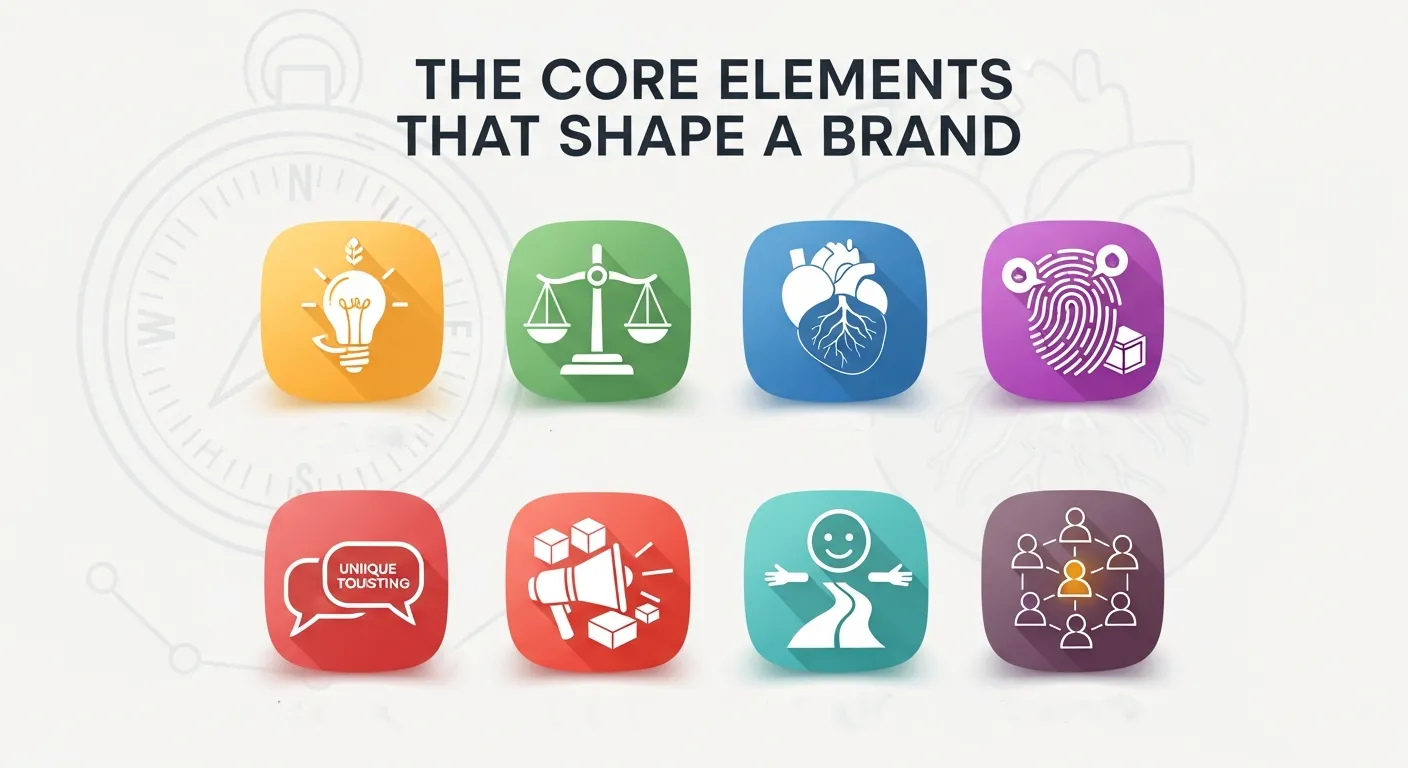
A strong brand is built on several interconnected elements that work together to create a cohesive and memorable identity. Mastering these components is essential for anyone serious about branding in marketing.
1. Brand Identity
This is the collection of all tangible brand elements that a company creates to portray the right image to its consumer. This includes:
- Logo: The primary visual symbol of your brand. A great logo is simple, memorable, timeless, and versatile. It’s the face of your company.
- Color Palette: Colors evoke emotions and can instantly communicate a brand’s personality. For example, red can signify energy and passion, while blue often suggests trust and stability. Your chosen colors should be used consistently across all marketing materials.
- Typography: The fonts you use say a lot about your brand. Are you modern and bold, or traditional and elegant? Your typography should be legible and align with your brand’s character.
- Imagery: This includes photography, illustrations, and videos. The style of your imagery should be consistent and reflect the quality and personality of your brand.
2. Brand Voice
Your brand voice is the distinct personality your brand uses in its communications. Are you professional and authoritative, or friendly and playful? A consistent brand voice helps build familiarity and trust. For instance:
- A financial institution might adopt a formal, trustworthy voice to convey security and expertise.
- A lifestyle brand targeting millennials might use a casual, humorous, and relatable voice.
Developing a brand voice strategy is a crucial part of branding in marketing, as it dictates how you connect with your audience on a human level.
3. Brand Values and Purpose
Your brand values are the guiding principles that shape every aspect of your business. In an age where consumers are increasingly conscious of a company’s ethics, clearly defined values are more important than ever. Your brand purpose development answers the “why” behind your business beyond just making a profit. Whether your focus is on sustainability, innovation, or community, these values should be authentically woven into your brand story.
4. Customer Experience (CX)
Branding in marketing extends far beyond visuals and messaging. It encompasses every single touchpoint a customer has with your business. This includes:
- The usability of your website.
- The quality of your customer service.
- The unboxing experience of your product.
- The efficiency of your sales process.
A positive and consistent customer experience reinforces your brand promise and is a powerful driver of loyalty. Customer journey mapping is an excellent tool for identifying and improving these touchpoints.
5. Brand Positioning
Your brand positioning is the unique space you occupy in the market and in the minds of your customers. A strong brand positioning statement clarifies what makes you different and better than the competition. To define your positioning, ask yourself:
- What specific problem do we solve for our customers?
- Who is our ideal target audience?
- What makes our solution unique?
Your positioning should be clear, defensible, and communicated consistently in all your brand marketing efforts. A tool for this is the brand strategy framework, which helps structure your thinking.
A Step-by-Step Guide to Developing a Strong Brand

Building a brand is a strategic process that requires careful planning and execution. Here are the essential steps to create a successful brand from the ground up, a true brand strategy road map.
Step 1: Define Your Target Audience
You cannot be everything to everyone. The first step in any branding in marketing strategy is to identify and understand your ideal customer. Develop detailed customer personas that outline their demographics, interests, pain points, and motivations. Knowing who you are talking to will inform every other branding decision you make.
Step 2: Create Your Brand Mission and Values
What is your company’s reason for being? Your mission statement should be a clear, concise declaration of your purpose. Your values are the principles that guide your actions. These elements form the soul of your brand and should resonate with your target audience.
Step 3: Design Your Visual Identity
This is where your brand becomes tangible. Work with professional designers to create a visual identity that is both aesthetically pleasing and strategically sound. This includes your logo, color palette, and typography. Remember, building brand consistency starts with a solid visual foundation.
Step 4: Establish Your Brand Voice and Messaging
Develop key messaging pillars that communicate your unique value proposition. Define the tone and personality of your brand’s communication. This brand voice should be applied consistently across your website, social media, advertising, and customer interactions.
Step 5: Be Consistent Across All Platforms
Consistency is the key to building brand recognition and trust. Your branding must be uniform everywhere your customers interact with you. This includes your:
- Website and blog
- Social media profiles
- Email marketing campaigns
- Physical storefront or packaging
- Customer service scripts
An inconsistent brand can confuse customers and erode credibility. A regular brand audit can help ensure alignment across all channels.
Step 6: Engage With Your Audience and Build a Community
Branding is not a one-way broadcast; it’s a conversation. Create valuable content that resonates with your audience, encourage interaction on social media, and listen to customer feedback. Building a community around your brand turns customers into loyal fans and advocates, which is the ultimate goal of branding in marketing.
Case Studies in Smart Branding
Studying successful brands provides valuable lessons in effective branding in marketing.
|
Brand |
Core Branding Strategy |
Key Takeaway |
|---|---|---|
|
Apple |
Simplicity, innovation, and premium quality. |
Consistency is everything. Apple’s minimalist design philosophy extends from its products to its advertising, creating a powerful and unified brand perception. |
|
Nike |
Empowerment and athletic achievement, summarized by “Just Do It.” |
Sell a story, not just a product. Nike’s brand storytelling connects with consumers’ aspirations, making the brand about personal triumph, not just sportswear. |
|
TOMS |
Social responsibility with its “One for One” model. |
Build your mission into your brand. TOMS appeals to socially conscious consumers by making its ethical values a core part of its business model and brand marketing strategy. |
|
Dove |
Real beauty and self-esteem. |
Challenge industry norms. Dove’s “Campaign for Real Beauty” created a powerful emotional connection by promoting an inclusive and authentic message, a prime example of cultural branding. |
These companies master branding in marketing by understanding that a brand is more than a logo—it’s an experience, a belief system, and a promise.
Incorporating Branding into Your Business
Whether you are launching a new venture or looking to refresh an existing one (a brand refresh), the principles of branding in marketing are universal. Start by deeply understanding your audience and defining your mission. Remember that branding is an ongoing process, not a one-time project. As your business evolves, your brand may need to adapt. However, your core values and purpose should remain your guiding light. A powerful brand is the foundation upon which all future success is built.
Conclusion
Branding in marketing is the art and science of shaping how the world perceives your business. It’s about creating a distinct identity that sets you apart, builds trust, and fosters deep customer loyalty. By strategically defining your identity, voice, and values, and delivering a consistent experience, you can transform your business from just another option into the only choice for your target audience.
FAQs
1. What is the difference between brand identity and brand image?
Brand identity is the collection of tangible elements a company creates to portray a specific image (logo, colors, etc.). Brand image is the actual perception of your brand in the minds of consumers. In effective branding in marketing, the goal is to have the brand image align as closely as possible with the intended brand identity.
2. How much does it cost to build a brand?
The cost can vary dramatically. A startup can begin building a brand with a modest budget by focusing on a strong mission and consistent messaging. Costs increase with professional logo design, website development, and large-scale marketing campaigns. The key is to invest strategically, starting with a solid brand strategy guide.
3. Can a personal brand be considered branding in marketing?
Absolutely. Personal brand strategy applies the same principles of branding in marketing to an individual. It’s about defining your unique expertise, values, and personality to build a reputation within your industry. This is crucial for entrepreneurs, freelancers, and thought leaders.
4. How long does it take to build a strong brand?
Building a strong brand is a long-term commitment. While you can establish the foundational elements (identity, voice) relatively quickly, building widespread brand awareness and trust can take years of consistent effort and positive customer experiences.
5. What is a brand audit and why is it important?
A brand audit is a comprehensive analysis of your brand’s current position in the market compared to your competitors and a review of its effectiveness. It helps identify inconsistencies, assess brand perception, and find opportunities for improvement, ensuring your branding in marketing stays on track.
6. How do you measure brand equity?
Brand equity in marketing refers to the value a brand holds in the minds of consumers. It can be measured through metrics like brand awareness (surveys, social media mentions), customer loyalty (repeat purchase rate), perceived quality, and financial metrics like price premium (how much more consumers are willing to pay for your brand over a generic alternative).
7. What is rebranding and when should a company consider it?
Rebranding is the process of changing a company’s corporate image. A business might consider a brand refresh or a full rebrand if its current branding is outdated, its target market has shifted, it has merged with another company, or it needs to overcome a negative reputation.
8. How important is storytelling in branding?
Brand storytelling is extremely important. It’s the practice of using a narrative to connect your brand to customers on an emotional level. Stories make a brand more relatable, memorable, and human, which is a powerful tool in modern branding in marketing.
9. What is a brand architecture?
Brand architecture is the structure that organizes a company’s portfolio of brands, sub-brands, and products. It defines the relationships between them to create clarity for consumers and maximize brand equity. Common models include a “branded house” (like Google/Alphabet) or a “house of brands” (like P&G).
10. Can a small business compete with large brands through branding?
Yes. Small businesses can’t compete on budget, but they can win with personality, niche focus, and exceptional customer experience. Strong branding in marketing allows a small business to create a deep connection with a specific audience, fostering a level of loyalty that large corporations often struggle to achieve.