


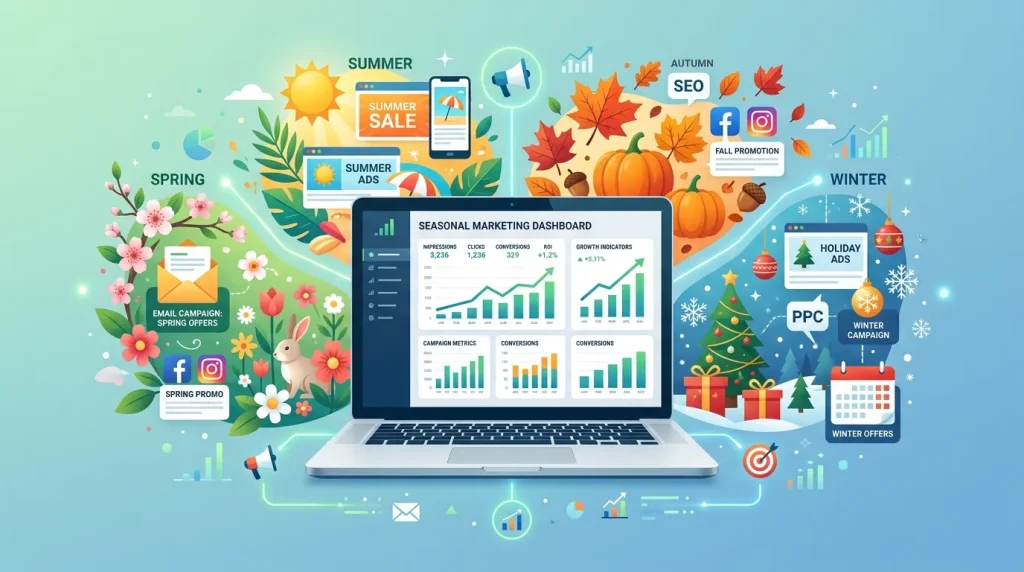
What is seasonal marketing? Seasonal marketing is the practice of tailoring your campaigns, promotions, and content around specific times of year—like holidays, weather changes, or recurring events—when customer demand and buying intent naturally spike. Understanding what seasonal marketing is can help brands stay relevant, boost sales during peak periods, and connect with audiences when they’re most ready to buy.
Some of the most memorable ad campaigns in history are tied to a moment in time. Think of Coca-Cola’s red-suited Santa, the John Lewis Christmas advert that stops the UK in its tracks each year, or the flood of pumpkin spice everything that arrives every fall. These aren’t accidents. They’re the result of smart seasonal marketing—a strategy that aligns your message with the rhythms of the calendar.
If you’ve ever wondered what seasonal marketing is and why brands lean so heavily into holidays, back-to-school season, or summer sales, this guide is for you. We’ll break down what seasonal marketing actually is, why it works, and how to build campaigns that capture attention exactly when your audience is paying attention.
By the end, you’ll have a clear understanding of what seasonal marketing is, how a seasonal marketing strategy works, and practical ideas and real examples you can adapt for your own brand—whether you’re a small business owner or a marketer at a growing company.
What is seasonal marketing?
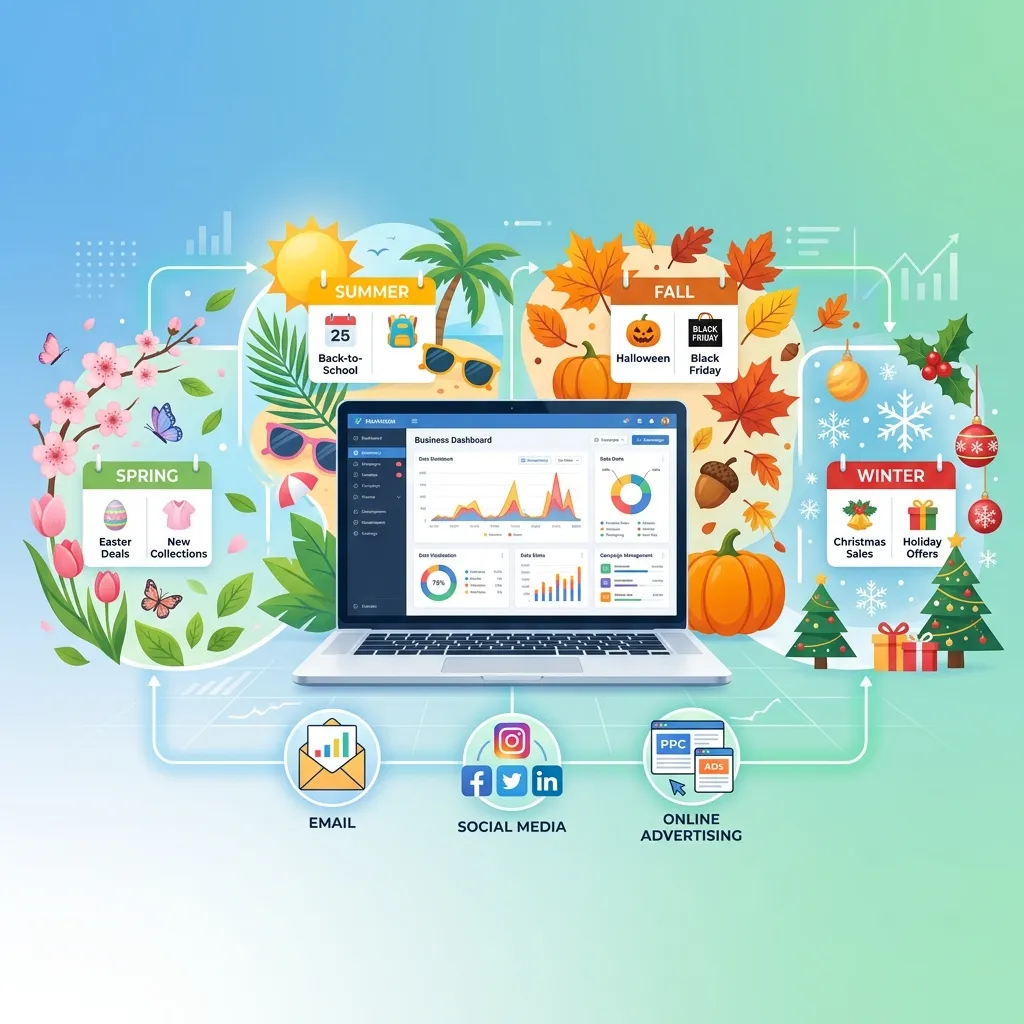

What is seasonal marketing? Seasonal marketing is a strategy that connects your products, promotions, and messaging to specific times of year. These “seasons” can be literal weather seasons (summer, winter), major holidays (Christmas, Valentine’s Day), cultural moments (back-to-school, tax season), or recurring events (the Super Bowl, Black Friday).
To understand the foundation better, it’s helpful to first explore what seasonality in marketing means and how consumer demand naturally shifts throughout the year.
The core idea behind seasonal marketing is simple: people’s needs, moods, and spending habits shift throughout the year. A sunscreen brand sees demand climb in summer, while a toy company knows December drives the bulk of its sales. By aligning marketing efforts with these natural patterns, brands using seasonal marketing meet customers at the exact moment they’re most likely to buy.
What sets seasonal marketing apart from year-round campaigns is its built-in urgency. Seasonal promotions have a clear start and end date, which encourages customers to act before they miss out. This ability to create relevance and urgency is one of the biggest reasons seasonal marketing continues to be so effective.
Why seasonal marketing works
Seasonal marketing taps into something powerful: timing. When your message arrives at the right moment, it feels helpful rather than intrusive. Understanding what seasonal marketing is and why it works can help businesses create campaigns that connect with customers when interest, engagement, and buying intent are naturally at their highest.. Here’s why this approach delivers results.
It matches customer intent
During certain times of year, people are actively looking for specific products. Shoppers searching for gift ideas in December or patio furniture in spring already have buying intent. Seasonal campaigns simply meet that demand head-on.
It creates urgency
Time-sensitive marketing campaigns work because they trigger fear of missing out (FOMO). A “Summer Sale Ends Sunday” message gives customers a reason to act now instead of later. Limited-time offers consistently outperform open-ended ones because the deadline does the persuading.
It feels timely and relevant
A well-timed campaign shows customers you understand their world. Sending cozy-themed content as the weather cools or fun, bright messaging in summer makes your brand feel in tune with your audience’s life.
It boosts repeat engagement
Seasonal moments recur every year, which gives you a reliable rhythm for connecting with customers. Over time, audiences come to expect and even look forward to your seasonal campaigns—think of how people anticipate certain holiday ads.
How to build a seasonal marketing strategy
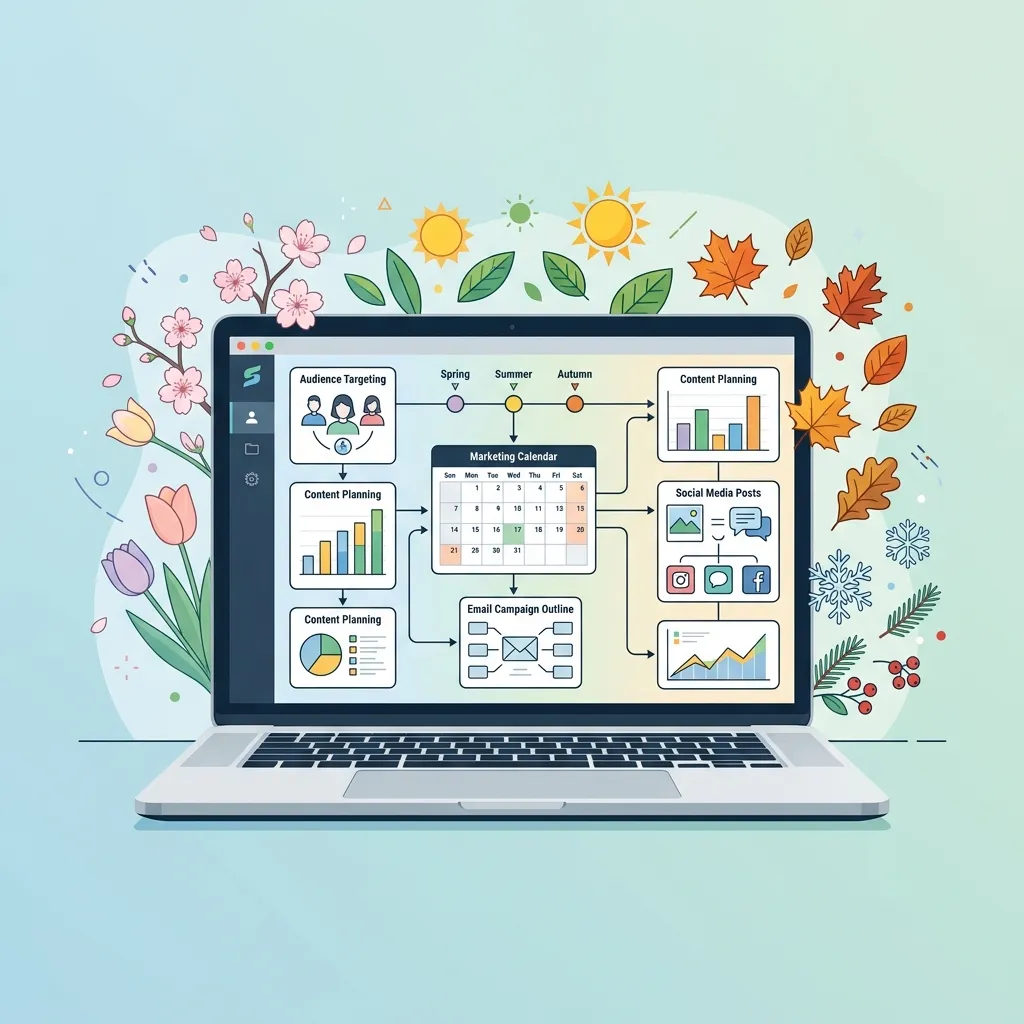
A great seasonal campaign doesn’t happen by chance. It takes planning, creativity, and a clear understanding of your audience. Here’s how to build a seasonal marketing strategy that works.
Start by reviewing your business goals and structure your planning around a promotion in a business plan so your seasonal campaigns align with overall growth strategy.
Start with a seasonal calendar
Map out the key dates that matter to your business. Beyond the obvious holidays, consider industry-specific events, local happenings, and quirky observances (like National Coffee Day for a café). Plotting these on a calendar helps you plan content and promotions well in advance.
Understand your audience’s seasonal behavior
Look at your past sales data to spot patterns. When do orders spike? Which products sell best at certain times? This information tells you where to focus your energy and budget for the biggest impact.
Plan ahead—way ahead
The brands that win at holiday marketing start months before the season hits. Retailers often plan Christmas campaigns in summer. Early planning gives you time to create quality content, secure inventory, and refine your messaging.
Tailor your message to the moment
Adjust your tone, visuals, and offers to fit the season. The energy of a summer campaign differs from the warmth of a winter one. Matching your message to the mood of the moment makes it far more effective.
Set clear goals and track results
Decide what success looks like before you launch—whether that’s sales, new customers, or social engagement. Tracking your results helps you learn what worked and improve next year’s campaign.
Holiday marketing ideas to inspire your next campaign
Holidays are the heart of seasonal marketing. Here are some holiday marketing campaign ideas you can adapt for your brand.
- Themed product bundles: Package related products together with a festive twist, like a “Cozy Night In” bundle for winter or a “Summer Essentials” kit.
- Holiday gift guides: Create curated guides that help shoppers find the perfect present. These are especially valuable during the December rush.
- Countdown campaigns: Build anticipation with a “12 Days of Deals” or advent-style promotion that reveals a new offer each day.
- Limited-edition products: Release special seasonal versions of your products. Scarcity drives demand and gives customers a reason to buy now.
- Charitable tie-ins: Pledge a portion of holiday sales to a cause. This resonates with the giving spirit of the season and builds goodwill.
- User-generated content contests: Invite customers to share photos of how they celebrate, then feature the best entries. This builds community and provides free promotional content.
Seasonal advertising examples that nailed it
Sometimes the best way to understand seasonal marketing is to see it in action. Here are a few standout seasonal advertising examples.
Starbucks and the Pumpkin Spice Latte
Starbucks turned a seasonal drink into a cultural phenomenon. The annual return of the Pumpkin Spice Latte each fall generates massive buzz, with customers eagerly counting down to its release. It’s a masterclass in creating anticipation around a limited-time product.
Coca-Cola’s holiday campaigns
Coca-Cola has tied its brand to Christmas for decades. From the iconic red Santa to the “Holidays Are Coming” truck campaign, Coca-Cola has made itself synonymous with the festive season—proving the power of consistent seasonal storytelling.
Spotify Wrapped
Every December, Spotify Wrapped invites users to look back on their year of listening. This event-based marketing campaign generates enormous social sharing as people post their personalized stats, turning customers into promoters.
REI and #OptOutside
Outdoor retailer REI famously closed its stores on Black Friday and encouraged people to spend the day outdoors instead. This bold, counter-seasonal move set the brand apart and strengthened its connection with nature-loving customers.
Seasonal promotion tactics that drive sales
Once you have your strategy and creative direction, you need tactics to convert attention into sales. Here are proven seasonal promotion ideas.
Flash sales and limited-time discounts
Short, intense sales create urgency. A 48-hour flash sale tied to a holiday gives customers a clear reason to buy immediately rather than putting it off.
Early-bird offers
Reward customers who shop ahead of the rush with special pricing. This spreads out demand and helps you capture sales before competitors ramp up.
Bundling and upsells
Group products into seasonal bundles at a slight discount. Customers feel they’re getting a deal, and your average order value climbs.
Free shipping thresholds
Offering free shipping above a certain spend encourages larger orders—especially during gift-giving seasons when people are buying multiple items.
Loyalty rewards
Give your existing customers early access or exclusive seasonal perks. This makes them feel valued and encourages repeat purchases during peak periods.
How to create seasonal content that connects

Seasonal content marketing goes beyond ads and discounts. It’s about creating valuable, timely content that draws people in and builds relationships.
Blog posts like “10 Summer Recipes for Busy Weeknights” or “The Ultimate Holiday Gift Guide” attract seasonal search traffic and position your brand as helpful. Social media is perfect for seasonal content too—think festive behind-the-scenes videos, holiday tips, or interactive polls.
Email marketing also shines during seasonal moments. A well-timed email series can guide subscribers from anticipation to purchase. Just be sure your content offers genuine value rather than only pushing sales.
The key is to plan your seasonal content in advance so it’s ready to publish at the perfect moment. Quality content takes time to produce, and rushing it shows.
Common seasonal marketing mistakes to avoid
Even experienced marketers slip up with seasonal campaigns. Watch out for these pitfalls.
- Starting too late: Launching a holiday campaign in mid-December means you’ve missed most of the action. Plan early.
- Being too salesy: Constant discount messaging can feel pushy. Balance promotions with genuine, valuable content.
- Ignoring the data: Failing to track results means you repeat the same mistakes year after year. Measure everything.
- Forgetting your brand voice: A seasonal theme shouldn’t override your brand identity. Stay recognizable, even when you’re being festive.
- Overlooking smaller occasions: Big holidays get crowded. Sometimes a lesser-known observance offers a less competitive opportunity to stand out.
Bringing your seasonal marketing strategy to life
Understanding what seasonal marketing is is the first step toward creating campaigns that connect with customers at the right time. Seasonal marketing is one of the most reliable ways to grow your brand because it works with human behavior, not against it. By aligning your campaigns with the moments your customers already care about, you create messages that feel timely, relevant, and worth acting on.
Start small if you need to. Once you understand what seasonal marketing is, pick one upcoming season or holiday, build a focused campaign around it, and measure the results. Use what you learn to refine your approach for the next opportunity. Over time, a well-planned seasonal marketing strategy can help keep your brand top of mind all year round.
The brands that succeed with seasonal marketing aren’t always the biggest—they’re the ones that plan ahead, understand their audience, and show up at exactly the right moment. By applying the strategies, ideas, and examples in this guide, you’ll have a clear understanding of what seasonal marketing is and how to use it to drive engagement, sales, and long-term growth.
To take it further, experiment with different formats, refine your campaigns over time, and continue learning from how cross-channel seasonal marketing improves performance to maximize results across platforms.
Frequently asked questions
What is the difference between seasonal marketing and event-based marketing?
Seasonal marketing focuses on recurring times of year like summer, winter, or major holidays. Event-based marketing centers on specific events, which can be seasonal (Black Friday) or one-off (a product launch or live event). The two often overlap, but event-based marketing tends to be tied to a single occasion rather than an entire season.
When should I start planning a seasonal marketing campaign?
Start planning at least two to three months before the season begins—and even earlier for major holidays like Christmas. Many retailers plan their holiday campaigns in summer. Early planning gives you time to create quality content, manage inventory, and refine your messaging before the rush.
Do small businesses benefit from seasonal marketing?
Yes. Seasonal marketing is especially valuable for small businesses because it lets them focus limited resources on high-impact moments. By targeting peak buying periods, smaller brands can compete more effectively and maximize their return on a tight budget.
What are examples of time-sensitive marketing campaigns?
Time-sensitive marketing campaigns include flash sales, limited-time discounts, countdown promotions, early-bird offers, and limited-edition product releases. These campaigns use a clear deadline to create urgency and encourage customers to act quickly.
How do I measure the success of a seasonal campaign?
Set clear goals before launching—such as total sales, new customers acquired, website traffic, or social engagement. Track these metrics throughout the campaign and compare them to previous years or non-seasonal periods to gauge performance and improve future campaigns.