
Seasonal trends are predictable shifts in consumer behavior, demand, and spending that follow recurring patterns throughout the year. Businesses that track and act on seasonal trends—across marketing, inventory, and pricing—consistently outperform those that don’t. This guide breaks down how to identify, forecast, and capitalize on seasonal shifts in your industry.
Every year, the same patterns play out. Gym memberships spike in January. Retailers scramble through Q4. Travel bookings surge in summer. Florists sell out in February. These aren’t coincidences—they’re seasonal trends, and the businesses that understand them don’t just react to these cycles. They plan for them months in advance.
Seasonal trends shape everything from how consumers spend to how companies staff, stock, and market. Yet many businesses still treat seasonality as background noise rather than a strategic input. The result? Missed revenue windows, inventory mismatches, and marketing campaigns that land at the wrong time.
This guide covers every major dimension of seasonal business trends—from consumer behavior and retail demand to holiday shopping patterns and forecasting methods—so you can build a smarter, more responsive strategy for every quarter.
What Are Seasonal Market Trends and Why Do They Matter?
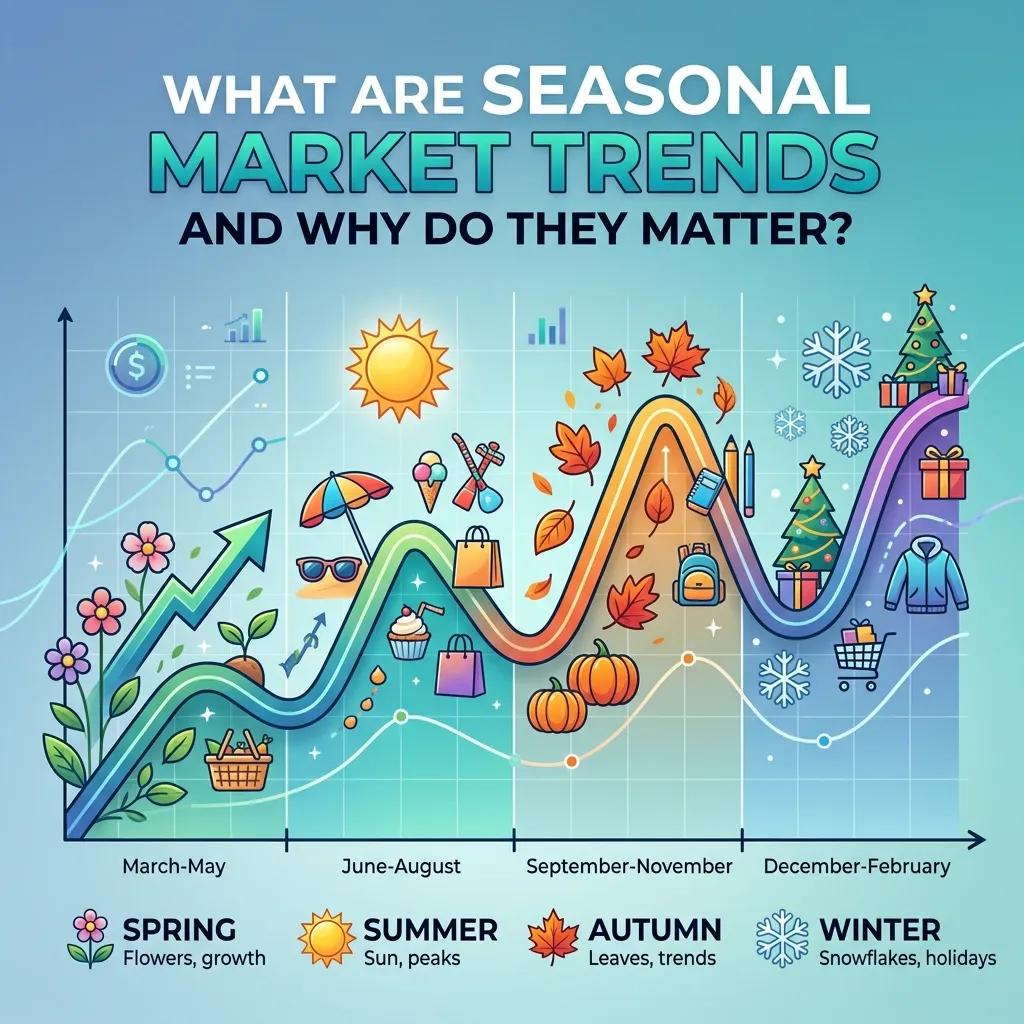
Seasonal market trends are recurring fluctuations in economic activity, consumer demand, and purchasing behavior that follow predictable cycles—typically tied to the calendar year, weather, cultural events, or holidays.
These trends matter because they create predictable windows of opportunity. For businesses that prepare, seasonal peaks drive disproportionate revenue. For those that don’t, they create costly supply shortages, staffing gaps, and missed conversions.
Take the retail industry as a benchmark. According to the National Retail Federation (NRF), holiday sales in November and December alone can represent 20% or more of annual retail revenue for many businesses. That’s a massive concentration of demand compressed into eight weeks—which means preparation can’t begin in October.
Understanding seasonal market trends also helps businesses benchmark performance. A dip in February sales might look alarming in isolation. Viewed through a seasonal lens, it’s often entirely expected—and the real question becomes how much of the dip you can offset with the right strategy.
How Does Consumer Behavior Change by Season?
Consumer purchasing patterns shift significantly depending on seasonal motivation—whether it’s spring renewal or holiday urgency. Many of these shifts are influenced by how brands structure their campaigns, especially when applying cross-channel seasonal marketing strategies across digital and offline platforms.
Spring: Renewal and Big Purchases
Spring triggers a “fresh start” mentality. Consumers invest in home improvement, fitness, outdoor gear, and fashion refreshes. Tax refund season in the US (typically February through April) injects extra disposable income into the market, accelerating purchases that shoppers had been deferring.
Summer: Experiences Over Things
Summer spending skews toward travel, entertainment, dining out, and outdoor recreation. E-commerce typically softens in some categories as people spend more time away from screens, though mobile commerce fills some of that gap.
Fall: Back to Routine and Holiday Preparation
Fall is dominated by two forces: the back-to-school season (one of the largest retail events of the year) and early holiday shopping. According to the NRF, a growing share of consumers begin their holiday shopping before Halloween, driven by early promotions and a desire to avoid the December rush.
Winter: Peak Spending, Then Sharp Contraction
December is the apex of consumer spending for most retail categories. January brings an equally sharp contraction as consumers recover financially and reset. Businesses that plan for the January slowdown—rather than being blindsided by it—manage cash flow and inventory far more effectively.
What Are the Key Seasonal Marketing Trends Businesses Should Know?
Seasonal marketing trends have shifted significantly over the past decade. The rise of digital advertising, social commerce, and AI-driven personalization has changed both the timing and the format of effective seasonal campaigns.
Modern seasonal marketing is no longer just about timing—it’s about integration across platforms. Businesses increasingly rely on social media marketing plans for seasonal campaigns to ensure consistent messaging across email, paid ads, and organic content.
Earlier launch windows: Brands now launch seasonal campaigns weeks earlier than they did five years ago. The “Christmas creep”—holiday marketing appearing before Thanksgiving—is widely documented and largely accepted by consumers. Getting ahead of the cycle is no longer optional for most retailers.
Shorter attention spans, longer consideration periods: Consumers are exposed to seasonal messaging earlier but still delay final purchase decisions. This creates an extended window for upper-funnel content (awareness, inspiration) and a compressed window for conversion-focused messaging close to the event date.
Social and influencer-driven seasonal content: Platforms like TikTok and Instagram have become primary discovery channels for seasonal trends, particularly in fashion, beauty, food, and gifting. Brands that co-create with creators—rather than just running paid ads—often see stronger engagement during peak seasons.
Personalization at scale: Email and SMS campaigns tied to seasonal events perform best when segmented by past purchase behavior. A customer who bought gardening supplies last spring is a high-probability target for spring gardening promotions this year. Generic seasonal blasts increasingly underperform.
Holiday Shopping Trends: What the Data Reveals
Holiday shopping is the most studied and data-rich seasonal trend in retail. A few patterns stand out.
First, the shopping window has expanded. Black Friday and Cyber Monday remain high-volume days, but many consumers now spread their holiday purchases across October, November, and December. Retailers have responded with “early access” sales that effectively extend the holiday shopping season by 4–6 weeks.
Second, online and in-store shopping are increasingly complementary rather than competitive. Many consumers research online and purchase in-store (particularly for gift items where tactile experience matters), or purchase online and return in-store. Omnichannel preparedness is now a baseline expectation, not a differentiator.
Third, last-minute shopping is structurally persistent. Despite every nudge toward earlier purchasing, a significant share of consumers still shop in the final 10 days before Christmas. Brands that maintain campaign momentum into mid-December—rather than pulling back after Cyber Week—consistently capture this segment.
Seasonal Sales Trends Across Industries
Not all industries follow the same seasonal curve. Understanding your sector’s specific sales trends is more useful than following a generic calendar.
- Retail and e-commerce: Q4 dominates, with secondary peaks around Valentine’s Day, Mother’s Day, and back-to-school season.
- Travel and hospitality: Summer and the December holiday period drive peak demand, with spring break creating a mid-cycle spike. January and September tend to be softer.
- Food and beverage: Highly event-driven. Super Bowl, Thanksgiving, and summer BBQ season are key moments. Alcohol and soft drink categories spike around specific holidays.
- Fitness and wellness: January drives massive acquisition spikes, with a secondary surge in spring ahead of summer. Retention in February and March is a known challenge.
- Home improvement: Spring and summer dominate, driven by real estate activity and favorable weather. Tax refund season amplifies spending in March and April.
Mapping your own sales data against these patterns—over at least two to three years—reveals your specific seasonal fingerprint, which is far more actionable than industry averages alone.
How to Approach Seasonal Demand Forecasting
Seasonal demand forecasting is the process of using historical data, market signals, and external inputs to predict future demand patterns. Accurate forecasting depends on understanding both historical data and marketing execution. Many businesses now combine forecasting with data-driven seasonal marketing optimization techniques to improve accuracy and revenue planning.
Use at Least 3 Years of Historical Data
Single-year comparisons can be misleading, particularly if a prior year was anomalous (a pandemic, a major weather event, a supply chain disruption). Three or more years of data allows you to distinguish true seasonal patterns from one-off events.
Layer in External Signals
Historical data tells you what happened. External signals help you refine what’s likely to happen next. These include economic indicators (consumer confidence, inflation data), search trend data from Google Trends, social listening insights, and competitive activity.
Build in Scenario Ranges
Rather than forecasting a single number, build a range—a conservative case, a base case, and an optimistic case. This approach helps procurement, staffing, and marketing teams plan for variability rather than anchoring to a single projection that may not materialize.
Retail Seasonal Trends: Planning Your Calendar
Effective retail seasonal planning requires a backward-planning approach. Start with the peak event date and work backward to determine when inventory needs to arrive, when campaigns need to launch, and when promotional mechanics need to be confirmed.
A useful framework for most retailers:
- 12+ weeks out: Finalize product assortment and place inventory orders
- 8 weeks out: Brief creative teams and confirm campaign strategy
- 4–6 weeks out: Launch upper-funnel campaigns (awareness, email list growth)
- 2–3 weeks out: Shift to conversion-focused messaging
- Event week: Maximize visibility with high-frequency, urgency-driven tactics
- Post-event: Plan clearance strategy and capture retention data for next year
This timeline compresses significantly for smaller businesses, but the sequencing logic holds regardless of scale.
Seasonal Marketing Strategies That Drive Results
The following seasonal marketing strategies consistently outperform across industries and business sizes.
Seasonal landing pages: Dedicated landing pages optimized for seasonal keywords (e.g., “best gifts for Mother’s Day” or “summer sale running shoes”) capture organic search traffic during peak periods. These pages should be built and indexed well before the season peaks.
Email segmentation by purchase history: Past seasonal purchasers are your highest-probability repeat buyers. Segment them and give them early access, exclusive offers, or personalized product recommendations based on what they bought before.
Limited-time offers with real scarcity: Urgency mechanics work best when the scarcity is genuine. A “48-hour flash sale” loses credibility if it recurs every week. Reserve high-urgency tactics for genuine seasonal moments.
Post-season retention campaigns: The period immediately after a peak season is an underutilized retention opportunity. Customers who just purchased are warm and engaged—a well-timed follow-up with complementary products, loyalty incentives, or helpful content can extend the relationship well beyond the seasonal window.
Build Your Seasonal Strategy Before the Season Starts
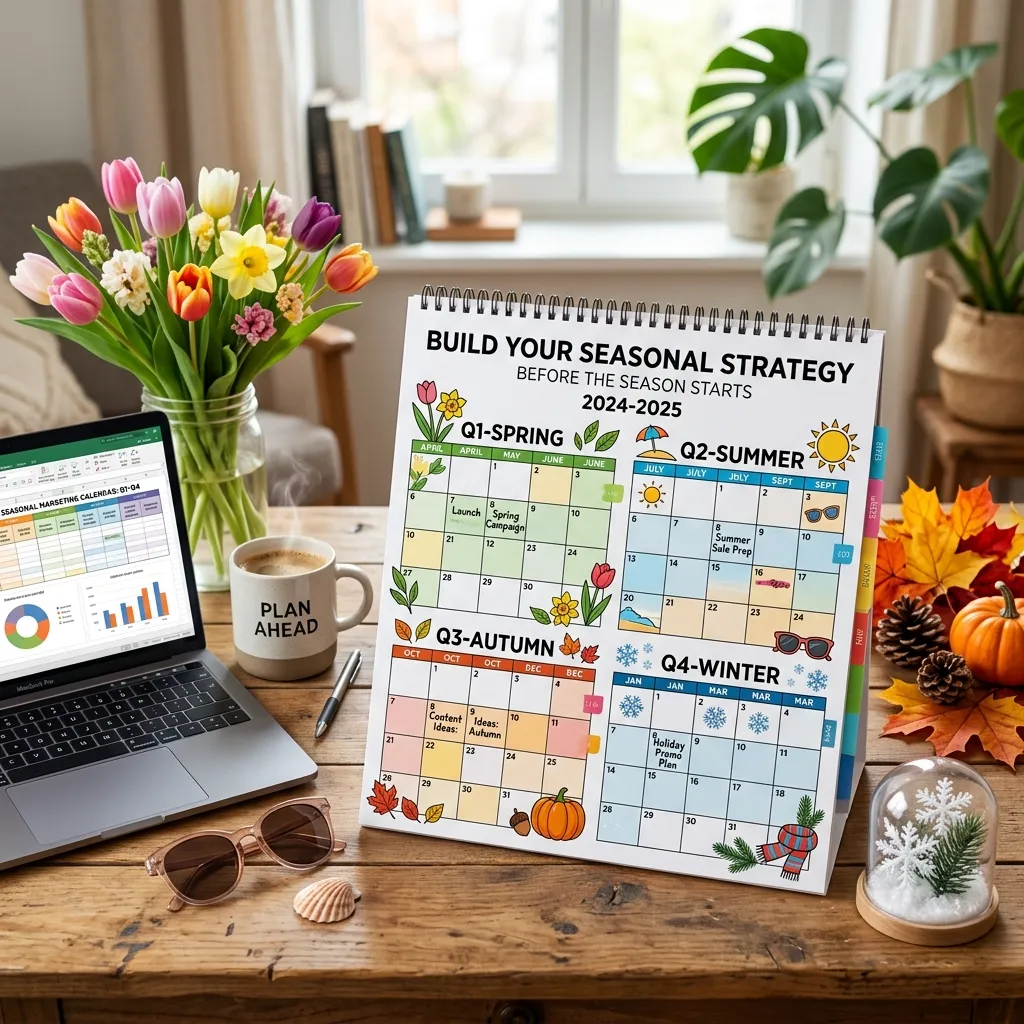
Seasonal trends reward preparation. The businesses that consistently win during peak periods aren’t necessarily the ones with the biggest budgets—they’re the ones that started planning earlier, forecasted more carefully, and executed with greater precision.
Start by auditing your own historical seasonal data. Identify your three highest-demand periods, your three slowest months, and the external events that have historically moved your numbers. From there, build a seasonal calendar that gives your marketing, operations, and product teams enough lead time to execute effectively.
Seasonality isn’t a variable you manage around—it’s a pattern you can learn to work with.
Frequently Asked Questions
What is the difference between seasonal trends and industry cycles?
Seasonal trends recur within a single calendar year, tied to weather, holidays, or cultural events. Industry cycles are longer-term fluctuations that span multiple years, driven by economic conditions, technology shifts, or structural market changes. Both matter for business planning, but they operate on different timescales and require different strategic responses.
How far in advance should businesses plan for seasonal demand?
Most businesses benefit from beginning seasonal planning 8–12 weeks before a peak event. Retailers with complex supply chains may need 16–24 weeks of lead time for inventory. Marketing campaigns typically launch 4–6 weeks out, shifting from awareness to conversion messaging closer to the event date.
What tools are useful for tracking seasonal consumer behavior?
Google Trends is a freely available tool for tracking search-based seasonal interest over time. Retail businesses can also use point-of-sale data analytics platforms, social listening tools (such as Brandwatch or Sprout Social), and e-commerce analytics dashboards to monitor seasonal demand signals in real time.
Which season is most important for retail businesses?
For most retail businesses, the Q4 holiday season (October through December) generates the highest revenue concentration. However, the most important season varies by category—back-to-school is critical for stationery and electronics, while spring is the dominant season for home improvement and garden retail.
How can small businesses compete during peak seasonal periods?
Small businesses often succeed by going narrow rather than broad—targeting a specific niche audience with highly personalized messaging rather than competing on volume or discounting against larger players. Early campaign launches, loyalty-based early access offers, and community-driven marketing tend to deliver strong ROI for smaller operations.
What are seasonal trends in business?
Seasonal trends are predictable changes in consumer demand and behavior that occur at certain times of the year, such as holidays, weather changes, or cultural events.
Why are seasonal trends important for businesses?
They help businesses plan marketing, inventory, and staffing more effectively, allowing them to maximize profits during peak demand periods.
Which industries are most affected by seasonal trends?
Retail, travel, hospitality, fitness, food & beverage, and home improvement industries are highly influenced by seasonal fluctuations.
How do seasonal trends affect consumer behavior?
Consumers tend to spend more during holidays and events, shift toward travel or outdoor activities in summer, and reduce spending after peak seasons.
What is seasonal demand forecasting?
It is the process of predicting future demand using historical data, market trends, and external factors to improve business planning.
How far in advance should businesses plan for seasonal demand?
Most businesses should start planning 8–12 weeks before peak seasons, while larger retailers may plan 4–6 months ahead.
What tools help track seasonal trends?
Tools like Google Trends, social listening platforms, and e-commerce analytics tools help track consumer behavior and seasonal demand patterns.
How can small businesses compete during peak seasons?
They can focus on niche audiences, use personalized marketing, build early campaigns, and offer loyalty-based promotions instead of competing on price alone.
What is the biggest seasonal sales period for most businesses?
For many industries, Q4 (October to December) is the strongest period due to holiday shopping demand.
Can seasonal trends be predicted accurately?
Yes, to a large extent—using multiple years of data, market signals, and scenario-based forecasting improves accuracy significantly.