
Digital marketing seasonal trends help businesses align campaigns with predictable changes in consumer behavior throughout the year. Planning around seasonal peaks like holidays and Q4 improves engagement, conversions, and overall marketing performance.
Seasonal digital marketing involves aligning campaigns, content, and advertising strategies with consumer behavior shifts that occur at predictable points throughout the year. Brands that plan seasonal campaigns in advance consistently outperform those that react last minute—particularly during high-stakes periods like Q4 and back-to-school season.
Every year, the same opportunities arrive on schedule. Black Friday. Valentine’s Day. Back-to-school. Summer slowdowns. And every year, some brands are ready—and many are not.
Seasonal marketing is one of the most powerful levers in digital marketing, yet it remains one of the most under-optimized. Marketers get caught up in always-on campaigns and evergreen content, only to scramble when a major shopping moment arrives with two weeks’ notice. The result? Rushed creative, inflated ad spend, and missed revenue.
This guide changes that. Below, you’ll find a detailed breakdown of how to build seasonal digital marketing strategies that are proactive, data-driven, and adaptable—covering everything from consumer behavior insights to platform-specific tactics and a full annual marketing calendar framework. Whether you’re running eCommerce campaigns, managing a content calendar, or planning paid media across the year, this is your reference.
How Does Consumer Behavior Shift With the Seasons?
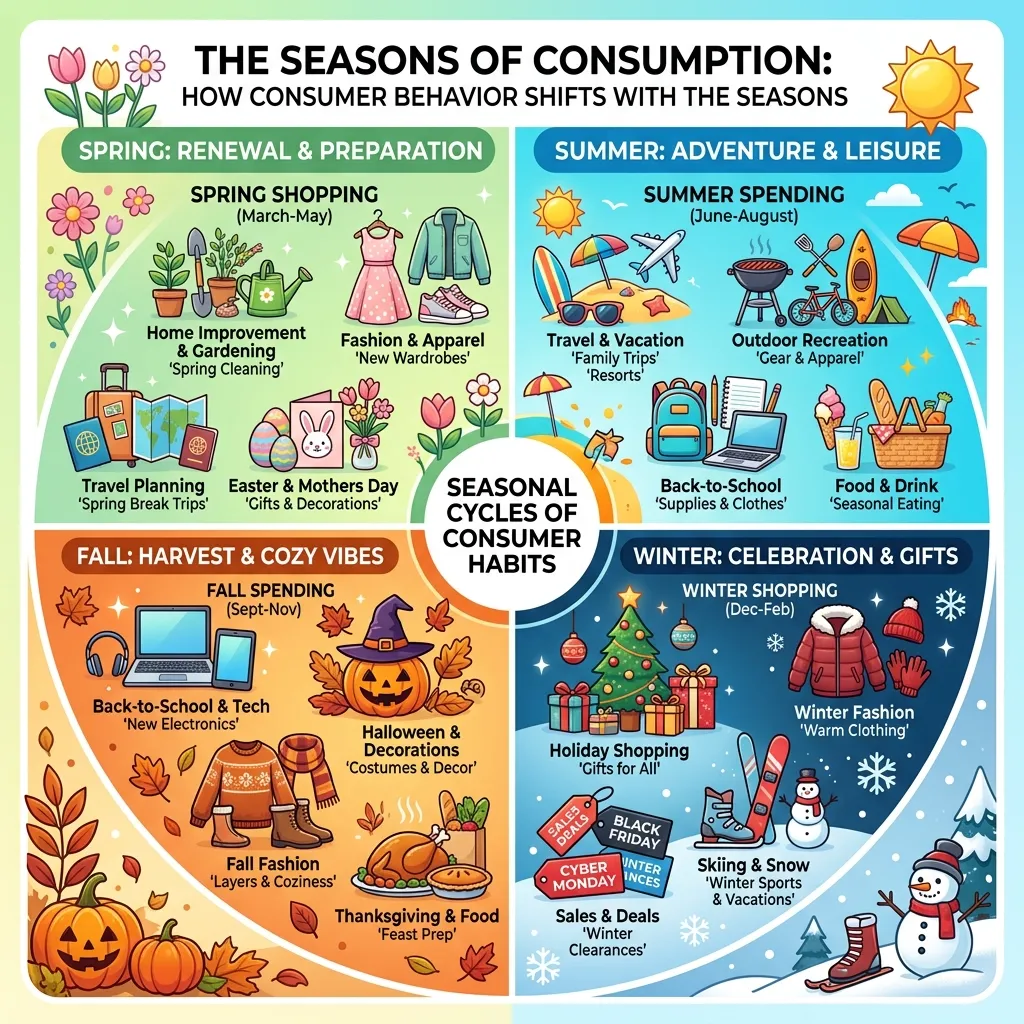
Before building a seasonal strategy, it’s worth understanding what actually drives seasonal consumer behavior in marketing. The answer is a mix of psychological, cultural, and environmental triggers.
Understanding these behavioral cycles is the foundation of any effective seasonal advertising strategy, and it pairs strongly with practical execution frameworks like email marketing tips for seasonal campaign success, which help translate seasonal intent into measurable conversions.
Temperature and weather directly influence product demand. Consumers search for air conditioners in June and slow cookers in October. These aren’t trends—they’re patterns, and search volume data from tools like Google Trends confirms them year after year.
Cultural and commercial events create purchase urgency. According to the National Retail Federation (NRF), holiday retail sales in November and December consistently account for a significant share of annual retail revenue in the United States. Consumers enter these windows already primed to spend, which dramatically lowers the cost of conversion for brands that show up prepared.
Post-event sentiment shapes behavior just as much as the events themselves. January brings a surge in health, fitness, and financial planning searches as consumers reflect on the year prior. Late March sees increased interest in home improvement as spring approaches. These shifts are predictable—and marketable.
Understanding these behavioral cycles is the foundation of any effective seasonal advertising strategy.
What Does a Strong Annual Marketing Calendar Look Like?
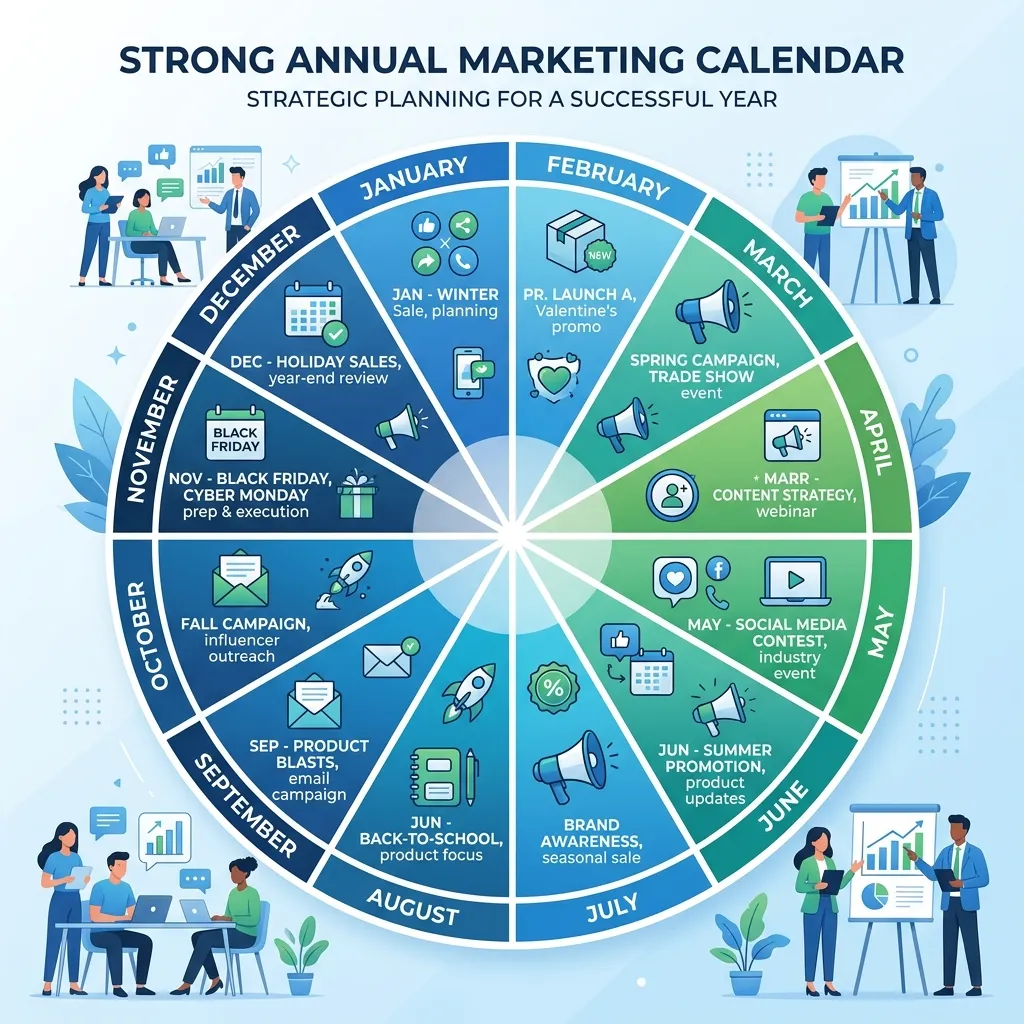
An annual marketing calendar is the operational backbone of seasonal digital marketing. Without one, teams default to reactive planning, which eats into margins and creative quality.
An annual marketing calendar is the operational backbone of seasonal digital marketing. Many brands streamline this process using a structured seasonal email marketing campaign calendar to ensure campaigns are launched at the right time with full alignment across teams.
A well-structured calendar maps campaigns to four distinct planning horizons:
Q1 (January–March): New Year, New Intent
Q1 is often underestimated. Post-holiday spending dips, but consumer intent is high—especially in categories like fitness, personal finance, productivity, and education. Key moments include:
- New Year’s campaigns (January 1–15): Target resolution-driven behavior. Health, wellness, and subscription products perform strongly.
- Valentine’s Day (February 14): A high-volume retail and gifting moment. Digital spend on paid social typically spikes in the first two weeks of February.
- Tax season (February–April): Relevant for financial services, software, and professional services brands.
Q2 (April–June): Momentum and Mid-Year Engagement
Spring brings renewed consumer energy. Key opportunities include:
- Spring sales events: Apparel, home goods, and outdoor products see increased demand.
- Mother’s Day (second Sunday of May): One of the top gifting occasions of the year in the US.
- Memorial Day weekend: A major eCommerce sale moment, particularly for home, travel, and apparel.
- Graduations: Gift-focused campaigns perform well across electronics, fashion, and experiences.
Q3 (July–September): Summer Strategy and Back-to-School
Summer presents a split: consumer attention fragments as people travel and spend time offline, yet several high-value moments cluster in this period.
- Prime Day and competing retail events: Amazon’s Prime Day has created a mid-July sales window that competitors now mirror with their own promotions.
- Back-to-school season: According to the NRF, back-to-school is the second-largest retail event of the year in the US. Campaigns targeting parents and students should launch by early July to capture early shoppers.
- Late summer brand-building: Lower CPMs during the summer lull make Q3 an underrated window for awareness campaigns and content marketing investment.
Q4 (October–December): The High-Stakes Quarter
Q4 is where annual revenue targets are won or lost for many brands. The density of high-intent shopping moments is unmatched:
- Halloween (October): Significant for food, retail, and entertainment brands.
- Pre-Black Friday buildup: Consumer research behavior starts climbing in early October. Brands that wait until November to launch Q4 campaigns are already behind.
- Black Friday and Cyber Monday (BFCM): The most competitive digital advertising window of the year. Paid media CPMs spike sharply. Brands with strong organic content and email lists hold a cost advantage here.
- Holiday gifting season (December): Cross-category demand peaks. Free shipping deadlines and last-minute gifting windows create urgency-driven conversion opportunities.
What Are the Most Effective Seasonal Content Marketing Ideas?
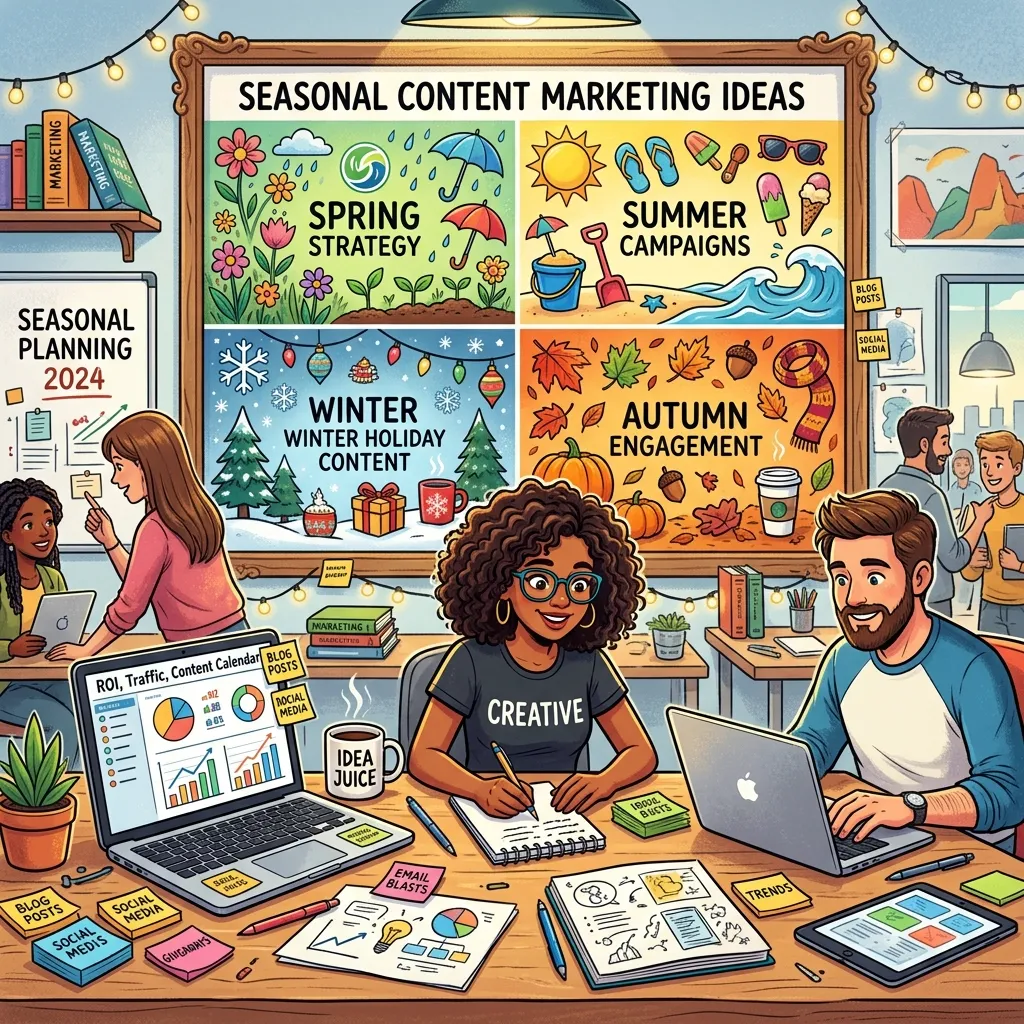
Seasonal content marketing earns compounding returns. A well-optimized “best gifts for Mother’s Day” article or a “summer skincare routine” guide can rank in search for years, driving organic traffic every time that season arrives.
Here are content formats that perform consistently well across seasons:
- Gift guides: High purchase intent, strong search volume, and highly shareable. Build category-specific guides (e.g., “gifts for remote workers,” “eco-friendly holiday gifts”) to capture long-tail queries.
- Trend roundups: “Spring home décor trends” or “fall fashion must-haves” perform well on both search and social platforms.
- How-to and tutorial content: Seasonal how-tos (e.g., “how to prep your garden for winter” or “how to create a holiday content calendar”) answer specific queries and position brands as helpful resources.
- Year-in-review and predictions content: Published in late November through December, this content earns links, shares, and authority heading into the new year.
- Email sequences tied to seasonal moments: A well-timed email series (e.g., a 5-day Black Friday countdown or a “spring reset” wellness sequence) drives engagement without requiring significant ad spend.
The key is building this content 8–12 weeks before the seasonal peak, not during it. Search engines need time to index and rank new pages, and social content benefits from early traction.
How Should eCommerce Brands Approach Seasonal Marketing?
For eCommerce brands, seasonal marketing directly ties to revenue—so the stakes are higher and the planning requirements more demanding.
Post-season reviews, rolling 90-day planning, and cross-functional alignment all contribute to stronger execution. These efforts are even more effective when paired with long-term visibility strategies such as how to increase brand awareness through digital marketing.
Inventory alignment is a non-negotiable starting point. Seasonal campaigns that drive traffic to out-of-stock products are costly failures. Marketing and operations teams should sync on inventory forecasts before campaigns launch.
Promotional strategy should ladder up across the season. Rather than holding a single sale event, high-performing eCommerce brands use a tiered approach:
- Early-access or subscriber-exclusive offers (builds list loyalty and drives early conversions)
- Main sale event (maximizes volume)
- Post-event “last chance” messaging (captures fence-sitters)
Platform-specific eCommerce seasonal trends also matter. Google Shopping campaigns benefit from early budget ramp-ups ahead of peak periods. Meta ads (Facebook and Instagram) require creative refresh cycles of roughly 7–10 days during high-volume windows to prevent audience fatigue. TikTok’s discovery-driven algorithm rewards seasonal trend participation—brands that create native-feeling seasonal content, rather than repurposed ad creative, consistently see stronger organic reach.
Which Seasonal Advertising Strategies Deliver the Best ROI?
Seasonal advertising strategy comes down to one core principle: spend early to pay less, and earn more.
CPMs (cost per 1,000 impressions) on paid platforms—particularly Meta and Google—rise sharply during peak periods as competition for ad inventory increases. Brands that build awareness and retargeting audiences in the 4–6 weeks before a seasonal peak enter the high-cost window with warmer audiences, lower effective CPAs, and less reliance on cold-audience prospecting at inflated rates.
Retargeting is disproportionately effective during seasonal windows. Consumers who have previously visited your site or engaged with your content are far more likely to convert during a promotional window. Building these audiences ahead of time—through content marketing, email acquisition, and organic social—reduces paid media dependency during peak periods.
Seasonal SEO should not be overlooked. Organic search remains one of the highest-ROI channels for seasonal traffic. Targeting high-intent seasonal keywords (e.g., “best Black Friday deals on [product category],” “Valentine’s Day gift ideas for him”) with well-optimized content can generate traffic without incremental ad spend.
How to Build a Year-Round Digital Marketing Planning Framework
The most resilient brands treat year-round digital marketing planning as a continuous process, not an annual sprint. A practical framework includes:
- Post-season reviews: Within two weeks of each seasonal campaign’s close, review performance data—conversion rates, ROAS, top-performing creatives, and traffic sources. Document what worked and what didn’t.
- Rolling 90-day planning: Always have a fully developed campaign plan for the next 90 days, with the following 90 days in draft stage.
- Trend monitoring: Subscribe to weekly reports from sources like Google Trends, Meta’s Seasonal Insights, and industry-specific publications. Seasonal trends shift—what worked in 2022 may underperform in 2025.
- Cross-functional alignment: Seasonal marketing works best when content, paid media, email, and product teams operate from the same calendar and campaign brief.
Build Seasonal Marketing Into Your Strategy Now
Seasonal digital marketing rewards preparation. The brands that consistently outperform during peak periods—earning more revenue, paying less for ads, and building stronger customer relationships—aren’t doing anything more creative than their competitors. They’re simply starting earlier and planning with more precision.
Map your annual marketing calendar now. Identify the two or three seasonal moments that matter most for your specific audience and product category. Build content, creative, and campaign infrastructure well ahead of those windows. Then review, refine, and repeat.
Seasonal opportunities arrive whether you’re ready or not. The question is whether your marketing strategy shows up before the moment—or scrambles to catch up with it.
Frequently Asked Questions
When should I start planning seasonal marketing campaigns?
For major seasonal events like Black Friday or back-to-school, planning should begin 3–4 months in advance. Content creation and SEO-focused assets should be published 8–12 weeks before the seasonal peak to allow time for indexing and ranking. Paid media campaigns typically launch 4–6 weeks before peak periods.
How do I identify which seasonal moments are most relevant to my business?
Start with your own sales and traffic data—look for recurring spikes in previous years. Cross-reference these with Google Trends data for your core product or service categories. Seasonal relevance varies significantly by industry, so prioritize moments where consumer intent aligns with what you offer, rather than trying to participate in every major calendar event.
What is the most cost-effective seasonal digital marketing channel?
Email marketing consistently delivers the highest ROI of any digital channel during seasonal windows, according to multiple industry benchmarks. Brands with large, engaged email lists can drive significant seasonal revenue without competing for expensive ad inventory. Organic search is the second most cost-effective channel, particularly for brands with established domain authority and well-optimized seasonal content.
How should small businesses approach seasonal marketing with a limited budget?
Small businesses should focus seasonal budgets on 2–3 high-impact moments per year rather than spreading resources across every calendar event. Prioritize email marketing, organic social, and SEO content—channels with lower upfront costs and strong conversion rates. Paid media, even at modest daily budgets, can be effective when tightly targeted to existing audiences or warm retargeting pools.
How do seasonal trends differ between eCommerce and service-based businesses?
eCommerce businesses see the most concentrated seasonal demand during Q4 and major gifting moments, with inventory and logistics playing a critical role in campaign success. Service-based businesses often follow different seasonal cycles—tax and financial services peak in Q1, travel and hospitality in Q2 and Q3, and B2B services typically slow during the summer and December holidays. Mapping your own data against cultural and environmental triggers helps identify the seasonal patterns specific to your category.