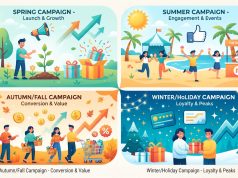

Holiday Marketing helps businesses capture seasonal demand early through strategic promotions, customer insights, relevant content, and coordinated campaigns that convert shopping interest into profitable sales.
The holiday shopping season creates some of the biggest revenue opportunities for businesses across e-commerce, retail, hospitality, fashion, consumer technology, beauty, and other industries. During these periods, customers actively search for gifts, compare products, explore seasonal collections, and look for attractive purchasing opportunities. However, the businesses that generate the strongest results are not necessarily those that spend the most money during peak shopping days. They are often the ones that prepare early, understand customer intentions, and build purchasing interest before competition reaches its highest level.
This is where Holiday Marketing becomes an important part of a company’s annual growth strategy. Instead of treating seasonal promotions as short-term advertising activities, businesses should approach them as coordinated campaigns that influence awareness, consideration, purchasing decisions, and customer retention.
Consider an online retailer selling premium skincare products. Waiting until Black Friday or the final weeks before Christmas to introduce its products means competing against brands that have already built awareness, developed customer interest, and established promotional expectations. However, a retailer that starts publishing gift guides, demonstrating product benefits, collecting customer preferences, and introducing seasonal bundles earlier can enter the peak shopping period with a more informed audience.
Holiday Marketing is not simply about offering discounts when customers are ready to purchase. It is about making the brand visible when customers begin planning, helping them understand why a product is worth considering, and removing the obstacles that prevent them from completing a purchase.
Consumer behaviour also demonstrates why early preparation matters. According to Gartner’s October 26, 2026 research, 57% of surveyed US consumers planned to begin winter holiday shopping in October or earlier, while nearly 60% reported having less money available for holiday purchases than in the previous year. These findings highlight two important considerations: customers may start researching earlier, and they increasingly need convincing value rather than discounts alone. <Cite refs={[“turn181661search0”]}/>
A successful Holiday Marketing strategy therefore balances timing, customer psychology, product positioning, advertising, content, inventory, and customer experience.
Businesses that understand these elements can capture demand before advertising competition intensifies, improve conversion opportunities, and turn seasonal purchases into longer-term customer relationships.
Understanding Holiday Marketing and Its Role in Seasonal Business Growth
Holiday Marketing refers to the strategic planning and execution of promotional activities around seasonal events, celebrations, public holidays, shopping occasions, and culturally significant purchasing periods.
These activities can include special product collections, limited-time offers, gift guides, email campaigns, seasonal advertising, loyalty rewards, website promotions, and personalised customer experiences.
The objective is to connect products and services with the needs and motivations people develop during specific seasonal periods.
Why seasonal demand creates business opportunities
Consumer purchasing behaviour often changes during holidays because people have different reasons to spend.
Some customers purchase gifts for family members, friends, and colleagues. Others prepare for celebrations, travel, home decoration, entertainment, or personal occasions. Businesses may also purchase supplies, promotional merchandise, and professional services.
Holiday Marketing helps organisations position relevant products around these purchasing needs.
Different seasons create different demand patterns:
| Seasonal occasion | Common purchasing motivation | Business opportunity |
|---|---|---|
| Black Friday | Discounts and planned purchases | Product promotions and bundles |
| Cyber Monday | Online deals and technology purchases | E-commerce and electronics campaigns |
| Christmas | Gifts, celebrations, and convenience | Gift collections and seasonal packages |
| Valentine’s Day | Personal gifts and experiences | Fashion, beauty, dining, and gifts |
| Mother’s Day | Appreciation and family gifting | Personalised products and gift sets |
| Eid | Clothing, food, gifts, and celebrations | Fashion, retail, food, and lifestyle |
| Diwali | Gifts, decoration, and festive shopping | Home products, electronics, and gifting |
| Lunar New Year | Family celebrations and traditional purchases | Food, fashion, travel, and gifts |
| Back-to-school season | Education and preparation | Stationery, technology, and clothing |
The relevance of each occasion depends on the target market and the products being offered.
Holiday campaigns are not limited to retail businesses
Although e-commerce brands frequently use seasonal campaigns, other industries can also benefit.
A software company might introduce annual subscription packages before the end of the financial year. A travel company could promote seasonal destinations. A restaurant may offer celebration menus, while a marketing agency could provide planning services for businesses preparing their next seasonal sales campaigns.
The important factor is identifying whether customers have a genuine reason to purchase during the selected occasion.
Holiday Marketing should connect a product with an existing customer need rather than creating an artificial seasonal connection.
The difference between seasonal promotion and seasonal strategy
A seasonal promotion is usually a specific offer, such as a discount or bundled product.
A seasonal strategy includes everything required to make that promotion successful.
| Seasonal promotion | Complete seasonal strategy |
|---|---|
| Temporary discount | Demand development and promotional planning |
| Limited-time banner | Website and landing page optimisation |
| Promotional social post | Coordinated content distribution |
| Discount email | Segmented customer communication |
| One advertising campaign | Multi-channel acquisition strategy |
| Short-term revenue objective | Acquisition, retention, and lifetime value |
A business may run a successful promotional event without having a strong long-term strategy. A more developed Holiday Marketing framework creates value before, during, and after the seasonal event.
Why Businesses Should Build Demand Before Peak Shopping
Peak shopping periods attract a large number of advertisers. Retailers compete for attention through paid search, social advertising, influencer promotions, marketplace placements, email campaigns, and limited-time offers.
When competition intensifies, advertising costs and customer acquisition challenges can increase.
Preparing early provides businesses with more opportunities to build awareness and understand which products, offers, and messages attract interest.
Capture customers during the research stage
Not every customer purchases immediately after discovering a product.
A person planning a holiday gift may spend several weeks comparing prices, checking reviews, researching alternatives, and asking friends for recommendations.
Someone purchasing electronics may wait for a specific offer, while another customer may need additional time to decide whether a product is suitable.
Holiday Marketing should therefore begin before the customer reaches the final purchasing stage.
During the early period, brands can publish helpful content, introduce seasonal collections, explain product benefits, and build awareness without immediately demanding a purchase.
Build familiarity before competitors become more aggressive
Repeated exposure can help customers recognise a brand when they eventually become ready to purchase.
For example, a customer may first discover a clothing retailer through a seasonal collection preview, later visit a gift guide, and eventually return during a promotional event.
The initial interactions help establish familiarity.
A Holiday Marketing campaign that starts early can develop these relationships before competitors increase their promotional activity.
Test offers before increasing advertising investment
Starting early also gives marketers time to test different ideas.
Businesses can evaluate which product categories generate interest, which messages receive engagement, and which landing pages encourage meaningful actions.
This information can guide the main campaign.
Instead of guessing which promotion will work, marketers can use early performance signals to make better decisions about creative, audience segments, and spending.
Reach customers with different shopping schedules
Not everyone shops according to the same seasonal calendar.
Some customers purchase gifts months ahead of time, while others wait for major promotional events. Last-minute shoppers may prioritise delivery speed and convenience over extensive product comparisons.
Recent 2026 industry research from DAC highlights that shoppers increasingly research earlier and continue purchasing beyond traditional promotional weekends. Its seasonal planning guidance recommends preparing discovery assets, gift guides, and measurement systems before the most competitive shopping periods. <Cite refs={[“turn181661search3”]}/>
A strong Holiday Marketing strategy accommodates these different behaviours instead of assuming that everyone will purchase on the same date.
Understanding Holiday Shopping Psychology
Seasonal purchasing decisions are influenced by emotional motivations, financial considerations, social expectations, and practical needs.
People may purchase products because they want to express appreciation, participate in celebrations, avoid disappointment, save time, or find something meaningful for another person.
Understanding these motivations helps marketers develop more relevant campaigns.
Emotional motivation influences gift purchases
Gift buying is often connected to relationships.
People want to communicate affection, appreciation, gratitude, or recognition through their choices.
A product’s perceived meaning may therefore become as important as its functional features.
For example, personalised accessories may appeal to customers because they feel more meaningful than generic alternatives.
Holiday Marketing should communicate the experience or emotion associated with the product instead of relying exclusively on specifications and discount percentages.
Convenience reduces purchasing friction
Seasonal shopping can create pressure.
Customers may need to buy several gifts, organise celebrations, compare multiple products, and manage delivery deadlines.
Businesses that simplify these tasks can create stronger purchase opportunities.
Useful solutions include:
- Curated gift collections.
- Easy product comparisons.
- Gift wrapping.
- Clear delivery information.
- Convenient checkout options.
- Personalised recommendations.
- Digital gift cards.
- Click-and-collect services where available.
Convenience should become a visible part of Holiday Marketing rather than an operational detail hidden on the website.
Scarcity and urgency can influence decisions
Limited-time promotions may encourage customers to make purchasing decisions sooner.
However, urgency should reflect genuine conditions.
A business can communicate an actual promotional deadline or limited product quantity, but artificial countdowns and misleading stock warnings can damage trust.
A responsible Holiday Marketing approach uses urgency to communicate real information rather than manipulate customers.
Value perception matters more than discount size
A discount does not automatically make a product attractive.
Customers evaluate price in relation to quality, usefulness, reliability, delivery, and alternatives.
For example, a customer may prefer a product bundle offering several complementary items over a larger discount on a single product.
Brands should explain why an offer provides value.
This becomes particularly important when consumer budgets are constrained and customers are more selective about seasonal spending.
Social proof reduces uncertainty
Customer reviews, demonstrations, testimonials, and recommendations can help shoppers evaluate unfamiliar products.
A person buying a gift may not personally use the product, so information from existing customers can be especially useful.
Include genuine reviews, relevant product demonstrations, and clear answers to frequently asked questions in seasonal landing pages.
Developing a Holiday Marketing Calendar
A structured campaign calendar helps businesses organise activities according to customer behaviour rather than reacting to promotional dates at the last moment.
A seasonal calendar should account for preparation, demand development, peak sales, delivery deadlines, and post-holiday opportunities.
Pre-season preparation
The preparation stage establishes the marketing and operational foundation.
Important activities include:
- Reviewing previous seasonal sales data.
- Identifying suitable products and bundles.
- Evaluating inventory availability.
- Researching competitors.
- Preparing promotional landing pages.
- Developing creative assets.
- Planning advertising budgets.
- Establishing customer segments.
- Preparing email and social media content.
- Reviewing delivery and return policies.
Holiday Marketing requires coordination between marketing, sales, customer service, operations, and inventory management.
Early discovery and awareness
The next stage introduces seasonal products and encourages customers to begin exploring options.
Useful activities include gift guides, product previews, educational content, social media demonstrations, and early access announcements.
Avoid overwhelming customers with aggressive discounts too early.
The objective is to become part of the consideration process before purchasing urgency reaches its highest level.
Active promotional period
As seasonal demand increases, businesses can introduce stronger offers.
Depending on the event, this may include Black Friday campaigns, Cyber Monday promotions, seasonal bundles, limited-edition products, or loyalty member offers.
Creative and promotional messages should be consistent across advertising, email, social media, and landing pages.
Final shopping window
Near the end of the season, convenience becomes increasingly important.
Customers may prioritise:
- Fast shipping.
- Local availability.
- Clear delivery cutoffs.
- Digital gift cards.
- Easy returns.
- Product availability.
- Immediate customer support.
Holiday Marketing should communicate these practical details clearly.
Post-holiday retention
The campaign should not end when the main shopping event finishes.
Customers may return products, purchase complementary items, use newly purchased products, or begin planning future purchases.
This creates opportunities for onboarding, cross-selling, feedback collection, and loyalty programmes.
Example seasonal campaign calendar
| Period | Marketing priority | Main activities |
|---|---|---|
| 8–10 weeks before | Research and preparation | Product planning, audience research, content production |
| 6–8 weeks before | Early awareness | Gift guides, previews, SEO, social content |
| 4–6 weeks before | Consideration | Email nurturing, demonstrations, customer reviews |
| 2–4 weeks before | Conversion | Stronger promotions, retargeting, product bundles |
| Peak shopping period | Sales optimisation | Budget pacing, inventory updates, campaign testing |
| Final delivery window | Convenience | Delivery messaging, local stock, digital gift cards |
| After the holiday | Retention | Thank-you emails, recommendations, loyalty campaigns |
This framework should be adjusted for each market and event. Some occasions have much shorter buying cycles than others.
Choosing Products and Offers That Generate Seasonal Demand
A seasonal campaign should promote products that customers actually want and that the business can fulfil profitably.
Not every product deserves equal marketing investment.
Some items naturally fit gift-giving occasions, while others may need additional positioning or packaging to attract seasonal interest.
Identify seasonal bestsellers
Review historical sales information and identify products that performed well during previous seasonal periods.
Examine:
- Revenue contribution.
- Units sold.
- Gross margin.
- Repeat purchase rate.
- Return rate.
- Customer feedback.
- Inventory availability.
Historical performance provides useful information, but it should not replace current customer research.
Develop seasonal bundles
Product bundles can increase perceived value and make shopping easier.
A beauty retailer might combine skincare essentials into a gift set. An electronics company could package accessories with a primary product, while a food retailer might create celebration collections.
The most effective bundles solve a purchasing problem.
Holiday Marketing should explain what makes each package useful and why the items work well together.
Introduce different price categories
Customers have different budgets.
Providing a range of options helps shoppers find products that match their financial expectations.
| Price category | Promotional approach | Suitable presentation |
|---|---|---|
| Entry-level | Affordable seasonal purchases | Small gifts and accessories |
| Mid-range | Balanced value | Popular products and bundles |
| Premium | Quality and differentiation | Special collections and exclusive packages |
| Luxury | Experience and craftsmanship | Premium gifting and personalised services |
The purpose is not to encourage unnecessary spending. It is to help customers make informed choices within their budgets.
Use gift guides to simplify decisions
Gift guides organise products according to customer needs.
Examples include gifts for parents, colleagues, technology enthusiasts, fitness lovers, students, and people who appreciate personalised products.
A well-organised guide reduces the effort required to explore a large product catalogue.
Businesses can also create guides based on price, interests, product functionality, or delivery requirements.
Introduce genuine seasonal exclusivity
Limited-edition packaging, seasonal colours, special collections, and exclusive product combinations can make an offer more distinctive.
However, exclusivity should represent a real product difference.
A Holiday Marketing campaign should not rely on artificial scarcity or imply that a regular product is unavailable outside a short promotional window when that is not true.
Build Search Visibility Before Seasonal Competition Peaks
Search engines are important discovery channels because customers frequently research products before making purchases.
A business that waits until the peak period to publish seasonal content may miss opportunities to attract earlier research traffic.
Organic search preparation should therefore begin well before the main promotional period.
Create dedicated holiday landing pages
Develop relevant pages for important seasonal occasions.
A retailer might create pages covering Christmas gift ideas, Eid collections, Valentine’s Day gifts, or seasonal product offers.
Each page should have a clear purpose and provide useful information.
Include:
- Relevant product categories.
- Clear introductory content.
- Suitable product images.
- Pricing information.
- Availability details.
- Delivery information.
- Genuine customer reviews.
- Frequently asked questions.
- Internal links to relevant products.
Holiday Marketing landing pages should remain useful beyond one short promotional event when possible.
Build keyword-focused seasonal content
Research the terms customers use when looking for products during relevant shopping occasions.
Examples include:
- Best Christmas gifts for parents.
- Affordable holiday gift ideas.
- Eid clothing collections.
- Valentine’s Day gift sets.
- Black Friday electronics deals.
- Holiday travel essentials.
- Seasonal home decoration ideas.
Develop content around genuine search intent rather than repeating seasonal keywords unnaturally.
Publish early enough for discovery
Search engines need time to discover, crawl, understand, and evaluate new content.
Publishing a gift guide immediately before a major shopping date leaves limited time for organic visibility to develop.
A better approach is to prepare core seasonal pages in advance and update them when new products, prices, and offers become available.
Improve AI search discoverability
Customers increasingly explore products through a combination of traditional search engines, social platforms, shopping websites, and AI-assisted experiences.
Businesses should therefore structure product information clearly.
Provide consistent product names, accurate specifications, transparent prices, reliable availability information, and useful answers to common questions.
An effective AI Search Optimization approach can help organise this information so that search systems and AI-assisted discovery experiences can better interpret the brand’s products and content.
Strengthen internal linking
Seasonal articles should connect with relevant product and category pages.
For example, a gift guide about skincare products should link naturally to the relevant product collections.
This helps visitors discover related products and supports website navigation.
Avoid creating isolated seasonal pages with no meaningful connection to the rest of the website.
Social Media Marketing for Early Holiday Demand
Social media provides opportunities to introduce seasonal products, demonstrate their uses, communicate offers, and build relationships with potential customers.
However, simply publishing promotional graphics repeatedly does not create a strong seasonal presence.
The content should give people reasons to pay attention.
Develop a seasonal content theme
A consistent visual and messaging direction can make a campaign more recognisable.
A fashion retailer might develop a festive styling concept, while a home décor brand could focus on celebration preparation and seasonal room transformations.
The theme should remain flexible enough to accommodate different product categories and promotional phases.
Use short-form videos
Short videos can demonstrate products more effectively than static promotional messages in certain categories.
Examples include:
- Gift selection demonstrations.
- Product unboxing.
- Styling ideas.
- Product comparisons.
- Seasonal preparation tutorials.
- Behind-the-scenes packaging.
- Customer experience videos.
Video content should communicate the main benefit quickly.
Encourage customer-generated content
Customers can provide genuine perspectives about product quality, appearance, functionality, and everyday use.
Encourage customers to share their experiences voluntarily.
With suitable permission, these contributions can become part of seasonal promotional content.
Collaborate with suitable creators
Influencer and creator partnerships can help introduce products to relevant communities.
Choose creators based on audience relevance, credibility, content quality, and genuine alignment with the brand.
Follower count alone is not a reliable measure of partnership value.
A Holiday Marketing campaign can benefit from smaller creators with strong audience relationships when their communities match the target customer profile.
Create interactive social experiences
Polls, quizzes, product selection games, wish-list prompts, and community challenges can encourage participation.
For example, a retailer might invite followers to vote on seasonal product bundles or choose between different collection themes.
The activity should connect naturally with the product and help customers discover relevant offers.
Email and SMS Marketing for Seasonal Conversions
Email and SMS can help businesses communicate directly with customers who have chosen to receive marketing messages.
These channels are especially useful during seasonal periods because they support reminders, personalised offers, product updates, and delivery information.
Segment the customer database
Not every customer needs the same message.
Useful segments may include:
- Previous seasonal purchasers.
- New customers.
- Frequent buyers.
- High-value customers.
- Customers interested in specific categories.
- Customers who purchased a complementary product.
- Subscribers who engaged with previous campaigns.
Segmentation helps businesses provide more relevant recommendations.
Build a seasonal email sequence
A practical email sequence may include several stages.
Early inspiration email: Introduce seasonal collections and gift ideas.
Product discovery email: Explain selected products and their benefits.
Value email: Communicate relevant bundles, offers, or product comparisons.
Promotional announcement: Introduce the main seasonal deal.
Delivery reminder: Share actual order deadlines and delivery information.
Post-purchase email: Provide order support, product guidance, and appreciation.
Holiday Marketing emails should maintain a useful balance between promotional messages and customer assistance.
Personalise product recommendations
Recommend products based on suitable purchase history, category preferences, and customer-provided information.
A person who previously purchased a camera may be interested in compatible accessories rather than another unrelated camera.
Personalisation should respect consent and data use requirements.
Use SMS selectively
SMS can be effective for time-sensitive information such as genuine promotional deadlines, order updates, and delivery notifications.
However, customers may find excessive messages intrusive.
Use appropriate permission, limit frequency, and provide clear opt-out options where required.
Recover abandoned carts
Some shoppers add products to their carts but leave before completing checkout.
Reasons may include unexpected delivery charges, uncertainty, payment difficulties, or comparison shopping.
A well-timed reminder can help customers return.
The message should address useful information, such as product availability, delivery details, or customer support.
Avoid creating false urgency to force a purchase.
Paid Advertising Strategies to Win Demand Before Peak Shopping
Paid advertising can introduce seasonal products to relevant audiences and support demand generation before major shopping events.
However, campaigns need clear objectives, suitable budgets, strong creative, and relevant landing pages.
Build awareness before increasing conversion pressure
Early campaign activity can focus on product discovery and education.
Examples include seasonal product previews, gift guides, collection demonstrations, and useful content.
As customers move closer to purchasing, campaigns can introduce stronger product offers and conversion-focused messages.
A structured Holiday Marketing approach gives different campaign stages appropriate objectives instead of expecting every advertisement to produce an immediate sale.
Develop a dedicated Facebook advertising plan
Facebook and Instagram advertising can support different stages of seasonal campaigns through visual creative, product demonstrations, audience engagement, and conversion-focused advertising.
A suitable Facebook Ads Strategy can help coordinate seasonal campaigns around audience research, creative testing, budget distribution, and conversion objectives.
Prepare several creative variations rather than depending on one advertisement.
Use retargeting carefully
Retargeting can reconnect with people who have previously engaged with a website or advertising content, where the relevant platform permissions and privacy requirements are met.
Potential audiences may include eligible website visitors, product viewers, and customers who interacted with previous campaigns.
Use different messages according to the customer’s stage.
Someone who viewed a product may need additional information, while someone who abandoned checkout may need help understanding delivery or payment options.
Test creative before peak season
Advertising creative should be tested before competition intensifies.
Compare different headlines, product presentations, offers, and visual approaches.
Identify which variations generate relevant engagement and stronger conversion quality.
Use automated campaign distribution appropriately
Performance Max can help advertisers optimise campaigns across Google’s eligible advertising inventory using automation.
Google’s guidance for retail advertisers recommends organising product data and campaign structures around business objectives. It also explains that separate campaigns may be appropriate when seasonal merchandise, different budgets, or distinct return targets require separate management. <Cite refs={[“turn181661search5”]}/>
A retailer can therefore evaluate whether dedicated seasonal campaigns provide better control over product priorities and spending.
Automation should not replace product feed accuracy, landing page quality, and campaign monitoring.
Using AI to Make Seasonal Campaigns More Efficient
Artificial intelligence can help marketers manage the increased workload associated with seasonal campaigns.
Businesses often need to produce multiple advertisements, develop gift guides, analyse customer feedback, create email variations, and monitor performance across different channels.
AI tools can support these activities when used with appropriate human oversight.
Use AI for content planning
AI can help generate seasonal content ideas based on product categories, customer questions, and campaign themes.
For example, an online retailer could use customer support questions to identify common concerns about gifting, delivery, product compatibility, or product selection.
These insights can inform blog content, social posts, and email campaigns.
Generate creative variations
AI-assisted tools can help prepare alternative headlines, promotional descriptions, image concepts, and short-form video scripts.
Marketing teams should verify the accuracy of generated content and maintain brand consistency.
Analyse customer behaviour
AI-powered analytics can help identify patterns in purchasing behaviour, product interest, and campaign engagement.
These insights can support inventory planning, product recommendations, and audience segmentation.
Improve campaign management
Businesses can explore AI Marketing Tools to support campaign planning, content production, automation, and marketing analysis.
The value of AI depends on the quality of the information provided and the decisions made using its recommendations.
AI should improve the efficiency of Holiday Marketing rather than replace customer understanding or human quality control.
Website and Conversion Optimisation During Peak Shopping
Driving additional traffic to a website is not enough.
If the website is confusing, slow, difficult to navigate, or unclear about delivery conditions, potential customers may leave without completing their purchases.
Conversion optimisation ensures that seasonal traffic has a suitable purchasing experience.
Create a clear seasonal homepage experience
Important promotional categories should be easy to discover.
Use clear navigation, relevant seasonal banners, gift collection links, and visible calls to action.
Avoid overwhelming visitors with too many competing offers.
Improve mobile shopping experiences
Many customers browse and purchase using smartphones.
Check that:
- Product information is readable.
- Images load correctly.
- Buttons are easy to use.
- Checkout forms are simple.
- Payment methods are visible.
- Delivery information is accessible.
- Customer support is easy to find.
A mobile-friendly experience is essential because seasonal campaigns frequently generate substantial mobile traffic.
Reduce checkout friction
Complicated checkout processes can create unnecessary purchasing barriers.
Offer clear pricing, transparent delivery charges, accessible payment options, and reasonable form requirements.
Customers should not discover unexpected costs only after investing time in completing an order.
Display trust information
Purchasing confidence can improve when customers understand who they are buying from and what happens after payment.
Useful trust information includes customer reviews, secure payment details, return policies, warranties, delivery information, and customer support options.
Prepare for traffic spikes
Peak campaigns can create sudden increases in website traffic.
Review hosting capacity, website performance, payment integrations, checkout stability, and inventory synchronisation.
A campaign that successfully attracts customers but causes website errors can damage both revenue and customer confidence.
Inventory, Pricing, and Fulfilment Planning
Marketing success depends on the business’s ability to deliver the advertised offer.
If a campaign promotes products that are unavailable or difficult to deliver, the customer experience can deteriorate.
Operations should therefore be integrated into seasonal marketing planning.
Forecast product demand
Use historical sales, current demand signals, product interest, and supplier information to estimate likely requirements.
Do not rely exclusively on previous seasonal performance because market conditions and customer preferences can change.
Prioritise high-demand inventory
Identify products likely to attract significant interest and ensure that inventory planning reflects campaign investment.
If stock is limited, avoid promoting products beyond realistic fulfilment capacity.
Maintain transparent promotional pricing
Customers should understand the offer and the actual purchasing conditions.
Clearly communicate:
- Original and promotional prices.
- Applicable exclusions.
- Bundle contents.
- Offer duration.
- Shipping charges.
- Return conditions.
- Product availability.
Avoid misleading discount claims or artificial price comparisons.
Prepare delivery and customer support
Seasonal periods can increase delivery questions, return requests, and product enquiries.
Ensure that customer support teams understand current promotions and delivery deadlines.
A good Holiday Marketing experience continues after checkout.
Retaining Seasonal Customers After the Holiday
Seasonal campaigns often introduce brands to customers who may have never purchased before.
These first purchases create an opportunity to develop longer-term relationships.
However, businesses should not assume that every seasonal buyer will automatically become a repeat customer.
Develop a useful post-purchase experience
Send order confirmations, delivery updates, product instructions, and customer support information.
This reduces uncertainty and helps customers feel confident about their purchase.
Encourage honest product feedback
After customers have had sufficient time to use the product, invite them to share feedback.
Reviews can help future buyers and provide valuable product improvement insights.
Introduce relevant complementary products
A customer who purchased a camera may be interested in a compatible lens or protective case.
Someone who bought skincare products may appreciate information about suitable complementary items.
Recommendations should be relevant rather than simply designed to increase the number of marketing messages.
Build loyalty through meaningful benefits
Consider loyalty points, exclusive previews, member benefits, referral opportunities, or personalised product recommendations.
These offers should reward genuine customer relationships rather than creating unnecessary pressure to purchase repeatedly.
Measure long-term customer value
Evaluate whether seasonal customers return, recommend the brand, or purchase additional products.
Customer lifetime value provides a broader view of Holiday Marketing performance than measuring seasonal revenue alone.
Measuring Holiday Marketing Performance
Campaigns should be evaluated using metrics that connect marketing investment with commercial outcomes.
A large number of impressions or social interactions may create visibility, but businesses also need to understand purchasing behaviour and profitability.
| Metric | What it measures |
|---|---|
| Reach | Number of people exposed to campaigns |
| Impressions | Total advertising exposure |
| Click-through rate | Ability to generate interest |
| Website conversion rate | Share of visitors completing a desired action |
| Average order value | Average revenue per order |
| Customer acquisition cost | Cost of acquiring customers |
| Return on ad spend | Revenue generated relative to advertising expenditure |
| Gross profit | Revenue remaining after direct product costs |
| Repeat purchase rate | Customers who purchase again |
| Customer lifetime value | Expected long-term customer value |
| Cart abandonment rate | Share of carts not converted into purchases |
Monitor results before peak shopping
Early performance provides useful information.
Review traffic sources, landing page engagement, product interest, email activity, and advertising response.
Identify which products and messages attract qualified interest.
Adjust budgets based on actual performance
Move investment towards campaigns that demonstrate stronger commercial potential.
However, do not increase spending simply because a campaign generates inexpensive clicks.
Review conversion rates, product margins, stock availability, and customer acquisition costs.
Evaluate profitability rather than revenue alone
A seasonal campaign may produce high sales volume while generating limited profit.
Calculate product costs, discounts, delivery expenses, advertising expenditure, payment fees, returns, and other relevant costs.
Holiday Marketing should support profitable growth rather than encourage unnecessary discounting.
Compare performance across seasonal periods
Historical comparisons can reveal changes in product demand, customer acquisition costs, and purchasing behaviour.
Account for changes in pricing, inventory, promotions, and market conditions before drawing conclusions.
Common Holiday Marketing Mistakes Businesses Should Avoid
Even attractive seasonal campaigns can underperform when planning is incomplete.
Starting too late
Waiting until peak shopping begins leaves less time to develop awareness, test creative, and improve campaign performance.
Begin planning according to customer research behaviour and the specific seasonal event.
Offering discounts without explaining value
Customers may ignore promotions when they do not understand why the product deserves attention.
Communicate product benefits, quality, convenience, and suitability alongside price.
Using identical messages across every channel
Different platforms serve different purposes.
A social video may introduce a product, while email can explain an offer and a landing page can provide detailed purchasing information.
Adapt creative to the channel while maintaining a consistent brand message.
Ignoring customer segments
A first-time visitor may need product education, while an existing customer may appreciate a relevant bundle.
Segment communication according to legitimate customer information and preferences.
Neglecting inventory and fulfilment
Promoting unavailable products or unrealistic delivery deadlines can undermine the entire campaign.
Coordinate marketing with operations.
Publishing weak seasonal content
Generic promotional graphics rarely provide enough information to support purchasing decisions.
Use product demonstrations, comparison guides, gift recommendations, customer experiences, and genuinely helpful educational content.
Ignoring the post-holiday opportunity
Ending communication immediately after a seasonal sale wastes opportunities to build customer relationships.
Plan retention activities before the main campaign begins.
A Practical 90-Day Holiday Marketing Growth Roadmap
A three-month implementation plan provides a useful structure for developing demand before the main shopping period.
The exact timing should be adjusted to the event, product category, and target market.
Days 1–30: Research and preparation
Start by reviewing historical results and identifying the most promising product categories.
Study customer purchasing patterns, competitor campaigns, relevant seasonal keywords, and market demand.
Define campaign objectives and budgets.
Prepare seasonal landing pages, product bundles, creative concepts, and email segmentation.
Review inventory requirements and delivery capacity.
The first month should establish a strong foundation for seasonal growth.
Days 31–60: Awareness and consideration
Launch early discovery campaigns.
Publish seasonal guides, product previews, educational content, and social media demonstrations.
Introduce relevant email campaigns and begin testing creative variations.
Build familiarity with the brand before promotional competition becomes intense.
Review early campaign signals and identify which offers attract meaningful interest.
Days 61–90: Conversion and optimisation
Increase support for proven products, advertisements, and landing pages.
Introduce the main promotional offers and communicate real purchase deadlines.
Monitor budgets, stock levels, website performance, and customer support.
Prepare alternative creative and promotional options so the campaign can respond to changing demand.
Continue measuring results and planning post-purchase engagement.
This structured approach allows Holiday Marketing to evolve through research, awareness, conversion, and retention rather than concentrating all activity into a few peak shopping days.
Conclusion
Holiday Marketing is most effective when businesses create purchasing interest before seasonal competition reaches its peak. Early preparation, customer-focused offers, useful content, search visibility, coordinated advertising, and convenient shopping experiences help brands influence decisions throughout the buying journey. However, sustainable success requires more than increasing promotional activity. Businesses must protect product value, manage inventory, communicate transparently, and measure profitability. By combining seasonal demand generation with customer retention, organisations can turn short-term shopping opportunities into lasting commercial relationships and establish a stronger foundation for future seasonal growth.
Frequently Asked Questions (FAQ)
What is Holiday Marketing?
Holiday Marketing is a seasonal promotional strategy that helps businesses connect products and services with customer needs during holidays, celebrations, and major shopping events. It includes advertising, seasonal offers, content, email campaigns, product bundles, and customer engagement activities.
When should businesses start Holiday Marketing campaigns?
Businesses should begin planning several weeks or months before important shopping occasions. The appropriate timing depends on the event, industry, product category, and customer purchasing cycle. Early planning creates opportunities to build awareness and test campaigns before peak demand.
Why is early holiday marketing important?
Early activity helps brands reach customers during the research stage, establish familiarity, test promotional offers, and understand product demand. It also allows businesses to prepare websites, inventory, and advertising campaigns before competition becomes intense.
Which platforms are best for holiday promotions?
Useful platforms include Facebook, Instagram, Google Ads, email, SMS, Pinterest, TikTok, and relevant marketplaces. The best combination depends on where target customers discover products and how they prefer to purchase.
How can small businesses compete during holiday shopping seasons?
Small businesses can focus on specialised products, personalised customer experiences, carefully selected audiences, local visibility, useful content, and relevant promotions. They do not necessarily need the largest advertising budget to create demand.
What types of holiday offers attract customers?
Common options include product bundles, limited-edition collections, seasonal discounts, free shipping, loyalty rewards, gift cards, and value-added packages. Offers should match customer needs and remain financially sustainable.
How can businesses improve holiday sales through social media?
Businesses can publish product demonstrations, seasonal videos, customer reviews, gift guides, creator collaborations, interactive posts, and promotional announcements. Consistent content and clear purchasing information help customers move from discovery to consideration.
What is the role of email marketing in seasonal campaigns?
Email marketing helps businesses communicate directly with subscribers through gift suggestions, personalised recommendations, promotional announcements, abandoned-cart reminders, and delivery information. Appropriate segmentation can make these messages more relevant.
How do businesses measure Holiday Marketing success?
Important metrics include revenue, conversion rate, customer acquisition cost, average order value, return on ad spend, gross profit, repeat purchase rate, and customer lifetime value. Evaluating these metrics together provides a clearer picture of campaign effectiveness.
How can businesses retain customers after holiday promotions?
Businesses can use post-purchase communication, customer support, relevant product recommendations, loyalty programmes, feedback requests, and exclusive member benefits. The objective is to transform seasonal buyers into customers who continue finding value in the brand.