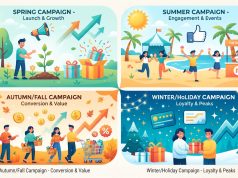
Capitalizing on temporal shifts and consumer purchasing cycles requires a structured, year-round approach. Implementing high-converting seasonal marketing ideas allows businesses to capture predictable surges in buying intent, revitalize customer engagement, boost brand visibility, and achieve sustainable revenue growth across every single quarter of the commercial calendar.
This comprehensive guide delivers actionable seasonal marketing ideas designed to drive year-round profitability. From quarter-by-quarter campaign blueprints and B2B strategies to advanced promotional execution frameworks and data-driven optimization tactics, you will learn how to align consumer psychology with commercial calendars. Master these proven techniques to eliminate off-season slumps, optimize marketing spend, and turn seasonal shoppers into lifelong loyal brand advocates.
The Strategic Foundation of Seasonal Marketing Ideas
Understanding the underlying mechanisms of consumer behavior during specific times of the year is essential for building sustainable revenue momentum. Seasonal marketing ideas succeed not merely because they align with holidays on a calendar, but because they leverage deeply ingrained psychological triggers, emotional rhythms, and cultural moments that naturally elevate purchase intent. When businesses transition from reactive holiday promotions to a proactive seasonal content calendar, they transform unpredictable sales cycles into reliable, recurring revenue engines.
Understanding Seasonal Consumer Psychology and Purchase Triggers
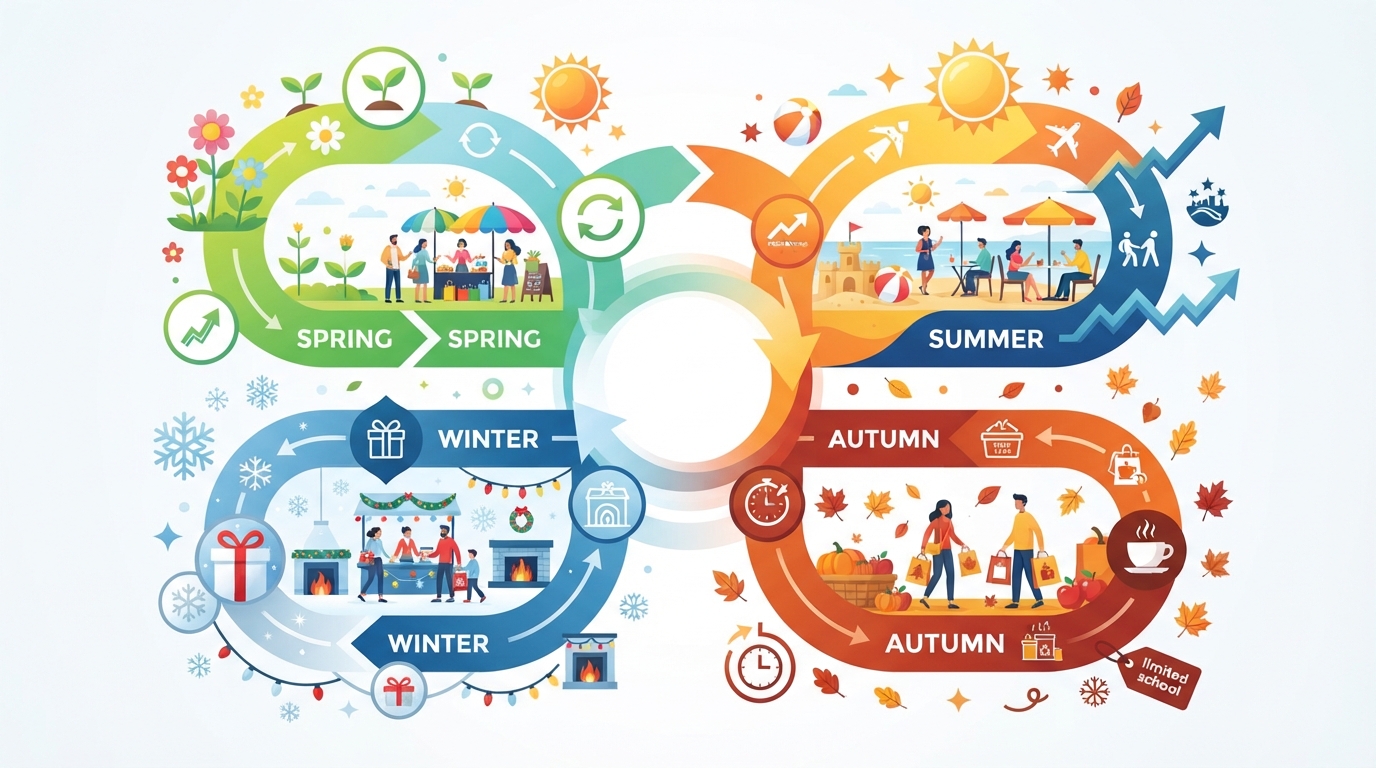
Consumer purchasing behavior changes dramatically across seasons. Spring inspires renewal and self-improvement; summer encourages leisure, travel, and outdoor living; autumn shifts focus toward preparation, comfort, and routine; and winter centers on gifting, celebration, and reflection. According to research from Harvard Business Review, consumers demonstrate heightened price sensitivity during non-peak months but shift toward emotional and value-based purchasing during major holiday windows.
By mapping effective seasonal marketing ideas to these emotional shifts, brands tap into established buying motives. For example, urgency and scarcity become exceptionally powerful during short-window events like Black Friday, whereas anticipation and altruism drive purchasing during the Christmas and end-of-year gifting periods. Identifying these emotional triggers allows marketers to craft messaging that resonates deeply rather than relying solely on aggressive price discounting.
Mapping the Annual Commercial Lifecycle
A robust omnichannel marketing strategy requires viewing the year as an interconnected commercial lifecycle rather than isolated promotional dates. Every industry experiences predictable peak seasons, shoulder periods, and low-volume troughs. Successful brands utilize shoulder periods—the weeks leading up to major shopping events—to build audience lists, warm up retargeting pools, and test creative messaging.
Mapping your annual lifecycle involves analyzing historical sales data, monitoring Google Trends search volume patterns, and establishing clear promotional milestones. Effective seasonal marketing ideas bridge the gap between high-volume retail holidays and quiet mid-season lulls, ensuring your acquisition funnel remains populated year-round. This structured pacing prevents audience fatigue and optimizes marketing spend allocation across all four quarters.
Defining High-Intent Seasonal Audiences
Not all customers engage with your brand in the same way throughout the year. Broad audience targeting during major shopping periods often leads to inflated customer acquisition costs (CAC) and reduced return on ad spend (ROAS). To maximize performance, businesses must segment their audience based on seasonal intent profiles:
- Early-Bird Planners: Customers who research purchases weeks or months in advance, seeking early access, pre-orders, and comprehensive gift guides.
- Peak Holiday Shoppers: Deal-motivated buyers looking for immediate savings, free shipping, and convenient bundled offers during major promotional days.
- Last-Minute Buyers: Fast-acting shoppers who prioritize rapid fulfillment, express shipping guarantees, gift cards, and friction-free checkout experiences.
- Off-Season Bargain Hunters: Price-conscious consumers searching for clearance inventory, end-of-season sales, and post-holiday discounts.
Tailoring specific seasonal marketing ideas to each intent segment ensures relevant messaging, higher conversion rates, and better utilization of ad budgets.
Spring Seasonal Marketing Ideas to Reignite Customer Engagement

Spring represents a powerful psychological turning point for consumers. As winter subsides, consumer confidence typically rises, accompanied by a desire for personal renewal, home organization, and outdoor activity. Deploying fresh spring seasonal marketing ideas allows businesses to capture this renewed energy, clear out legacy inventory, and engage buyers as they prepare for warmer weather.
Spring Cleaning Promotions and Inventory Liquidation
The concept of “spring cleaning” extends far beyond household chores—it provides a compelling narrative for seasonal inventory management and warehouse clearance. Businesses can position inventory liquidation sales as exclusive spring refresh events, offering steep discounts on outgoing stock while making room for upcoming summer collections.
To execute a successful spring cleaning campaign, bundle complementary products together at an attractive price point. Frame the promotion around themes of decluttering, refreshing routines, or upgrading outdated equipment. Utilizing limited-time offers with clear countdown timers creates genuine urgency, encouraging hesitant buyers to complete their purchases before new seasonal lines arrive.
Earth Day and Sustainability-Driven Brand Positioning
Modern consumers increasingly favor brands that demonstrate genuine environmental responsibility. Earth Day provides an ideal focal point for purpose-driven seasonal marketing ideas that highlight eco-friendly initiatives, sustainable sourcing, and ethical manufacturing practices.
Rather than engaging in superficial “greenwashing,” brands should showcase tangible commitments. Consider launching a campaign where a percentage of every sale during April supports environmental conservation efforts, or offer trade-in discounts for customers who recycle used products. Aligning your seasonal branding strategies with authentic sustainability initiatives builds long-term brand equity and attracts conscious consumers who value corporate responsibility.
Easter and Mother’s Day High-Converting Campaigns
Easter and Mother’s Day serve as major commercial catalysts during the mid-to-late spring period. Consumer spending during these holidays spans multiple categories, including apparel, jewelry, gourmet food, home decor, and experiential gifts. Data from the National Retail Federation consistently highlights Mother’s Day as one of the highest-spending gift-giving holidays of the year.
High-converting seasonal marketing ideas for Mother’s Day center on curated gift guides segmented by recipient persona (e.g., “Gifts for the Tech-Savvy Mom,” “Pampering Sets for New Mothers”). Incorporate email marketing automation sequences that remind subscribers of upcoming shipping deadlines, ensuring last-minute shoppers purchase early enough to guarantee on-time delivery.
Summer Seasonal Marketing Ideas for Peak Warm-Weather Sales

Summer brings distinct shifts in lifestyle, travel patterns, and media consumption habits. While consumer attention may disperse due to vacations and outdoor activities, businesses that deploy targeted summer seasonal marketing ideas can maintain steady revenue momentum and capture high-converting seasonal demand.
Father’s Day and Early Summer Gifting Strategies
Father’s Day kicks off the summer promotional calendar, presenting a major revenue opportunity for brands across electronics, outdoor gear, menswear, and subscription services. Successful Father’s Day campaigns utilize personalized messaging and problem-solving content that simplifies decision-making for gift buyers.
Interactive gift finders, personalized product customization, and curated gift bundles perform exceptionally well during this period. Pair these offers with target social media campaign planning that speaks directly to spouses and adult children looking for thoughtful, high-quality gifts. Highlighting expedited shipping options in the final days preceding Father’s Day helps capture high-intent, last-minute shoppers.
Independence Day and Mid-Summer Flash Sales
Mid-summer often brings a slight dip in overall digital engagement as consumers spend more time outdoors. To counteract this seasonal slowdown, businesses utilize high-impact summer promotional tactics centered around major summer holidays like Independence Day or mid-season flash sales.
Short-duration flash sales—typically lasting 24 to 72 hours—create intense focus and immediate buying action. Utilize bold, vibrant visual assets across social channels and send targeted push notifications or SMS alerts to announce exclusive summer discounts. Combining steep percentage discounts with tiered minimum-spend thresholds (e.g., “Spend $100, Save $20; Spend $200, Save $50”) successfully increases average order value (AOV) during off-peak periods.
Back-to-School and Back-to-College Promotional Campaigns
The back-to-school and back-to-college shopping period represents the second-largest consumer spending window of the year, trailing only the winter holiday season. Spanning late July through early September, this period impacts a vast array of industries beyond traditional school supplies, including consumer electronics, apparel, dormitory furnishings, and meal delivery services.
Deploying comprehensive back-to-school marketing tactics requires multi-channel coordination. Target parents and students with messaging focused on preparation, productivity, and savings. Utilize influencer marketing collaborations with student creators and lifestyle bloggers to showcase product utility through authentic room makeovers, haul videos, and desk setups. Providing student discounts verified through academic verification platforms further strengthens conversion rates among younger demographics.
Fall Seasonal Marketing Ideas to Prepare for Peak Shopping Season

Autumn marks the critical transition into the fourth quarter—the most lucrative period for retail and digital commerce. Implementing proactive fall seasonal marketing ideas allows businesses to capture early holiday search traffic, build robust remarketing audiences, and warm up customer channels before ad costs surge during late Q4.
Halloween and Spooky-Themed Engagement Tactics
Halloween has evolved into a major global commercial event, driven by high consumer enthusiasm for themed entertainment, apparel, candy, and home decor. Beyond specialized costume retailers, mainstream brands leverage Halloween to deploy lighthearted, highly shareable seasonal marketing ideas.
Gamified promotional experiences—such as digital “Mystery Coupon” reveals, interactive trick-or-treat spin wheels, or themed user-generated content contests—drive exceptional engagement on social media platforms. According to industry analysis by Sprout Social, interactive seasonal campaigns achieve significantly higher social sharing and organic reach compared to standard promotional broadcasts.
Thanksgiving and Harvest Appreciation Campaigns
The period surrounding Thanksgiving offers a natural opportunity to step back from hard-sell promotional messaging and focus on customer appreciation, brand values, and community connection. Authentic gratitude campaigns foster deep emotional connections that lay the groundwork for high holiday conversion rates.
Consider sending personalized “Thank You” messages from company founders, offering exclusive VIP early-access discounts to loyal customers, or highlighting charitable giving partnerships. Demonstrating authentic appreciation reinforces customer trust and positions your brand favorably right before the intense commercial competition of Black Friday and Cyber Monday begins.
Early Q4 Holiday Prep and Pre-Black Friday Teasers
Waiting until Black Friday week to launch your Q4 campaigns is a recipe for inflated ad costs and lost market share. Modern consumer shopping behavior starts significantly earlier, with shoppers researching gifts and seeking deals as early as October.
A strong q4 sales strategies framework incorporates pre-Black Friday teasers, early-bird VIP registration pages, and downloadable holiday shopping checklists. Collect email addresses and SMS opt-ins by offering exclusive early access to Black Friday discounts. Building list volume in early autumn ensures you can reach high-intent buyers through cost-effective owned channels when paid ad space becomes extraordinarily expensive in November.
Winter Seasonal Marketing Ideas for Maximum Holiday Revenue
Winter represents the peak commercial window for B2C and e-commerce brands worldwide. Executing rigorous, well-structured winter seasonal marketing ideas enables businesses to maximize holiday transaction volumes, optimize conversion funnels, and capture significant year-end market share.
Black Friday and Cyber Monday Omnichannel Blitzes
Black Friday and Cyber Monday (BFCM) represent the pinnacle of retail urgency. To stand out amidst intense inbox noise and aggressive ad competition, brands need an integrated, multi-channel promotional blitz executed with flawless technical precision.
Successful BFCM execution relies on structured e-commerce conversion optimization. Streamline site navigation, pre-load promotional code discounts at checkout, ensure rapid server load times, and offer transparent cart-level free shipping thresholds. Pair site optimization with automated marketing automation workflows that trigger browse abandonment and abandoned cart recovery emails within minutes of a visitor leaving your store.
Christmas, Hanukkah, and Year-End Holiday Gift Guides
As the main December holiday season approaches, consumer search intent shifts rapidly from self-purchasing to gift acquisition. Crafting structured, easily navigable holiday gift guides is one of the most effective seasonal marketing ideas for driving high-intent organic traffic and boosting cross-category sales.
Organize gift guides logically by budget ranges (e.g., “Gifts Under $50”), recipient interests (“Gifts for Outdoor Enthusiasts”), or solution categories. Incorporate rich visual media, customer reviews, and explicit live updates on shipping cut-off dates. Partnering with industry publications for inclusion in external gift guides provides authoritative backlinks and expands top-of-funnel reach.
New Year Resolutions and Fresh Start Promotional Messaging
The period immediately following Christmas through early January marks a distinct shift from gift shopping to personal self-improvement, health, financial planning, and professional development. Businesses can leverage this “fresh start effect” to launch high-converting New Year campaigns.
Position your products or services as essential tools for achieving personal or business goals in the coming year. Whether offering fitness equipment, software productivity tools, educational courses, or organizational home goods, align your messaging with themes of transformation, habit building, and starting fresh. Offering tiered annual subscription discounts during January locks in predictable recurring revenue for the year ahead.
Seasonal Marketing Ideas for B2B Companies and Niche Service Providers
While seasonal marketing is often associated with consumer retail, B2B organizations and niche service providers can profit immensely from aligning their sales efforts with professional calendar milestones, fiscal years, and industry cycles.
Aligning B2B Offers with Fiscal Calendar Cycles
B2B purchasing behavior is heavily governed by corporate fiscal calendars, budget cycles, and tax reporting timelines. Understanding when your business clients set budgets, evaluate software vendors, or execute procurement decisions allows you to timing-optimize your outreach.
Many corporations operate on a calendar-year fiscal cycle ending December 31st, while others follow federal or mid-year fiscal calendars (e.g., ending June 30th or September 30th). Aligning your B2B sales campaigns with these key dates ensures your sales team pitches key decision-makers when budget approval processes are actively underway.
Tax Season and Mid-Year Business Audit Campaign Triggers
Spring and mid-year periods present powerful promotional triggers for professional service providers, financial consultants, SaaS platforms, and legal firms. Tax season (Q1/Q2) naturally elevates corporate awareness around expense optimization, compliance, and financial record-keeping.
Deploying specialized seasonal marketing ideas around tax preparation or mid-year business performance reviews establishes your firm as an indispensable strategic partner. Offer free downloadable audit templates, host educational webinars on tax minimization strategies, or provide limited-time service assessments to attract business owners seeking operational efficiency.
Year-End Budget Consumption Strategies
One of the most predictable B2B sales opportunities occurs during Q4 when corporate department heads face “use-it-or-lose-it” budget constraints. Unspent departmental funds often expire at year-end, creating strong incentive for managers to invest in software upgrades, consulting packages, team training, or equipment upgrades before December 31st.
Structure dedicated Q4 B2B campaigns highlighting prepaid annual plans, multi-year contract incentives, or bundled implementation packages. Framing your solution as an immediate capital investment that maximizes current-year tax deductions while securing long-term operational capabilities resonates strongly with financial decision-makers.
Step-by-Step Framework to Execute High-ROI Seasonal Campaigns
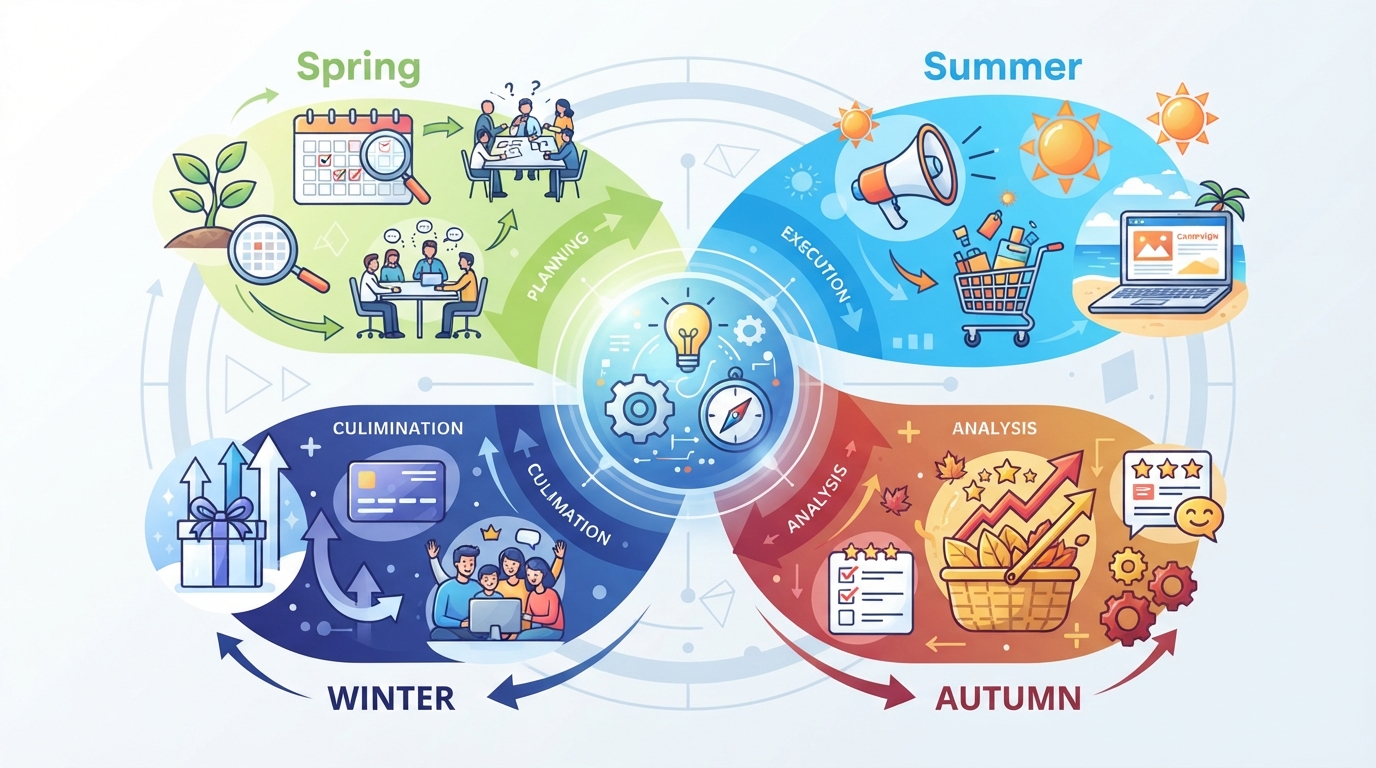
Executing a seamless, highly profitable campaign requires rigorous organization, cross-departmental coordination, and data-backed performance tracking. Utilizing a standardized framework prevents last-minute execution errors, safeguards brand quality, and ensures optimal resource allocation.
Phase 1: Advanced Planning and Trend Forecasting
-
Audit Historical Data: Analyze performance metrics from previous seasonal campaigns, identifying top-performing channels, best-selling product categories, and baseline conversion rates.
-
Conduct Trend Research: Utilize tools like Google Trends and consumer research databases from Gartner to spot emerging product demand and shifting search query patterns.
-
Establish Clear Campaign KPIs: Define specific quantitative targets for revenue, return on ad spend (ROAS), new customer acquisition costs (CAC), email list growth, and overall conversion rate.
-
Construct a Promotional Calendar: Map out campaign launch dates, promotional offer tiers, content publishing schedules, and channel distribution timelines at least 60 to 90 days prior to launch.
Phase 2: Creative Asset Production and Multichannel Staging
-
Develop Cohesive Visual Assets: Design branded ad banners, email templates, landing pages, and social media media kits that reflect the specific seasonal aesthetic while preserving core brand identity.
-
Draft Persuasive Campaign Copy: Write tailored ad copy, email subject lines, and landing page headlines incorporating clear value propositions, urgency elements, and contextual seasonal relevance.
-
Stage Automated Workflows: Build and thoroughly test technical automation pathways, including event-driven marketing triggers, abandoned cart series, and post-purchase onboarding sequences.
-
Optimize Local Visibility: Update business listings, operating hours, and localized Google Business Profile assets to capture high-intent buyers searching via local SEO optimization.
Phase 3: Execution, Real-Time Optimization, and Post-Mortem Analysis
-
Launch Across Owned and Paid Channels: Synchronize campaign deployment across email list blasts, organic social posts, paid advertising networks, and direct sales outreach.
-
Monitor System Performance: Continuously audit landing page loading speeds, inventory stock levels, payment gateway stability, and customer service ticket responsiveness during peak traffic spikes.
-
Optimize Performance In-Flight: Reallocate ad spend dynamically toward top-performing ad creatives, audience segments, and product variants based on real-time ROAS data.
-
Conduct a Comprehensive Post-Mortem: Document campaign wins, operational bottlenecks, revenue totals, and creative learnings immediately following campaign completion to refine future iterations.
Common Mistakes to Avoid in Seasonal Campaign Planning
Even well-funded marketing initiatives can fail if common strategic and operational pitfalls are overlooked. Protecting your profit margins and brand reputation requires proactive risk management throughout the campaign lifecycle.
- Starting Creative Production Too Late: Delaying asset production leads to rushed messaging, unvetted technical bugs, and missed early-shopper demand windows.
- Relying Solely on Heavy Price Discounting: Constantly eroding margins through deep discounts devalues your brand and trains customers never to pay full price.
- Ignoring Website Infrastructure and Mobile Optimization: High ad spend is wasted if your website crashes under traffic surges or presents a frustrating, slow mobile checkout experience.
- Neglecting Post-Holiday Customer Retention: Acquiring seasonal buyers without deploying dedicated customer retention strategies results in high churn and low long-term customer lifetime value (LTV).
- Overpromising and Underdelivering on Logistics: Failing to meet stated delivery deadlines during critical gifting windows damages brand trust and generates negative public reviews.
Pro Tips and Advanced Tactics for Maximizing Seasonal ROI
Leading digital brands leverage advanced marketing technologies and data strategies to outpace competitors during high-stakes promotional periods. Integrating these high-level tactics elevates campaign efficiency and maximizes profitability.
Deploy Predictive AI Demand Forecasting: Utilize predictive analytics platforms like McKinsey & Company recommended inventory algorithms to analyze real-time market signals, ensuring optimal stock levels without over-committing capital to slow-moving items.
- Implement Dynamic Email Personalization: Go beyond basic broad-blast emails by leveraging email marketing automation platforms to dynamically insert recommended products based on past browsing behavior, location-specific weather conditions, and precise customer lifecycle stages.
- Leverage User-Generated Content (UGC) as Social Proof: Integrate authentic customer photos, video unboxing experiences, and verified product reviews directly onto holiday landing pages and ad creatives to drastically boost trust and conversion rates.
- Structure Post-Holiday Re-Engagement Funnels: Immediately follow peak holiday sales periods with structured post-holiday customer re-engagement campaigns, offering surprise thank-you perks, bounce-back discount codes for Q1, and product onboarding guides.
Seasonal Marketing Ideas Comparison: Channel Effectiveness Matrix
Selecting the optimal mix of promotional channels is critical for maximizing ROI across different stages of the seasonal lifecycle. The matrix below compares core marketing channels across key operational performance metrics:
| Marketing Channel | Typical Cost Structure | Conversion Velocity | Scalability & Reach | Ideal Seasonal Use Case |
| Email Automation | Low (Owned Channel) | Immediate / High | Medium (List Constrained) | VIP Early Access, Cart Recovery, Flash Sales |
| Paid Search (PPC) | High (Competitive Bidding) | High (Search Intent) | High (Instant Traffic) | High-Intent Keyword Capture, Last-Minute Buyers |
| Paid Social Advertising | Medium to High | Moderate | Very High | Visual Gift Guides, Seasonal Awareness, Retargeting |
| Influencer Collaborations | Fixed / Performance Fee | Moderate to Slow | Medium (Targeted Audience) | Seasonal Unboxing, Back-to-School, UGC Creation |
| SMS & Push Notifications | Low to Medium | Immediate | High (High Open Rates) | Short-Window Flash Sales, Shipping Deadlines |
| Content Marketing & SEO | High Upfront / Low Long-Term | Slow (Requires Lead Time) | High (Sustained Traffic) | Evergreen Gift Guides, Trend Keyword Dominance |
Deploying a balanced combination of these channels ensures your seasonal marketing ideas achieve maximum touchpoint frequency, guiding consumers seamlessly from initial awareness to final purchase.
Executing targeted seasonal marketing ideas transforms unpredictable revenue fluctuations into a reliable, year-round growth engine for your business. By aligning creative promotions with consumer psychology, leveraging structured execution frameworks, and prioritizing long-term retention, you secure sustainable competitive advantages. Start planning your next quarterly campaign today to maximize conversions, build customer loyalty, and scale your brand predictably.
Frequently Asked Questions
1. What are the best seasonal marketing ideas for small businesses with limited budgets?
Small businesses with modest budgets can achieve exceptional results by focusing heavily on high-ROI owned media channels like email marketing, organic social media content, and local community partnerships. Crafting curated digital gift guides, running interactive user-generated content contests, hosting localized in-store or virtual events, and sending targeted SMS alerts allow small brands to engage local audiences effectively without competing directly against massive enterprise ad budgets on paid search channels.
2. How far in advance should a company start planning seasonal marketing campaigns?
Major quarterly campaigns should ideally be planned 60 to 90 days prior to launch. Planning far in advance allows marketing teams to perform thorough competitive analysis, draft high-converting ad copy, build automated email sequences, design visual assets, coordinate inventory logistics, and secure cost-effective influencer partnerships. Early planning also ensures your brand can capture early search demand from proactive shoppers who research purchases weeks before peak promotional windows.
3. How do B2B companies effectively utilize seasonal marketing strategies?
B2B companies execute seasonal marketing by aligning promotional outreach with professional calendar milestones, fiscal year-end budget cycles, tax seasons, and corporate planning periods. Rather than using consumer-style discount blitzes, B2B brands offer year-end contract incentives, prepaid annual plan discounts, compliance audit checklists, and specialized educational content like webinars or whitepapers that help business clients optimize operations or maximize current-year budget utilization before fiscal deadlines expire.
4. How can businesses avoid devaluing their brand during high-discount promotional periods?
To prevent brand erosion, businesses should shift focus from deep percentage discounts to value-added promotional strategies. Offering exclusive product bundles, gift-with-purchase incentives, tiered spend thresholds, VIP early access passes, free express shipping upgrades, or bonus loyalty points delivers exceptional perceived value to customers without slashing standalone product prices or training consumers to wait for clearance sales.
5. What role does email automation play in successful seasonal campaigns?
Email automation is the operational backbone of high-converting seasonal campaigns. Automated workflows allow brands to deliver personalized, behavior-triggered messages at exact moments in the buyer journey. Setting up automated welcome series, VIP early-access notifications, browse abandonment triggers, countdown shipping deadline reminders, and abandoned cart recovery sequences ensures maximum conversion efficiency while dramatically reducing manual marketing workload during busy promotional periods.
6. How can an e-commerce store optimize its website for peak seasonal traffic spikes?
Optimizing an e-commerce store for heavy seasonal traffic requires both technical and user-experience enhancements. Technically, ensure server infrastructure can handle concurrent user surges, compress image assets for rapid page load speeds, and test payment gateway reliability. From a user experience perspective, streamline checkout steps, display prominent free-shipping progress bars, pre-apply promotional coupon codes at checkout, and optimize site navigation with dedicated seasonal category pages.
7. How do you maintain customer engagement after a major holiday promotional campaign ends?
Maintaining engagement post-holiday requires a structured post-purchase onboarding and re-engagement strategy. Send automated thank-you notes, provide helpful product usage guides, solicit verified customer reviews, and introduce bounce-back incentive codes valid for purchase during the following quarter. Transitioning seasonal buyers into brand loyalty programs and delivering valuable, non-promotional educational content keeps your brand top-of-mind during traditional off-peak periods.
8. How can local businesses leverage local SEO for seasonal promotions?
Local businesses can capture high-intent nearby shoppers by fully optimizing their Google Business Profiles and localized content ahead of key shopping dates. Update seasonal holiday hours, post promotional updates directly on local business listings, publish localized landing pages targeting city-specific seasonal terms, collect positive customer reviews, and ensure location-based inventory features are active so local searchers can see product availability in real-time.
9. Which key metrics should be tracked to measure the success of a seasonal marketing campaign?
To accurately evaluate seasonal campaign performance, track Return on Ad Spend (ROAS), Customer Acquisition Cost (CAC), Overall Conversion Rate, Average Order Value (AOV), Gross Profit Margin, Email List Growth, and Net Revenue generated against pre-established targets. Additionally, monitoring post-campaign metrics like Customer Lifetime Value (LTV) and 90-day repeat purchase rates reveals whether your campaign successfully acquired high-quality long-term customers.
10. How can brands effectively integrate social media into seasonal campaigns?
Integrating social media requires a mix of organic engagement, influencer partnerships, and targeted paid advertising. Utilize social channels to post video teasers, host interactive polls or Q&A sessions, launch user-generated content hashtags, showcase product gift unboxings, and run retargeting ad campaigns to remind past site visitors of ending promotional offers. Utilizing native social commerce features like shoppable posts and direct checkout further reduces friction for mobile shoppers.