
Understanding Event Based Marketing: Core Concepts and Architecture
Strategic Benefits of Event Based Marketing for Enterprise Growth
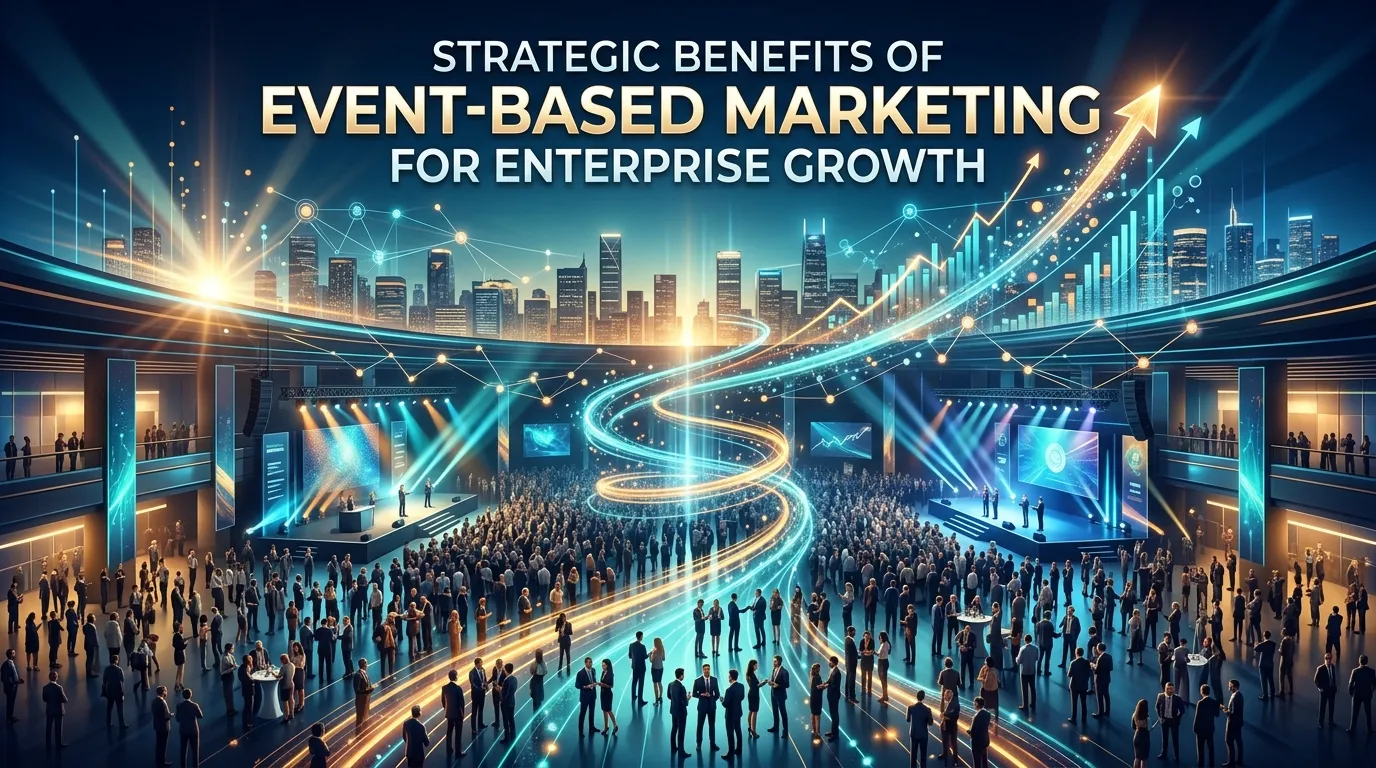 Implementing a robust Event Based Marketing capability delivers transformative commercial advantages across the entire revenue funnel. The primary catalyst for these results is the unmatched relevance that event-driven triggers provide. When an automated communication directly references a user’s recent action, response rates, click-through rates, and conversion metrics skyrocket compared to generic promotional broadcasts. Organizations that transition to Event Based Marketing consistently report significant improvements in customer acquisition efficiency and total campaign effectiveness.
Key Event Based Marketing Triggers and Operational Categories
- Behavioral Triggers: Initiated by direct user actions across digital properties, including website page visits, form submissions, mobile app feature usage, video views, product cart additions, and resource downloads. Behavioral triggers represent the highest intent signals in Event Based Marketing because they mirror active user consideration and interest.
- Transactional and Financial Triggers: Generated by monetary transactions or account status updates, such as successful order placement, subscription renewals, failed payment processing, credit limit adjustments, or refund requests. Transactional Event Based Marketing triggers deliver exceptional open and engagement rates due to their direct relevance to user finances.
- Demographic and Lifecycle Triggers: Sparked by temporal milestones connected to an individual user profile, such as customer onboarding anniversaries, birthdays, account creation dates, or progression into a new loyalty program tier. Lifecycle Event Based Marketing fosters deep brand affinity and emotional connection.
- Contextual and Environmental Triggers: Triggered by external conditions external to the specific user profile, including localized weather updates, macroeconomic changes, regional sport achievements, geo-location proximity, or real-time inventory level changes. Contextual Event Based Marketing establishes extreme contextual relevance by tapping into immediate real-world surroundings.
- Understanding how Event Based Marketing compares to traditional campaign marketing highlights why top-performing enterprises are rapidly reallocating their budgets toward event-driven methodologies.
| Strategic Feature | Traditional Campaign Marketing | Event Based Marketing |
| Execution Trigger | Pre-set calendar schedule (e.g., weekly blast) | Real-time user action, milestone, or signal |
| Relevance Level | Low to moderate (generic segment messaging) | Exceptionally high (context-aware & individualized) |
| Data Reliance | Historical static demographic profiles | Real-time behavioral, transactional & stream data |
| Response Latency | Hours, days, or scheduled weekly windows | Immediate (milliseconds to real-time minutes) |
| Primary Goal | Broad brand awareness and reach | Conversion, retention & intent satisfaction |
| Customer Experience | Frequently intrusive or repetitive | Helpful, timely, value-adding & seamless |
| Scalability | Manual effort scales with campaign volume | Automated infrastructure scales infinitely |
How to Implement Event Based Marketing: A Step-by-Step Framework
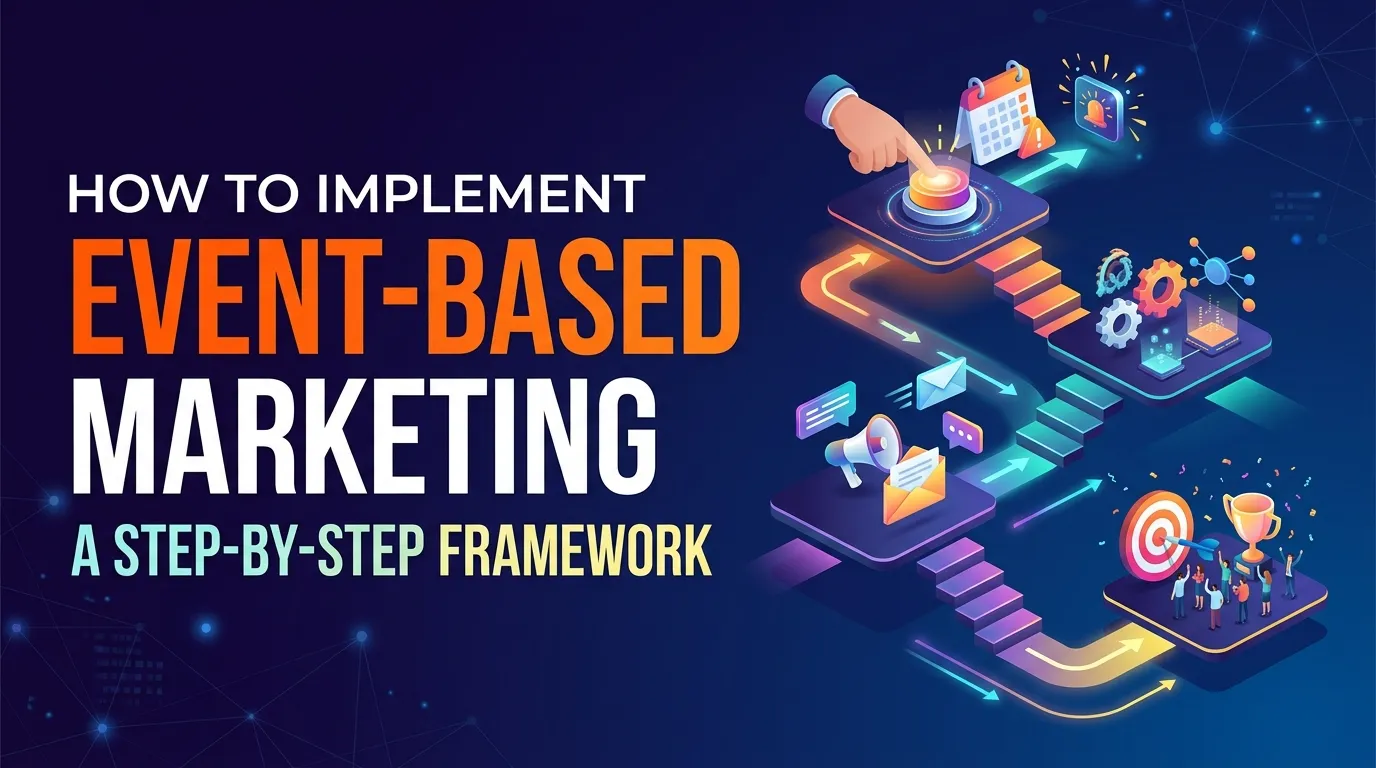 Executing a successful Event Based Marketing program requires a disciplined, structured approach that spans data architecture, journey mapping, content creation, and cross-channel system integrations. Without a clear step-by-step roadmap, organizations risk building disjointed workflows that create message clutter and frustrate prospects. The following framework outlines the essential steps to construct an enterprise-grade Event Based Marketing engine.
Mapping the Customer Journey and Defining High-Intent Events
Integrating Data Pipelines and CDP Infrastructure
Designing Automated Triggers and Workflow Logic
Testing, Dynamic Personalization, and Omnichannel Orchestration
Common Mistakes to Avoid in Event Based Marketing
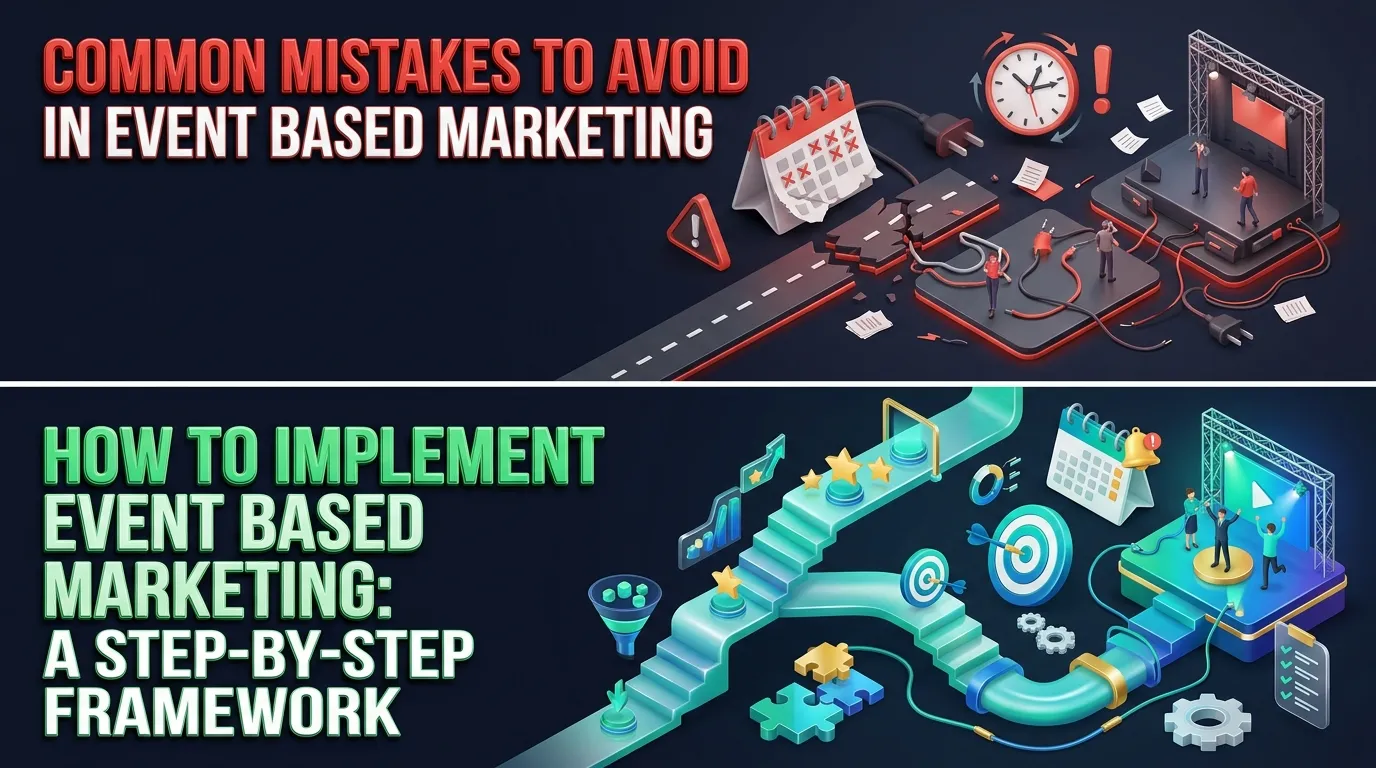 While Event Based Marketing provides unmatched conversion potential, poor execution can alienate customers, damage brand reputation, and waste technical resources. Identifying and mitigating operational traps early ensures long-term program stability and customer satisfaction.
- Over-Triggering and Lack of Frequency Capping: Bombarding users with automated emails, push notifications, and SMS messages every single time they click a button causes instant message fatigue and skyrockets unsubscribe rates. Enterprise Event Based Marketing systems must enforce strict global frequency rules that limit total touchpoints across all active workflows.
- Data Latency and Stale Event Processing: Delivering an event-driven abandoned cart email three days after the user already completed the purchase creates a terrible customer experience. Event Based Marketing demands real-time data pipelines that process event streams in milliseconds, backed by immediate suppression logic the moment a goal action is completed.
- Generic Content Lacking True Personalization: Triggering a communication based on a specific action but delivering generic, unpersonalized copy defeats the core value proposition of Event Based Marketing. Messages should dynamically reference the exact product viewed, topic researched, or milestone achieved to maximize conversion intent.
- Siloed Channel Communication: Running independent Event Based Marketing triggers across isolated email, mobile push, and direct sales systems leads to conflicting messaging. Modern execution requires centralized orchestration so that engagement on one channel instantly updates or pauses communications across all other channels.
Pro Tips and Advanced Strategies for Event Based Marketing Excellence
- Predictive Event Triggering with Artificial Intelligence: Shift from purely reactive Event Based Marketing to proactive, predictive engagement. By training machine learning models on vast historical customer datasets, algorithms can predict high-probability future events—such as churn likelihood, propensity to upgrade, or imminent product depletion—allowing systems to fire Event Based Marketing campaigns before the customer even initiates the action.
- Synergizing Event Based Marketing with B2B ABM Strategies: Combine event triggers with Account-Based Marketing frameworks to transform enterprise business development. When multiple stakeholders from a key target account visit specific solution pages, attend webinars, or review pricing documentation simultaneously, an integrated Event Based Marketing platform can instantly alert assigned account executives, deploy targeted LinkedIn advertising, and initiate tailored executive outreach sequences.
- Dynamic Omnichannel Orchestration and Next-Best-Action Decisioning: Implement advanced decision engines that evaluate user preferences, channel responsiveness history, and margin profitability to select the absolute “Next Best Action.” Rather than relying on rigid, pre-scripted workflow paths, AI-powered Event Based Marketing dynamically determines whether to send a discount offer via SMS, deliver an educational guide via email, or present an in-app interactive modal.
- Micro-Moment Event Optimization: Capitalize on fleeting consumer intent windows by optimizing Event Based Marketing for micro-moments—such as immediate post-purchase enthusiasm or instant location-based context. Delivering instant value within these small timeframes establishes unmatched brand authority and customer delight.
Conclusion
Mastering Event Based Marketing allows modern enterprises to move beyond generic broadcasts and connect with customers at peak intent. By unifying real-time behavioral data with automated execution, your organization can increase conversions, reduce churn, and scale long-term revenue. Ready to transform your customer journeys? Upgrade your marketing automation stack today to launch high-converting campaigns.
FAQ
1. What is Event Based Marketing and how does it differ from traditional marketing?
Event Based Marketing sends personalized messages based on customer actions in real time, unlike traditional marketing, which uses scheduled campaigns.
2. Why is Event Based Marketing important for modern digital campaigns?
It reaches customers at the right moment, improving engagement, conversions, and marketing ROI.
3. What are the most common triggers used in Event Based Marketing?
Common triggers include cart abandonment, product views, purchases, downloads, renewals, and account milestones.
4. How does Event Based Marketing improve customer retention?
It detects customer inactivity or risk signals and automatically sends re-engagement messages or offers.
5. What software tools are required for Event Based Marketing?
Businesses typically use a CDP, CRM, marketing automation platform, event-tracking tools, and analytics software.
6. How do you measure the ROI of Event Based Marketing?
Measure conversions, revenue, customer acquisition costs, customer lifetime value, and results from automated campaigns.
7. What is the difference between Event Based Marketing and event marketing?
Event Based Marketing uses customer actions as digital triggers, while event marketing focuses on conferences, webinars, trade shows, and similar events.
8. How does real-time data processing impact success?
Real-time data helps businesses respond immediately to customer actions, increasing engagement and conversion opportunities.
9. What are the biggest technical challenges?
Key challenges include data integration, data accuracy, low latency, frequency control, and cross-platform connectivity.
10. How can B2B companies use Event Based Marketing?
B2B companies can track actions like pricing-page visits, downloads, and webinar attendance to trigger sales alerts and personalized campaigns.