
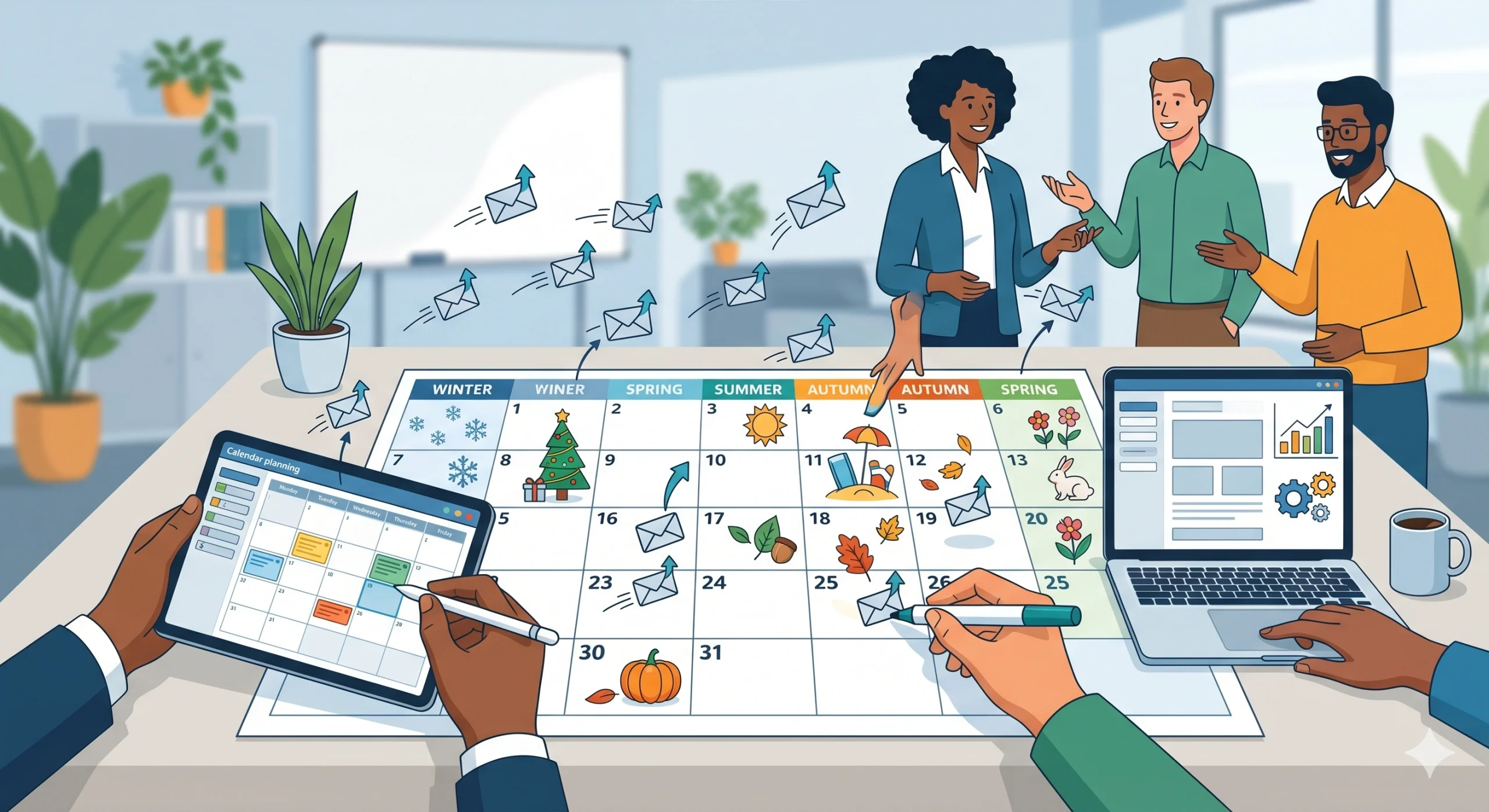
Email marketing remains one of the most reliable channels for reaching customers, driving sales, and building brand loyalty. Yet many businesses struggle to maximize their return on investment because they fail to plan ahead. When holidays and special events roll around, marketing teams often find themselves scrambling to put together last-minute promotions.
Learning how to create a seasonal email marketing campaign calendar completely changes this dynamic. A well-structured calendar allows you to map out your communications months in advance. You gain the ability to align your messaging with product launches, inventory cycles, and consumer spending habits. This proactive approach reduces stress and ensures your campaigns are thoughtful, engaging, and highly effective.
Throughout this guide, we will explore the essential steps for building a robust email strategy. You will learn how to design templates, automate workflows, and time your messages perfectly for peak seasons. By the time you reach the end, you will have a clear roadmap to keep your marketing efforts organized and profitable all year long.
Seasonal email marketing strategy planning

A strong marketing strategy starts with a clear understanding of your audience behavior and overall business cycle, especially when planning a Seasonal Email Campaign. The first step is to identify the most important dates that matter to your industry and customer journey. For example, a clothing retailer may focus heavily on back-to-school season, Black Friday, and holiday shopping periods, while a B2B software company may prioritize budget planning cycles, product launch windows, or major industry conferences.
After mapping out these key moments, the next step is to set clear and measurable goals for each phase of your Seasonal Email Campaign. Decide whether your focus is acquiring new customers, increasing repeat purchases, promoting seasonal offers, or clearing out old inventory. When each campaign has a defined purpose, it becomes much easier to align your messaging, design, and call-to-action so that every email works together to achieve a specific, high-impact result.
Planning also improves significantly when paired with strong promotional fundamentals. Learning what is promotion in a business plan helps define how each email fits into your broader marketing objective
Email campaign calendar template for businesses
You do not need complex tools or expensive software to create an effective planning system for your Seasonal Email Campaign strategy. In most cases, a simple spreadsheet is enough to organize your entire workflow and keep your marketing team aligned. A well-structured template should include key columns such as send date, email subject line, target audience segment, core message, campaign goal, and the team member responsible for execution.
Using an email campaign calendar template for businesses plays a crucial role in maintaining consistency and avoiding miscommunication across your marketing efforts. It ensures that every stage of your Seasonal Email Campaign is properly scheduled and nothing is missed during busy promotional periods. When everyone works from a single shared document, it reduces the risk of duplicate sends, missed audience segments, or poorly timed promotions.
To make the system even more effective, the template should be reviewed and updated regularly, especially during weekly marketing meetings. This allows teams to adjust timing, refine messaging, and stay flexible based on performance data and upcoming seasonal opportunities, ensuring each Seasonal Email Campaign runs smoothly and delivers better results.
To improve execution quality, many businesses also align email planning with email marketing tips for seasonal campaign success, which helps refine messaging, timing, and segmentation strategies.
How to plan holiday email marketing campaigns

The winter holiday season is notoriously loud. Consumers are bombarded with promotional messages from early November through January. To stand out, you must plan your holiday email marketing campaigns well in advance.
Begin teasing your holiday promotions weeks before the actual event. Send gift guides, exclusive early-access codes for VIP customers, and helpful content related to the season. By the time the main holiday arrives, your audience will already be engaged with your brand and primed to make a purchase.
Yearly email marketing content calendar
While holidays are important, your yearly email marketing content calendar must also account for the quieter months. You cannot simply go silent in March and expect customers to eagerly open your emails in November.
Map out recurring themes for each month. In the spring, you might focus on renewal or spring cleaning. In the summer, shift your messaging to travel, relaxation, or outdoor activities. Filling the gaps between major holidays with valuable, non-promotional content keeps your open rates high and your audience engaged year-round.
This becomes even more effective when aligned with broader behavioral insights like what is seasonality in marketing, which explains how customer demand naturally fluctuates across different times of the year.
Seasonal promotional email ideas for brands
Creativity is essential when developing seasonal promotional email ideas for brands. Instead of relying on a generic “10% off” discount code for every holiday, tailor your offers to the specific occasion.
For Valentine’s Day, offer a “buy one for you, get one for a friend” promotion. During the back-to-school season, create bundle deals that help parents check off multiple items on their shopping lists. Aligning the structure of your promotion with the spirit of the season makes your emails feel timely and relevant rather than purely transactional.
Email marketing schedule for peak seasons
Timing is everything during high-traffic periods. An email marketing schedule for peak seasons requires careful pacing. Sending too many emails will lead to high unsubscribe rates, but sending too few will cause you to miss out on potential revenue.
Adopt a tiered sending strategy during events like Black Friday. Send an initial announcement email, followed by a reminder halfway through the sale, and a final “last chance” warning a few hours before the promotion ends. Segment your list so that individuals who have already made a purchase receive a thank-you message instead of repeated sales pitches.
Ecommerce seasonal email campaign planning

For online retailers, ecommerce seasonal email campaign planning must tightly integrate with inventory management and shipping logistics. There is nothing worse than promoting a product that is already out of stock or promising delivery dates you cannot fulfill.
Include shipping deadlines prominently in your seasonal emails. “Order by December 15th to guarantee Christmas delivery” creates genuine urgency and sets clear expectations for the customer. Coordinate with your fulfillment team to ensure your marketing promises align with operational realities.
Automated seasonal email workflow setup
You do not have to manually hit “send” on every seasonal email. An automated seasonal email workflow setup saves time and ensures consistent communication.
Set up automated triggers for specific dates. For example, you can create a birthday workflow that sends a personalized discount code to subscribers at the beginning of their birthday month. You can also automate post-purchase follow-ups that suggest seasonal add-ons based on the customer’s previous buying history. Automation handles the heavy lifting, allowing your team to focus on strategy and creative development.
Best practices for email campaign timing
Determining the exact right moment to send an email requires testing and data analysis. However, several best practices for email campaign timing provide a solid starting point.
Generally, sending emails mid-week (Tuesday through Thursday) yields the highest engagement. Avoid sending important promotions on Monday mornings when people are clearing out their weekend inboxes, or Friday afternoons when they are logging off for the week. Pay attention to time zones, and use the send-time optimization features available in most modern email service providers to deliver messages when individual subscribers are most likely to open them.
Marketing calendar for festive email campaigns
A dedicated marketing calendar for festive email campaigns helps you track minor holidays that might resonate with your specific audience. National Coffee Day, Earth Day, or International Women’s Day can provide excellent opportunities for themed campaigns.
Do not try to celebrate every single micro-holiday. Select a few that authentically align with your brand values and product offerings. When you participate in these smaller events thoughtfully, you create unexpected moments of delight for your subscribers without overwhelming their inboxes.
Frequently Asked Questions
How far in advance should I plan my seasonal email calendar?
You should plan your overall Seasonal Email Campaign calendar at least three months before the new year begins. This gives you enough time to map key dates, align marketing goals, and prepare content. Detailed execution—such as design, copywriting, and automation—should be finalized four to six weeks before each scheduled send.
How many emails should I send during a major holiday?
The ideal number depends on your audience behavior, but most effective Seasonal Email Campaign strategies include three to five emails per major holiday. This usually covers teaser announcements, launch emails, reminders, last-chance offers, and optional extensions for engaged users.
What is the most important metric to track for seasonal emails?
While open rates and click-through rates are helpful indicators of engagement, the most important metric is the overall conversion rate. Tracking how many emails actually resulted in a sale or completed goal will dictate your future strategies.
Should I segment my email list for seasonal campaigns?
Yes. Segmenting your list allows you to send highly relevant messages. You can segment by past purchase behavior, geographic location, or engagement levels to ensure your seasonal offers match the recipient’s interests.
How do I handle customers who complain about too many emails during the holidays?
What role does A/B testing play in a seasonal email calendar?
A/B testing is crucial for optimizing your campaigns. Test different subject lines, send times, and call-to-action buttons early in the season, then apply the winning variations to your most critical holiday emails.
Can I reuse email templates from previous years?
You can absolutely reuse the underlying structure and layout of successful past templates. However, you must update the imagery, copy, and specific offers to reflect your current branding and inventory.
How do I ensure my seasonal emails do not end up in the spam folder?
Maintain good list hygiene by regularly removing inactive subscribers. Avoid using spam-trigger words in your subject lines, ensure your HTML is clean, and always authenticate your sending domain.
What should a seasonal email calendar look like for a service-based business?
Service-based businesses can focus seasonal emails on annual check-ups, end-of-year tax planning, spring cleaning services, or gift certificates for the holidays. The focus shifts from physical products to timely expertise and availability.
How do I come up with fresh ideas for my seasonal campaigns every year?
Review your competitors’ past emails, survey your current customers to find out what they want, and hold team brainstorming sessions. Looking outside your specific industry can also provide unique inspiration.
Is it necessary to offer a discount in every seasonal email?
No. Constant discounting trains your customers to wait for sales. Mix up your promotions by offering early access, exclusive bundles, free shipping, or premium content instead of flat percentage discounts.
How do I integrate my email calendar with social media?
Your email calendar should mirror your social media content calendar. When you launch a seasonal email campaign, ensure your social media channels are promoting the same underlying message, aesthetic, and offer.
What happens if a seasonal product sells out before the email campaign finishes?
If you have automated workflows running, update them immediately to remove the out-of-stock item. You can send a follow-up email apologizing for the shortage and offering a similar alternative product.
Should my seasonal emails look different from my standard brand emails?
Seasonal emails can include festive design elements, but they must retain your core brand identity. Keep your logo, primary fonts, and distinct brand voice consistent so subscribers immediately recognize the sender.
What tool is best for creating a seasonal email marketing calendar?
Many businesses succeed using simple tools like Google Sheets or Excel. If you require more advanced collaboration, project management software like Trello, Asana, or Monday.com offers excellent calendar views and task assignments.
Take Control of Your Marketing Schedule Today
The difference between a stressful holiday season and a highly profitable one often comes down to how well you prepare in advance. Learning how to create a Seasonal Email Campaign calendar gives your team the structure and clarity needed to plan, organize, and execute high-performing email campaigns without last-minute pressure or confusion.
Instead of reacting to events as they come, you can take a proactive approach by mapping out key seasons, holidays, and business goals in advance. Start by focusing on the next three months—define your main objectives, identify important campaign dates, and prepare simple email templates that can be reused and adapted. This early planning helps you stay consistent, maintain better timing, and deliver more relevant content to your audience.
As you become more confident, you can expand your strategy into a full-year Seasonal Email Campaign calendar. This long-term approach allows you to align marketing efforts with product launches, customer behavior, and seasonal demand, ensuring steady engagement and more predictable revenue growth throughout the year.