
B2B event lead generation helps businesses connect with potential customers, build professional relationships, and create new sales opportunities. With the right strategy before, during, and after an event, companies can turn valuable conversations into qualified leads and long-term business relationships.
Understanding B2B Event Lead Generation

B2B event lead generation is the process of finding and attracting potential business customers through professional events and activities. The main purpose is to identify people or organizations that may have an interest in a company’s products or services and then move those prospects toward a future business conversation.
The process may begin when a potential customer sees an event advertisement, visits a company’s booth, attends a presentation, joins a networking session, or speaks with a sales representative. That initial interaction can become the beginning of a relationship if the business understands the prospect’s needs and provides useful information.
In a B2B environment, buying decisions are often more complex than regular consumer purchases. A prospect may need to discuss a solution with colleagues, managers, finance teams, or senior decision-makers before making a final decision. Because of this, businesses should not expect every event conversation to immediately result in a sale.
The real value of event lead generation is often found in building relationships. A person who is not ready to purchase today may become an important customer several months later. Maintaining communication and providing useful information can help keep the business relevant when that prospect eventually needs a solution.
Why Events Matter for B2B Businesses
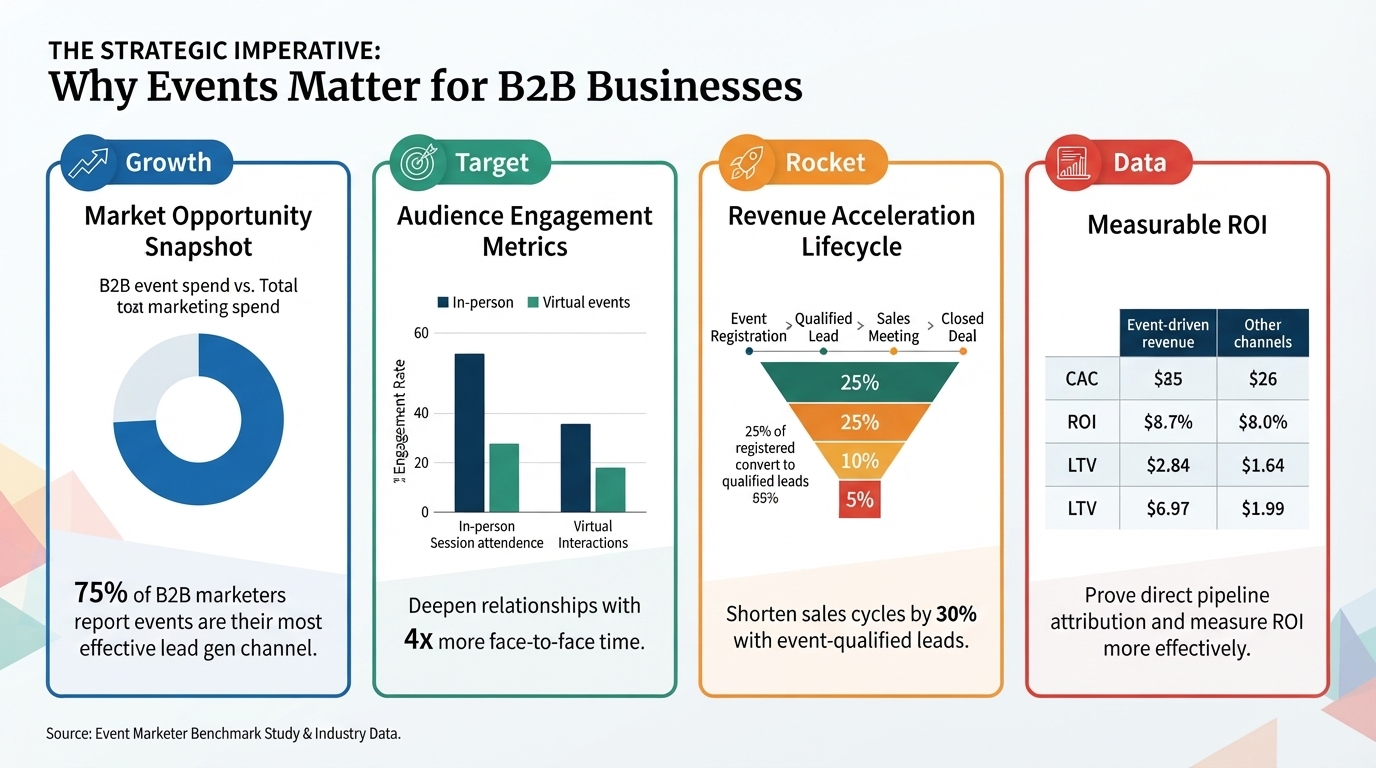
Professional events provide businesses with an opportunity to meet potential customers in a focused environment. Unlike many online advertising channels, events allow representatives to have direct conversations with people who may already be interested in a particular industry or solution.
For a B2B company, this direct interaction can make it easier to understand customer problems. A sales representative can ask questions, listen to the prospect, explain a solution, and respond to concerns immediately. This type of conversation can provide valuable information that may be difficult to collect through a standard online form.
Events can also improve brand visibility. When a company participates in a respected industry event, attendees can become more familiar with the brand. A professional booth, useful presentation, or informative discussion can create a positive impression and encourage people to learn more.
Another important advantage is networking. Business events often attract decision-makers and professionals from different companies and industries. A single conversation can lead to a sales opportunity, partnership, referral, or future collaboration.
For this reason, B2B events should not be viewed only as marketing activities. They can become an important part of a company’s wider sales and relationship-building strategy.
Preparing for Successful Event Lead Generation

Strong preparation can make a major difference to event results. Before attending an event, businesses should understand why they are participating and what they want to achieve.
The first step is understanding the ideal customer. A company should know what type of business it wants to reach, which industries are relevant, what problems potential customers may have, and which people are involved in purchasing decisions.
Once the target audience is clear, the company can create messaging that speaks directly to those people. Instead of simply saying what the company sells, the message should explain how the product or service can solve a real business problem.
For example, a software company may focus on how its solution can reduce manual work, improve productivity, or make business processes easier. This type of communication gives potential customers a reason to start a conversation.
Businesses should also prepare their sales and marketing teams before the event. Team members need to understand the company’s main message, target audience, product benefits, and lead qualification process. When everyone communicates consistently, prospects receive a clearer understanding of the brand.
Another important part of preparation is deciding how leads will be captured. Businesses can use digital forms, QR codes, event applications, CRM systems, or other lead collection methods. Having a simple process makes it easier to organize information and begin follow-up after the event.
Creating Meaningful Conversations at Events
A successful event is not about talking to as many people as possible. It is about having meaningful conversations with the right people.
Many sales representatives make the mistake of immediately talking about their products. While product information is important, starting with the prospect’s needs can create a much stronger conversation.
A simple question about the prospect’s current business challenges can open the door to a more useful discussion. Once the representative understands the problem, they can explain how the company’s solution may help.
This approach is especially valuable in B2B marketing because business customers usually want to understand the practical value of a solution. They may want to know how it will affect costs, productivity, efficiency, revenue, or customer experience.
Good conversations also help sales teams identify buying intent. Some visitors may simply be exploring the market, while others may already be searching for a solution. Understanding this difference allows businesses to prioritize their follow-up efforts.
The goal should not be to pressure visitors into making a decision. Instead, the objective should be to create a useful conversation and establish a reason to continue communicating after the event.
Using Technology to Improve Lead Generation
Technology has changed the way companies manage event leads. In the past, businesses often depended on business cards, handwritten notes, and manual spreadsheets. These methods can still work, but they can make lead management slower and less organized.
Modern B2B companies can use digital lead capture tools to collect prospect information quickly. A sales representative can record a person’s name, company, job title, contact information, interests, and other relevant details during a conversation.
This information can then be connected to a CRM system. A CRM allows sales and marketing teams to organize prospects and track their progress through the sales process.
Technology can also help automate follow-up communication. For example, a prospect who requests a product demonstration can receive relevant information shortly after the event. Another prospect who is only interested in educational content can receive useful articles or industry resources.
The goal of technology should not be to replace human communication. Instead, it should help teams organize information, save time, and make communication more relevant.
The Importance of Follow-Up
One of the biggest mistakes companies make after an event is failing to follow up properly. A potential customer may have an excellent conversation with a company during an event, but if there is no communication afterward, the opportunity can quickly disappear.
Effective follow-up should happen while the event is still fresh in the prospect’s mind. However, the message should not feel like a generic sales email.
A personalized message can refer to the conversation that took place at the event. If the prospect mentioned a specific challenge, the follow-up can provide information related to that challenge.
For B2B companies, personalization can make follow-up communication more relevant and professional. It shows the prospect that the sales representative remembers the conversation and understands the business problem.
Not every lead needs the same type of follow-up. A highly interested prospect may be ready for a sales meeting, while another person may need educational content before considering a purchase.
This is why lead segmentation is important. Leads can be organized according to their interests, needs, level of engagement, and potential buying timeline.
Turning Event Leads Into Long-Term Opportunities
Generating a lead is only the beginning. The real objective is to develop that lead into a business opportunity.
Some prospects may be ready to talk with a sales representative immediately. Others may need more time. Businesses should continue providing value without overwhelming prospects with constant promotional messages.
Useful content can include industry research, case studies, educational articles, webinars, product information, and practical business insights.
When prospects consistently receive useful information, they may become more familiar with the company and its expertise. Over time, this can help build trust.
A strong B2B marketing strategy recognizes that different prospects move at different speeds. Some may convert within weeks, while others may require several months of communication.
Businesses should therefore create a follow-up process that supports prospects throughout their buying journey rather than focusing only on immediate sales.
Measuring Event Lead Generation Performance
Measuring results is essential for understanding whether an event was successful. Simply counting the number of contacts collected does not provide a complete picture.
Businesses should look at the quality of the leads, the number of meaningful conversations, sales meetings, opportunities, and eventual customers generated from the event.
The cost of the event should also be compared with the business value it creates. This can help companies understand which types of events are producing useful results.
For a B2B organization, measurement can also reveal weaknesses in the lead generation process. If an event produces many contacts but very few qualified opportunities, the company may need to improve its targeting or lead qualification.
If the event generates strong opportunities but follow-up results are weak, the problem may be in the post-event communication process.
Regularly reviewing these results allows businesses to improve their future event strategies and make better use of their marketing resources.
Important Tips for Better Event Results
Successful event marketing requires consistency. Businesses should make sure that their event message matches their overall brand and marketing communication.
The event team should also be trained to listen rather than simply deliver sales pitches. Understanding the prospect’s situation often creates a stronger foundation for a future business relationship.
Another important consideration is the quality of the information collected. Incorrect phone numbers, incomplete company details, or missing notes can make follow-up difficult. Sales teams should therefore capture useful information during the initial conversation.
Businesses should also avoid treating every visitor as an equally valuable lead. Quality is more important than quantity. A smaller number of relevant prospects can create more business value than hundreds of contacts with little interest.
Finally, companies should continue communication after the event. The relationship should not end when the conference or exhibition closes. Consistent and useful communication can turn an initial meeting into a long-term business opportunity.
Common Questions About B2B Event Lead Generation
What is B2B event lead generation?
B2B event lead generation is the process of attracting, identifying, and collecting potential business customers through professional events. It includes activities before, during, and after an event that help companies create new sales opportunities.
Why is event lead generation important?
Event lead generation helps businesses connect directly with potential customers and understand their needs. It can create qualified sales opportunities, improve brand awareness, and support long-term professional relationships.
Which events are useful for lead generation?
Trade shows, conferences, exhibitions, seminars, networking events, industry workshops, webinars, and business meetings can all support lead generation. The most useful event depends on the company’s target audience and business objectives.
How can a company attract more leads at an event?
A company can attract relevant prospects by creating clear messaging, offering useful content, providing demonstrations, participating in discussions, and building a professional event presence. Understanding the target audience before the event is also important.
How quickly should businesses follow up with event leads?
Businesses should follow up as soon as reasonably possible after an event. Early communication helps maintain the connection while the conversation is still fresh. The message should be personalized according to the prospect’s interests and needs.
Should every event lead go directly to the sales team?
Not necessarily. Some leads may be ready for a sales conversation, while others may still be researching their options. Lead qualification can help businesses determine which prospects need immediate sales attention and which ones should receive further nurturing.
Can small businesses use event lead generation?
Yes. Small businesses can use professional events to connect with highly relevant prospects without needing a large marketing budget. A focused audience, clear message, and strong follow-up process can make event participation valuable for smaller companies.
How does technology help with event lead generation?
Technology can make it easier to collect, organize, qualify, and track prospect information. CRM systems, digital forms, event applications, and marketing automation tools can help businesses manage leads more efficiently.
Conclusion
B2B event lead generation is more than collecting names and contact details at a conference or trade show. It is a complete process that starts with understanding the target audience and continues through meaningful conversations, lead qualification, personalized follow-up, and long-term relationship building.
Events give businesses an opportunity to speak directly with potential customers and understand their challenges. When these conversations are handled properly, they can create valuable sales opportunities and strengthen brand relationships.
The most effective approach is to focus on relevance and value. Businesses should target the right audience, communicate clearly, listen carefully, collect useful information, and follow up with content that matches the prospect’s needs.
A strong B2B strategy does not measure success only by the number of leads collected. It also considers the quality of those leads and the business opportunities they create over time.
With careful planning, effective communication, suitable technology, and consistent follow-up, event participation can become a valuable part of a company’s overall marketing and sales strategy. Instead of treating an event as a single marketing activity, businesses can use it as the beginning of relationships that continue long after the event is over.